 how-to
Buying a Used Car Online Safely: 7 Critical Steps
Table of Contents
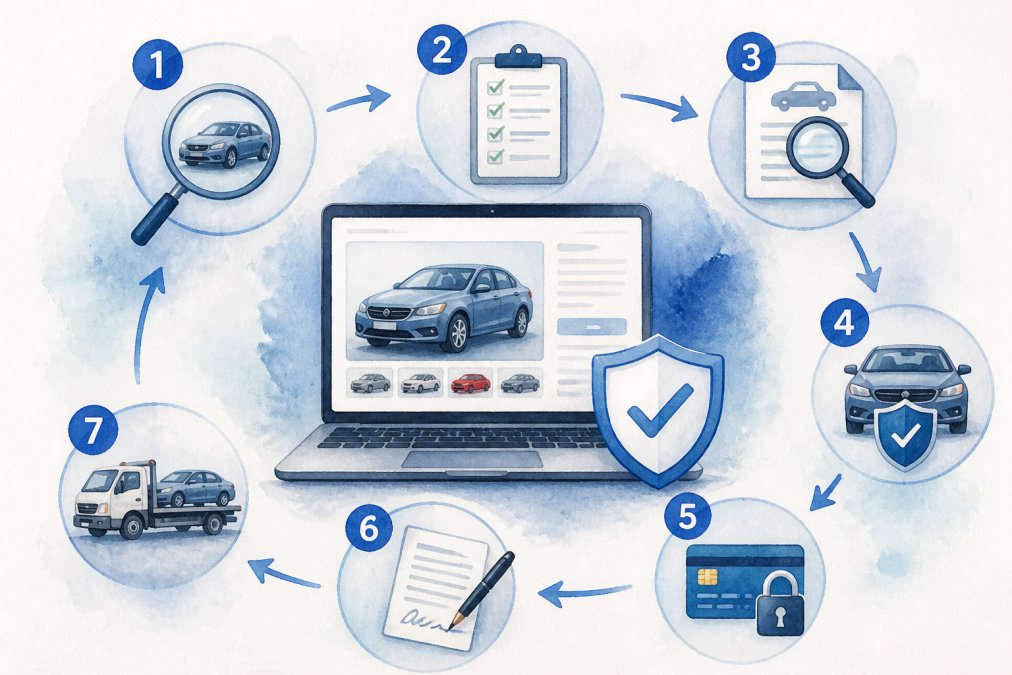
- Step 1: Verify the Seller and Spot Red Flags
- Step 2: Review the Used Car Vehicle History Report
- Step 3: Request and Review Pre-Purchase Inspection Checklist
- Step 4: Conduct a Remote Test Drive or Video Walkthrough
- Step 5: Understand Financing, Fees, and Total Cost
- Step 6: Secure Payment and Use Escrow Services
- Step 7: Handle Title Transfer and Remote Registration
- Frequently Asked Questions
Last Updated: September 1, 2026
Step 1: Verify the Seller and Spot Red Flags
Start by researching the seller's background. For dealerships, check business licensing through your state's motor vehicle department and verify physical address, phone number, and business history. Private party sellers should provide their full name, address, and phone number without hesitation.
Red flags include pressure to wire money immediately, refusal of video calls or in-person inspections, and unusual payment methods. Curbstoners, private individuals reselling auction cars as private sales to avoid dealer regulations, typically advertise multiple vehicles, rotate inventory frequently, and avoid providing their real address.
Be wary of prices significantly below market value, which often indicate hidden problems, salvage title status, or fraud. Cross-reference asking prices against similar models on multiple platforms. If a seller becomes evasive about vehicle history, pricing, or condition, move on.
Verify the seller's identity through video call before committing. Ask them to show the vehicle in their driveway or lot, demonstrate that it starts, and answer specific questions about maintenance records.
Step 2: Review the Used Car Vehicle History Report
A vehicle history report reveals accidents, title issues, service records, and other critical information. These reports aggregate data from insurance companies, repair shops, DMV records, and auction houses, showing the vehicle identification number (VIN), accident history, odometer readings, title status, ownership count, and damage branding.
Pay particular attention to title status. A clean title means no outstanding loans or major damage claims. A salvage title indicates the vehicle was declared a total loss by an insurance company. Rebuilt titles mean the salvage vehicle was repaired and passed inspection but carries significantly lower resale value and may have hidden structural issues. Lien titles show a lender still holds financial interest; you cannot legally own it until that lien is satisfied.
Cross-reference odometer readings in the history with the current reading. Discrepancies suggest odometer fraud, a federal crime. If current mileage is lower than recorded history, walk away immediately.
Look for patterns in service records. Regular maintenance at dealerships or reputable shops suggests the previous owner cared for the vehicle. Long gaps between services or only quick-lube visits may indicate deferred maintenance.
Step 3: Request and Review Pre-Purchase Inspection Checklist
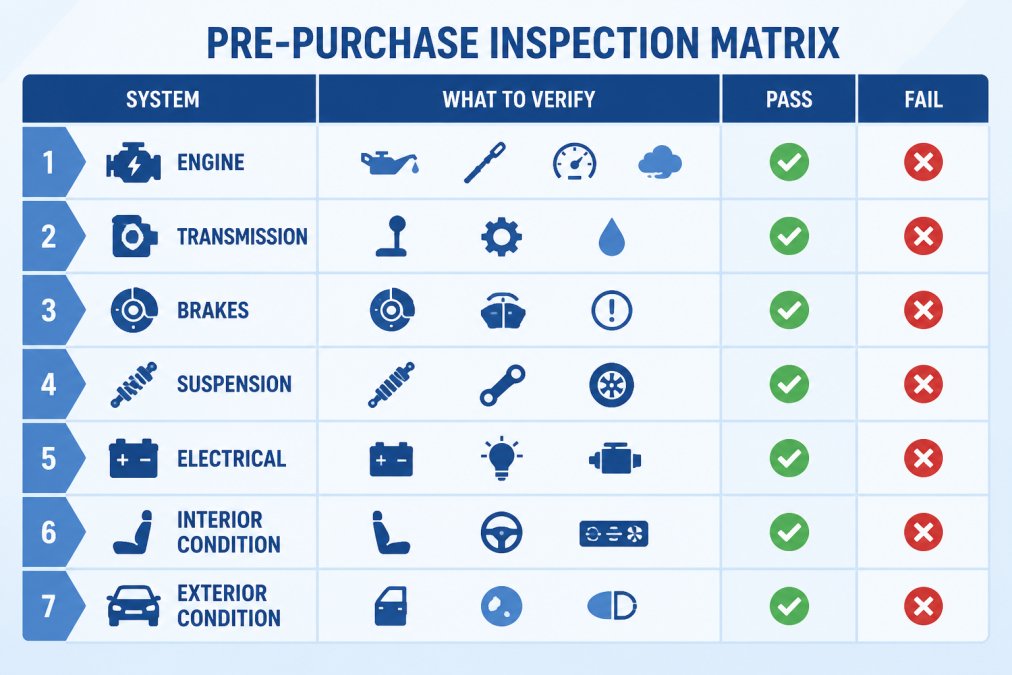
A pre-purchase inspection checklist is your blueprint for evaluating the vehicle's mechanical and structural condition. Request that the seller provide a detailed video walkthrough covering engine, transmission, brakes, suspension, electrical system, interior, and exterior condition. Ask them to start the engine, let it idle, and demonstrate that all warning lights clear.
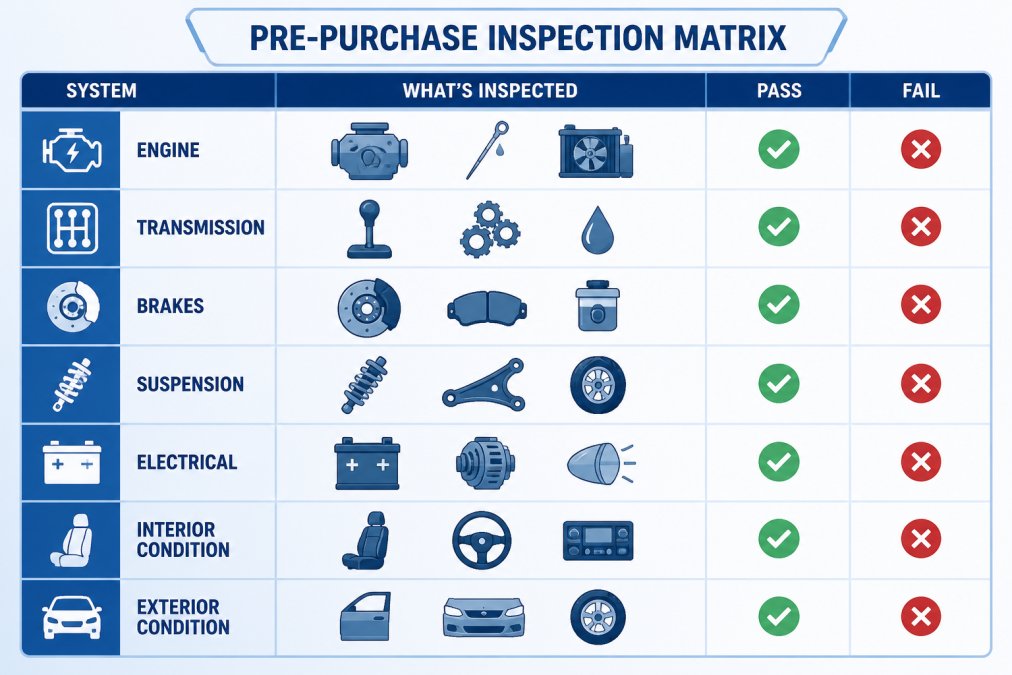
The engine is most critical. Listen for unusual noises, knocking, grinding, or excessive rattling suggests serious problems. Smoke or burning smells indicate internal damage. Check the oil dipstick for color and consistency; dark or sludgy oil points to poor maintenance or engine wear. Ask the seller to rev the engine and hold it at 2,000 RPM for 10 seconds.
Automatic transmissions should shift smoothly without hesitation or jerking. Manual transmissions should engage without grinding. Hesitation during acceleration or lurching when shifting indicates likely transmission repair.
Brakes are a safety issue. Ask the seller to demonstrate firm braking from 30 mph to a complete stop in a straight line. Soft or spongy brake pedal feel indicates air in the system or brake fluid contamination. Grinding sounds mean brake pads are worn to metal.
The suspension keeps the vehicle stable. Look for uneven tire wear suggesting alignment issues or suspension damage. Ask the seller to bounce each corner; it should settle after 2-3 bounces, not continue oscillating. Clunking sounds indicate worn suspension components.
Inspect the body and frame for rust, dents, and repair signs. Misaligned panels, overspray on trim, or welding marks suggest prior accident damage. Check door gaps and ensure they close smoothly.
Step 4: Conduct a Remote Test Drive or Video Walkthrough
Schedule a video call with the seller during natural light. Ask them to walk through the vehicle systematically, starting with exterior, both sides, front, rear, roof, and undercarriage. Have them open the hood and show engine bay, battery condition, fluid levels, and obvious leaks.
Move to the interior. Have the seller demonstrate that all doors open and close smoothly, windows operate without grinding, and locks function. Check seat, carpet, and headliner condition for stains, tears, or odors suggesting water damage. Ask them to sit in the driver's seat, start the engine, and let you observe the dashboard for warning lights. Request demonstration of all controls, wipers, lights, climate control, infotainment, and power features.
For the driving portion, have the seller accelerate smoothly from a stop, drive at highway speed, make gentle turns, and perform moderate braking. Listen for unusual noises, vibrations, or hesitation. Ask them to demonstrate responsive steering and straight tracking without pulling.
Pay attention to how the seller responds to questions. Legitimate sellers appreciate thorough buyers because it reduces post-sale disputes.
Step 5: Understand Financing, Fees, and Total Cost
The advertised price rarely equals the final amount. Request an itemized breakdown of all costs. Sales tax varies by state, ranging from roughly 4% to 10% of purchase price (taxfoundation.org). Registration and title transfer fees typically run $200 to $500 (aamva.org). Documentation fees charged by dealers range from $50 to $300, though some states cap them.
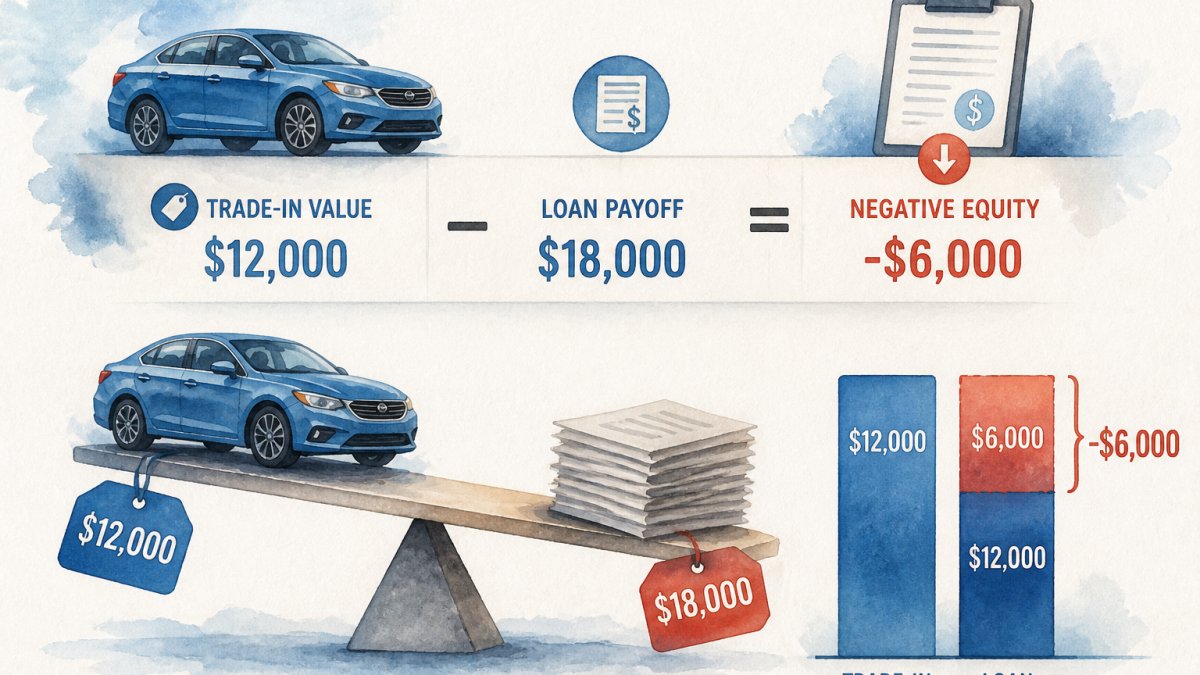
Gap insurance is optional but worth considering. If the vehicle is totaled in an accident while financed, gap insurance covers the difference between what you owe and what insurance pays. Gap insurance typically costs $200 to $600 (naic.org).
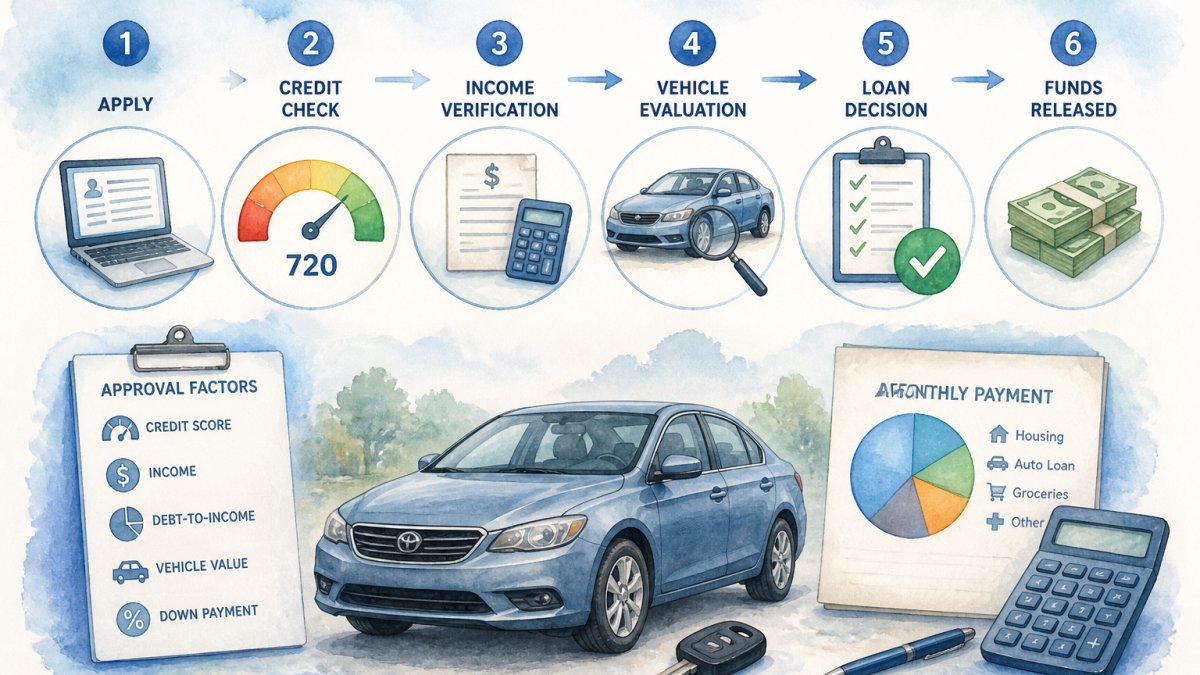
Financing costs depend on your credit score and loan terms. Request a written estimate of monthly payment, interest rate, and total finance charge. Compare offers from multiple lenders, banks, credit unions, and dealer financing may offer different rates.
Ask about dealer-added products or warranties. Extended warranties, paint protection, and undercoating increase final price. Evaluate whether these services justify their cost.
Request a final written estimate including vehicle price, all taxes, all fees, insurance requirements, financing terms, and any warranties or add-ons. Do not proceed without this written estimate.
Step 6: Secure Payment and Use Escrow Services
Escrow services act as neutral third parties that hold your payment until both buyer and seller fulfill obligations. You deposit funds with the escrow service, the seller transfers the vehicle, and once you confirm receipt and condition, the escrow service releases payment to the seller.
Wire transfers offer no buyer protection. Once money leaves your account, it's gone. Never wire money to a private party seller.
Credit cards offer stronger protections. If the dealer charges your card and fails to deliver as promised, you can dispute the charge with your credit card company.
For significant transactions, consider using a service specializing in vehicle escrow. These services charge a fee, typically 1-2% of purchase price, but provide legal documentation, title handling, and dispute resolution.
Verify the seller's identity before any payment. Ask for government-issued ID and cross-reference the name with the vehicle title. Confirm the person is authorized to sell the vehicle.
Step 7: Handle Title Transfer and Remote Registration
Obtain the signed title from the seller before transferring any money. The title should be signed by the current owner and free of liens. If a lien exists, the lender must sign off on the transfer. Never accept a verbal promise that the lien will be cleared.
Verify that the title matches the vehicle's VIN and current mileage. Any discrepancies must be resolved before taking possession.
Complete the bill of sale, a document recording the sale price, date, buyer and seller information, and vehicle details. This creates a legal record protecting both parties.
Obtain proof of insurance before registering the vehicle. Most states require continuous insurance coverage. Contact your insurance agent with the vehicle's VIN, year, make, model, and expected purchase date.
Submit your registration application to your state's DMV along with the title, bill of sale, proof of insurance, and applicable fees. Processing times vary, but most states issue new registration within 2-4 weeks.
If purchasing from out of state, research that state's title transfer requirements. Some states require notarization or inspection before registration.
Buying a used car online safely requires vigilance at every stage, but the process is manageable when you follow a systematic approach. You've learned how to verify sellers, review vehicle history, inspect remotely, understand costs, secure payment, and complete the legal transfer.
AutoSport USA makes this process easier by providing transparent vehicle information, and secure online financing tools. Our team handles the details so you can focus on finding the right vehicle for your needs. When you're ready to move forward with confidence, Apply Online to get started with a dealership that prioritizes your peace of mind.
| Step | Key Action | Protection Level |
|---|---|---|
| Verify Seller | Check licensing, research background, video call | High |
| Review History Report | Check title status, accidents, odometer, liens | High |
| Request Inspection | Video walkthrough of all systems | High |
| Remote Test Drive | Observe acceleration, braking, handling | Medium |
| Understand Costs | Request itemized breakdown, financing terms | High |
| Secure Payment | Use escrow service, verify seller identity | High |
| Complete Registration | Obtain signed title, register with DMV | High |
=== FAQ ANSWERS (audit these too, same rules) ===
[1] Q: How can I verify the history of a used car before purchasing? A: Request a vehicle history report from the seller using the vehicle identification number (VIN). Reports from services like Carfax or AutoCheck show accident history, title status, odometer readings, and previous ownership. Cross-reference the report details against the seller's claims. Check for title issues, flood damage, frame damage, and multiple ownership changes. A clean history doesn't guarantee mechanical condition, so also arrange a pre-purchase inspection by an independent mechanic before committing funds.
[2] Q: What are the biggest risks when buying a used car online? A: Major risks include fraud (curbstoning, odometer rollback), hidden mechanical problems, misrepresented vehicle condition, and unsecured payment methods. You cannot physically inspect the car before paying, making it harder to spot damage or deferred maintenance. Scammers may use stolen photos or describe vehicles inaccurately. Title complications and cross-state registration issues can delay ownership transfer. Mitigate these by verifying seller legitimacy, obtaining a vehicle history report, requesting a professional inspection, and using secure payment methods like escrow services.
[3] Q: How do I avoid being scammed when buying a used car online? A: Verify the seller's legitimacy by checking business registration, reviews, and contact information. Request a vehicle history report and arrange a professional pre-purchase inspection. Never wire money without seeing a bill of sale or purchase agreement. Use escrow services to hold payment until you receive the title and complete the transaction. Avoid deals that seem too cheap compared to market rates. Ask for multiple photos, video walkthroughs, and documentation. Meet in person for final inspection if possible, or hire a local inspector to verify the vehicle's actual condition.
[4] Q: Is it safe to pay for a car online before seeing it in person? A: Paying before inspection carries significant risk. Instead, use a phased payment approach: place a small deposit to secure the listing, arrange a professional inspection at the seller's location or through a third-party service, then complete full payment only after confirming the vehicle matches its description. Escrow services hold your payment until title transfer is complete and you verify ownership. Never wire full payment upfront. If the seller refuses inspection or escrow, that's a red flag. Always obtain a bill of sale and title documentation before releasing final payment.
Frequently Asked Questions
How can I verify the history of a used car before purchasing?
Request a vehicle history report from the seller using the vehicle identification number (VIN). Reports from services like Carfax or AutoCheck show accident history, title status, odometer readings, and previous ownership. Cross-reference the report details against the seller's claims. Check for title issues, flood damage, frame damage, and multiple ownership changes. A clean history doesn't guarantee mechanical condition, so also arrange a pre-purchase inspection by an independent mechanic before committing funds.
What are the biggest risks when buying a used car online?
Major risks include fraud (curbstoning, odometer rollback), hidden mechanical problems, misrepresented vehicle condition, and unsecured payment methods. You cannot physically inspect the car before paying, making it harder to spot damage or deferred maintenance. Scammers may use stolen photos or describe vehicles inaccurately. Title complications and cross-state registration issues can delay ownership transfer. Mitigate these by verifying seller legitimacy, obtaining a vehicle history report, requesting a professional inspection, and using secure payment methods like escrow services.
How do I avoid being scammed when buying a used car online?
Verify the seller's legitimacy by checking business registration, reviews, and contact information. Request a vehicle history report and arrange a professional pre-purchase inspection. Never wire money without seeing a bill of sale or purchase agreement. Use escrow services to hold payment until you receive the title and complete the transaction. Avoid deals that seem too cheap compared to market rates. Ask for multiple photos, video walkthroughs, and documentation. Meet in person for final inspection if possible, or hire a local inspector to verify the vehicle's actual condition.
Is it safe to pay for a car online before seeing it in person?
Paying before inspection carries significant risk. Instead, use a phased payment approach: place a small deposit to secure the listing, arrange a professional inspection at the seller's location or through a third-party service, then complete full payment only after confirming the vehicle matches its description. Escrow services hold your payment until title transfer is complete and you verify ownership. Never wire full payment upfront. If the seller refuses inspection or escrow, that's a red flag. Always obtain a bill of sale and title documentation before releasing final payment.
This article was written using GrandRanker