 ultimate-guide
Tips for First Time Car Buyers: 2026 Guide
Table of Contents
- How to Calculate Car Affordability Before You Shop
- First Time Car Buyer Loan Requirements You Need to Know
- Researching the Right Vehicle for First Time Car Buyers
- Used Car Inspection Checklist: What to Verify Before You Buy
- Test Drive Strategies and Dealer Negotiation Tips
- The Digital-First Buying Process for First Time Car Buyers
- Closing the Deal: Documents, Fees, and Post-Purchase Costs
- Conclusion
Last Updated: August 26, 2026
How to Calculate Car Affordability Before You Shop
First time car buyers make one mistake more than any other: they walk onto a lot without a number in their head. A salesperson will fill that vacuum immediately, and rarely in your favor. At AutoSport USA, we work with buyers at every budget level, and the ones who come in prepared consistently get better deals.
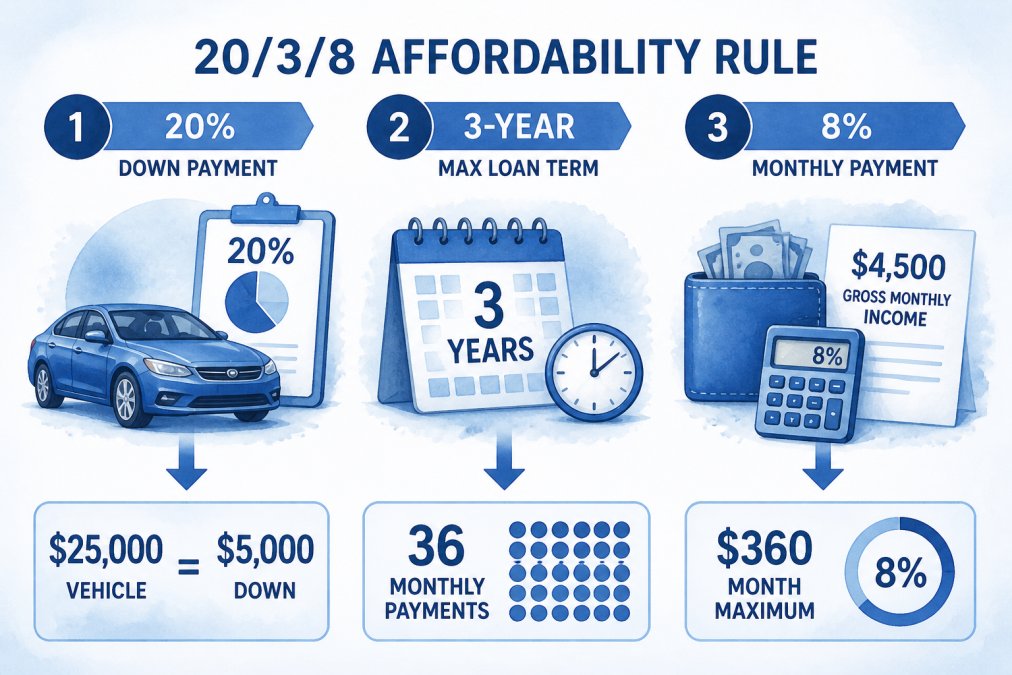
The 20/3/8 Rule Explained
The 20/3/8 rule is a practical budgeting framework: put at least 20% down, finance for no more than 3 years, and keep your monthly payment at or below 8% of your gross monthly income.
Many financial planners treat this as the ceiling, not the target. If your monthly payment would exceed 8% of what you earn before taxes, the vehicle is outside your realistic budget, regardless of what a lender will approve.
The 20% down payment reduces your loan principal immediately, lowering both your monthly payment and total interest paid. It also protects you from being "upside down" on the loan, owing more than the car is worth, a serious problem if the vehicle is totaled early in the loan.
A 3-year loan term is shorter than what many dealers will push. Longer terms lower the monthly payment but dramatically increase total interest paid. Run the numbers both ways before agreeing to anything.
Total Cost of Ownership: Beyond the Sticker Price
The sticker price is the least useful number on the lot. Total cost of ownership includes fuel, insurance premiums, routine maintenance, registration fees, and depreciation.
As documented in Consumer Reports' vehicle reliability and ownership cost data, ownership costs vary significantly by make, model, and vehicle age. A lower-priced vehicle can easily cost more over five years than a more expensive one with lower insurance premiums and stronger reliability.
Before committing to any model, estimate:
- Fuel costs: Annual mileage divided by MPG, multiplied by local gas prices
- Insurance premiums: Get quotes for the specific VIN before you buy
- Scheduled maintenance: Check the manufacturer's service intervals
- Registration: Varies by state and vehicle value
- Depreciation: Some models lose value far faster than others
Certified pre-owned vehicles often win on paper, even at a higher sticker price.
First Time Car Buyer Loan Requirements You Need to Know
Most first time car buyers underestimate how much their financing terms affect the total cost. The interest rate matters more than the monthly payment figure a dealer quotes.
Credit Score, Co-Signers, and Pre-Approval
Your credit score determines the APR you'll be offered, which determines how much you'll actually pay for the vehicle over the life of the loan. If your credit history is thin or includes past issues, a co-signer with stronger credit can help you qualify for better terms.
Pre-approval through a bank or credit union before visiting a dealership gives you a baseline rate to compare against dealer financing. It also signals to the dealer that you're a serious, prepared buyer.
According to the Consumer Financial Protection Bureau's auto loan guidance, borrowers who shop multiple lenders before accepting financing consistently pay less over the loan term.
Understanding APR, Loan Terms, and Monthly Payments
APR (Annual Percentage Rate) is the true cost of borrowing, expressed as a yearly rate. It includes the interest rate plus any lender fees. Always compare APR across offers, not just the monthly payment.
The loan principal is the amount you borrow after your down payment. Stretching the loan term reduces the monthly payment but increases total interest paid. A $20,000 loan will cost meaningfully more over 60 months than over 36 months, even though the monthly payment looks lower.
Gap insurance covers the difference if your vehicle is totaled and you owe more on the loan than the car's current value. For buyers with small down payments or long loan terms, this coverage can prevent significant financial loss.
Researching the Right Vehicle for First Time Car Buyers
Start with reliability data and ownership costs, then narrow by features and style. Aesthetics should come last.
Certified Pre-Owned vs. Private Party Sale
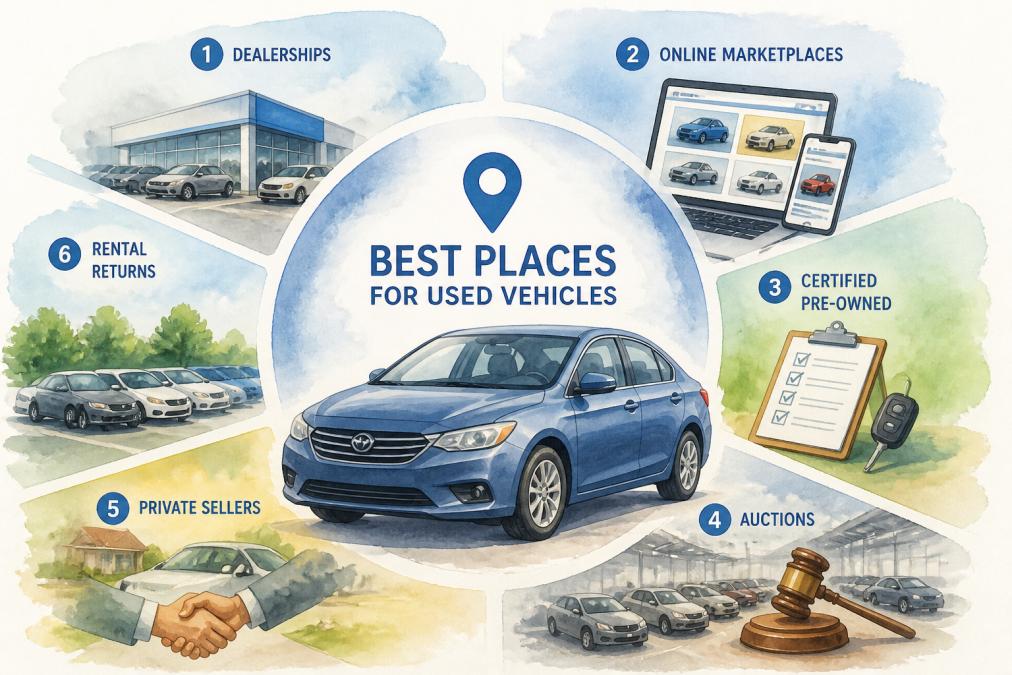
Certified pre-owned (CPO) vehicles have passed a manufacturer-approved inspection and typically come with an extended warranty. They cost more than comparable non-certified used vehicles, but the inspection history and warranty reduce the risk of unexpected repair costs.
Private party sales carry more risk but often offer lower prices. There's no dealer markup, but there's also no warranty or inspection guarantee. A vehicle history report and an independent pre-purchase inspection are non-negotiable.
For first time car buyers, CPO vehicles from a reputable dealership often represent the better balance of price and protection.
Electric Vehicle Considerations for First-Time Buyers
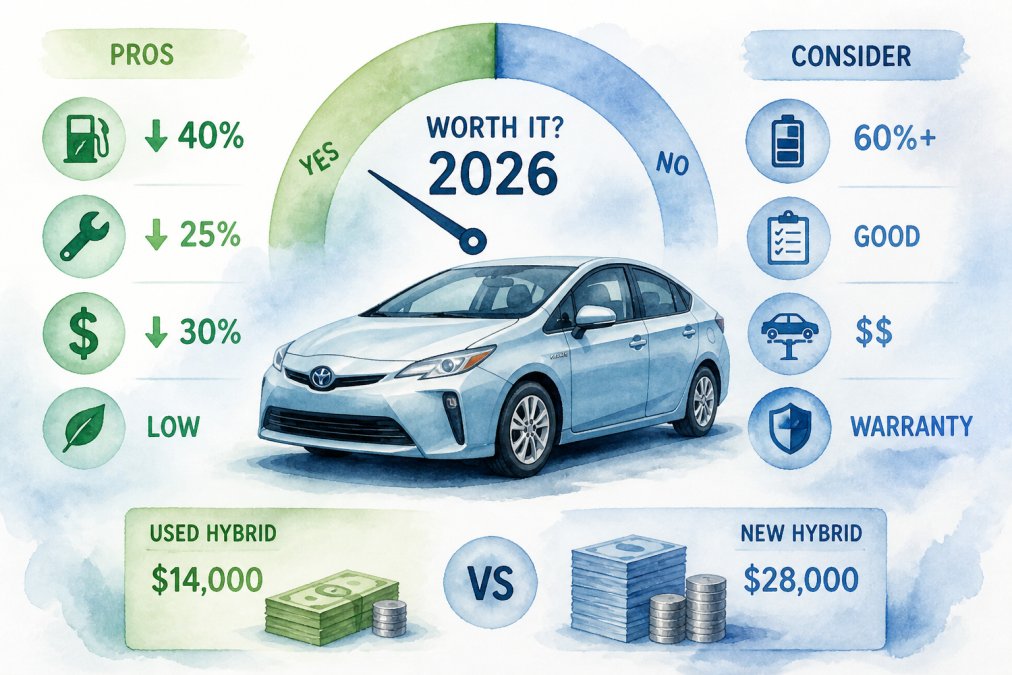
EVs deserve a separate conversation because the ownership math is genuinely different. The purchase price is often higher, but fuel and routine maintenance costs are substantially lower.
Critical questions for first time car buyers considering an EV:
- Range: Does the vehicle's range cover your typical daily driving with margin to spare?
- Charging infrastructure: Do you have access to home charging? What's the public charging situation in your area?
- Federal tax credits: The IRS clean vehicle credit guidance outlines income limits and vehicle eligibility that can reduce the effective purchase price
- Battery replacement costs: Understand the battery warranty and out-of-warranty replacement costs
- Depreciation: Check current resale data for specific models
EVs are strong for buyers with predictable commutes and home charging access. They're harder for buyers who take frequent long trips or live in areas with limited charging infrastructure.
Used Car Inspection Checklist: What to Verify Before You Buy
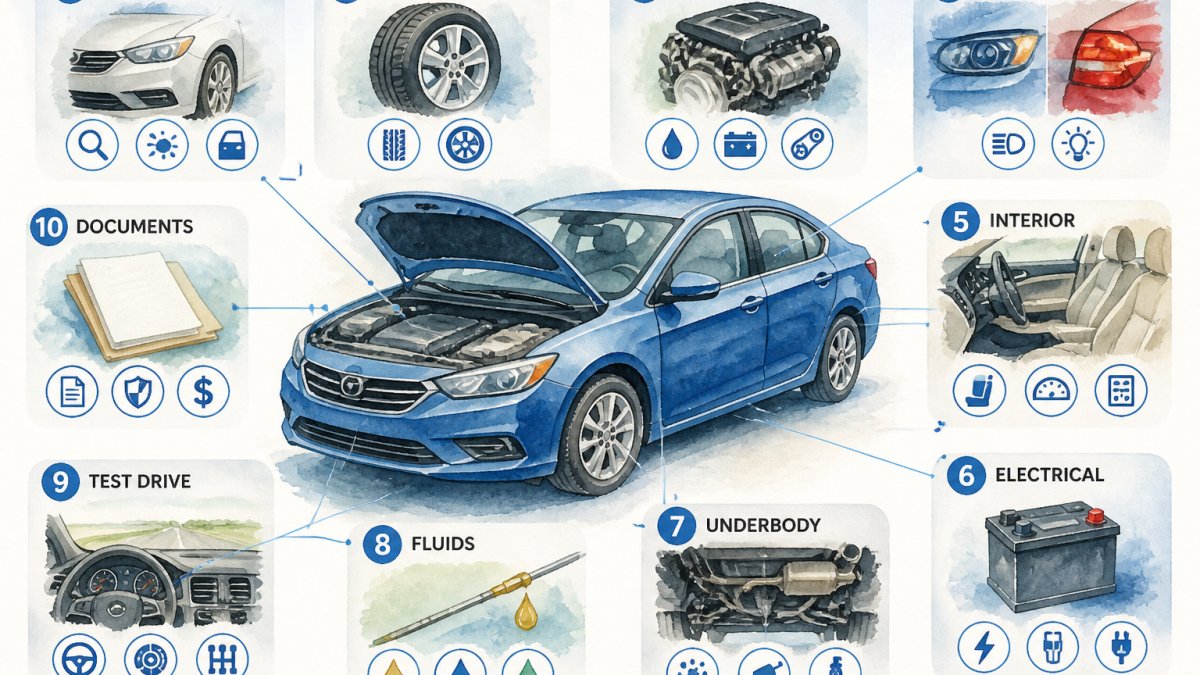
Never skip a physical inspection, even on a certified pre-owned vehicle.
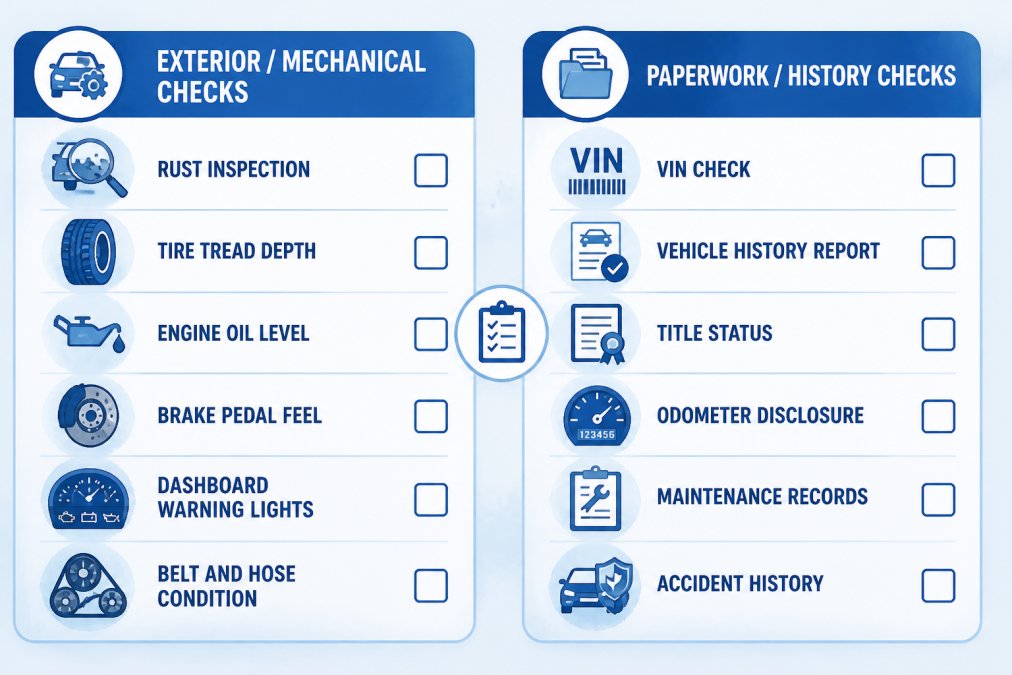
Exterior:
- Rust on the undercarriage, wheel wells, and door sills
- Panel gaps that suggest accident repair
- Paint inconsistencies across body panels
- Windshield chips and cracks
- Tire tread depth and even wear
Mechanical:
- Engine oil condition and level
- Coolant, brake fluid, and transmission fluid condition
- Belt and hose condition
- Dashboard warning lights
- Brake pedal feel and parking brake function
Interior:
- All electronics: windows, locks, infotainment, climate control
- Seat adjustment mechanisms
- Odometer reading consistency with wear patterns
Paperwork:
- Title status (clean, salvage, rebuilt)
- Odometer disclosure statement
- Maintenance records
Vehicle History Report and VIN Check
A vehicle history report is non-negotiable in any used car purchase. The VIN (Vehicle Identification Number) is a 17-character identifier unique to each vehicle. Running a VIN check reveals accident history, title status, odometer readings, and prior ownership.
Pay particular attention to salvage or rebuilt titles. A salvage title means the vehicle was declared a total loss by an insurance company. A rebuilt title means it was subsequently repaired and passed a state inspection. Both significantly affect resale value and can indicate structural issues.
Test Drive Strategies and Dealer Negotiation Tips
A test drive is not a formality. It's your primary diagnostic tool.
Drive the vehicle in conditions that match your actual use. If you commute on a highway, get it up to highway speeds. If you park in tight spaces, test the turning radius. Test every feature: the HVAC, infotainment, backup camera, and cruise control.
On negotiation: the final price is what matters, not the monthly payment. Dealers can manipulate monthly payments by adjusting the loan term while keeping the total price high. Agree on the purchase price first, then discuss financing separately.
Useful negotiation positions:
- Arrive with a pre-approved loan offer to anchor the conversation
- Know the fair market value for the specific vehicle before you walk in
- Be willing to walk away
- Dealer fees are often negotiable; ask for an itemized breakdown
Psychological Tactics Sales Staff Use (and How to Counter Them)
The urgency play: "This car won't last the weekend." Counter it by slowing down. A good deal will still be good tomorrow.
The monthly payment focus: Shifting to monthly payment obscures actual cost. Always convert back to total price and total interest paid.
The four-square method: A worksheet bundling trade-in value, purchase price, down payment, and monthly payment into a single negotiation. Negotiate each element separately.
The add-on close: Extended warranty, paint protection, and gap insurance presented at signing. Research these products in advance so you're not making decisions under pressure.
The Digital-First Buying Process for First Time Car Buyers
The car buying process has shifted significantly online. First time car buyers who use digital tools effectively arrive at the dealership in a far stronger position.
Start with online research: reliability ratings, ownership cost comparisons, and fair market value tools. Many dealerships, including AutoSport USA, offer online financing applications, trade-in valuation tools, and vehicle finder features.
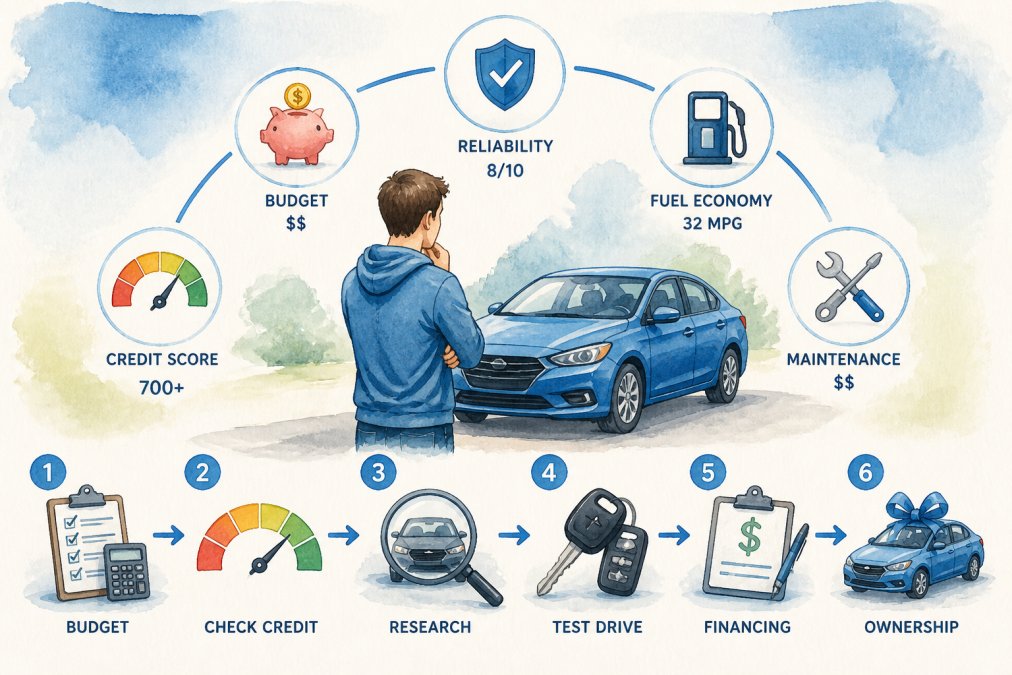
A digital-first approach for first time car buyers looks like this:
| Step | Action | Tool/Resource |
|---|---|---|
| 1. Set budget | Apply 20/3/8 rule | Spreadsheet or online calculator |
| 2. Check credit | Pull credit report | AnnualCreditReport.com |
| 3. Get pre-approved | Apply to 2-3 lenders | Bank, credit union, dealer |
| 4. Research models | Compare reliability and costs | Consumer Reports, manufacturer sites |
| 5. Check inventory | Search online listings | Dealer websites, aggregators |
| 6. Run VIN check | Pull vehicle history | Reputable VIN check services |
| 7. Inspect in person | Schedule test drive | Dealership appointment |
| 8. Negotiate and close | Price first, financing second | In person or online |
Completing steps 1 through 6 digitally means you arrive at step 7 with all the information you need. You're confirming what you already know, not discovering the vehicle's history at the dealership.
Closing the Deal: Documents, Fees, and Post-Purchase Costs
Closing day has its own set of traps. Know what you should be signing and what the fees represent.
Documents you'll receive:
- Bill of sale: The formal record of the transaction, including purchase price and VIN
- Title transfer: The document that transfers legal ownership to you
- Financing agreement: The complete loan terms, including APR, loan principal, monthly payment, and total amount financed
- Registration paperwork: Filed with your state's DMV to register the vehicle in your name
Dealer fees vary. Ask for an itemized list before signing. Documentation fees, title fees, and registration fees are standard. "Dealer prep fees" and "market adjustment" fees are negotiable or avoidable.
Post-purchase costs many first time car buyers don't fully anticipate:
- Insurance: Your premium changes the moment you own the vehicle. Get quotes before closing.
- Maintenance schedule: Follow the manufacturer's recommended intervals from day one.
- Registration renewal: An annual cost that varies by state and vehicle value
- Unexpected repairs: An emergency fund covering potential repair costs is practical, especially for used vehicles outside of warranty
As noted in the FTC's guide to buying a new car, reviewing all financing documents carefully before signing is essential. If anything differs from what was verbally agreed, stop and ask for clarification.
Handle the trade-in process as a separate transaction from the purchase. Know your vehicle's approximate value before the appraisal. Bundling trade-in and purchase negotiations makes it harder to evaluate whether you're getting a fair outcome on either side.
Frequently Asked Questions
What is the biggest mistake first-time car buyers make?
The most common mistake is focusing only on the monthly payment instead of the total loan cost. A dealer can extend your loan term to lower the monthly payment while significantly increasing the amount you pay in interest over time. Always calculate the full loan principal plus interest before agreeing to any financing terms. Getting pre-approved through your bank or credit union before visiting a dealership gives you a clear ceiling and prevents this trap.
What is the 20/3/8 rule for buying a car?
The 20/3/8 rule is a budgeting guideline for first time car buyers: put at least 20% down, finance for no longer than 3 years, and keep your monthly payment at or below 8% of your gross monthly income. Following this rule limits depreciation risk, reduces total interest paid, and keeps your car expense from crowding out other financial priorities. It works for both new and used vehicle purchases.
Do I need a co-signer for my first car loan?
Not always, but a co-signer can help if your credit score is thin or you have past credit issues. A co-signer with strong credit can secure a lower APR and better financing terms, reducing your total loan cost. Some dealerships offer guaranteed credit approval programs specifically designed for first-time buyers or buyers rebuilding credit, which removes the need for a co-signer entirely. Check what programs are available before assuming you need one.
How much should a first-time car buyer put down?
A down payment of at least 10-20% of the vehicle's purchase price is the standard recommendation. A larger down payment lowers your loan principal, reduces monthly payments, and protects you from being upside-down on the loan if the car depreciates quickly. For used vehicles, even a modest down payment matters because used cars can lose value faster in the first year. If your trade-in has equity, that amount can count toward your down payment.
What documents do I need to bring to the dealership?
Bring a valid government-issued photo ID, proof of income (recent pay stubs or tax returns), proof of insurance or your insurance agent's contact information, and your pre-approval letter if you have one. If you're trading in a vehicle, bring the title and any loan payoff information. Having these ready speeds up the financing and title transfer process and prevents delays on the day you close the deal.
What should a used car inspection checklist include?
A solid used car inspection checklist covers exterior rust and panel gaps, tire tread depth and wear patterns, all lights and electronics, fluid levels and any leaks, brake condition, transmission smoothness during a test drive, and HVAC function. On the paperwork side, always run a VIN check and pull a vehicle history report to confirm accident history, odometer accuracy, and whether the title is clean. A pre-purchase inspection by an independent mechanic adds another layer of protection.
Buying a used vehicle is one of the larger financial decisions most people make, and the process rewards preparation more than enthusiasm. AutoSport USA offers online financing tools, a vehicle finder, and trade-in valuations designed to help first time car buyers complete as much of the process as possible before the dealership visit. Apply online to get your financing started, or use the inventory search to find vehicles that match your budget and needs before you schedule a test drive.
This article was written using GrandRanker