 how-to
How to Get Pre-Approved for a Used Car Loan Online
Table of Contents
- Step 1: Check Your Credit and Set Your Budget
- Step 2: Understand the Difference Between Pre-Qualification and Pre-Approval
- Step 3: Gather the Documents Needed for an Auto Loan Application
- Step 4: Apply Online and Compare Offers
- Used Car Financing for Bad Credit: What to Expect
- Step 5: Use Your Pre-Approval as a Negotiation Tool
- Private Party vs. Dealer: How Pre-Approval Works for Each
- Troubleshooting a Denied Application and Protecting Your Documents
- Frequently Asked Questions
Last Updated: September 20, 2026
Step 1: Check Your Credit and Set Your Budget
Learning how to get pre-approved for a used car loan online starts with two numbers: your credit score and your monthly budget. Pull your free credit report from AnnualCreditReport.com, the official site backed by the three major credit bureaus. Look for errors, old balances, and anything that does not belong to you.
- Check all three credit reports for mistakes
- Note your score from each bureau
- Add up your monthly take-home income
- Subtract rent, utilities, and other fixed bills
- Decide on a down payment amount
Step 2: Understand the Difference Between Pre-Qualification and Pre-Approval
The difference between pre-qualification and pre-approval comes down to how deep the lender looks. Pre-qualification is a quick estimate based on basic info you provide. Pre-approval is a real decision after a full review of your credit and income.
| Feature | Pre-Qualification | Pre-Approval |
|---|---|---|
| Credit check | Soft pull | Hard inquiry |
| Documents needed | None | Pay stubs, ID, proof of income |
| Time to complete | Minutes | Same day to a few days |
| Result | Estimated loan amount | Firm offer with a rate |
| Effect on credit score | None | Small, short-term dip |
Step 3: Gather the Documents Needed for an Auto Loan Application
The documents needed for an auto loan application are simple, but missing one slows everything down. Have these ready:
- Government-issued photo ID
- Proof of income, such as recent pay stubs or a W-2 form
- Bank statements from the last two to three months
- Proof of residency, like a utility bill or lease
- Current vehicle info if you plan to trade in
- Insurance details
Step 4: Apply Online and Compare Offers
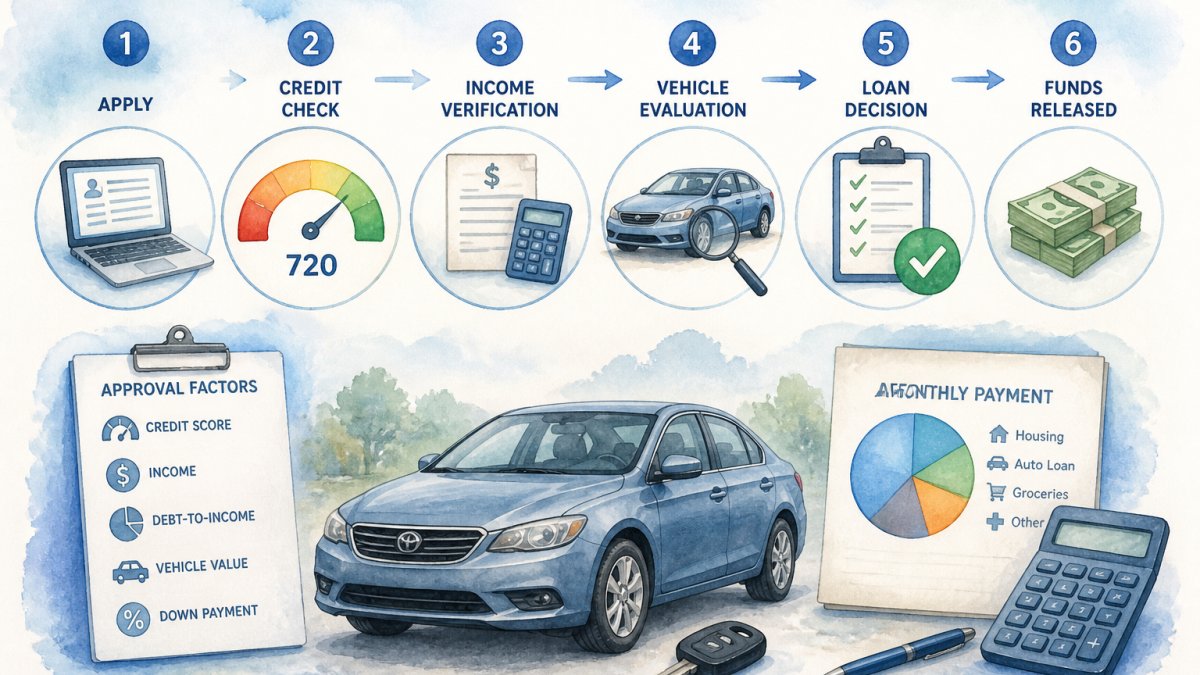
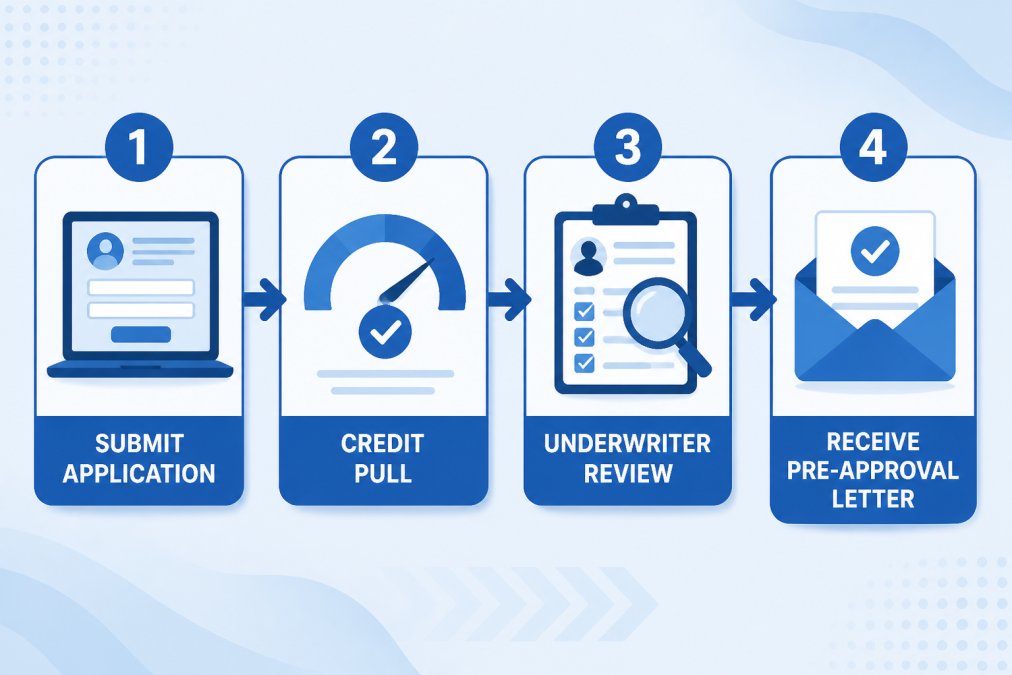
Applying online takes about 15 minutes once your documents are ready: submit your application, the lender runs a credit pull, an underwriter reviews your file, and you get a pre-approval letter.
Compare each offer on:
- Annual percentage rate, not just the base interest rate
- Loan term length
- Monthly payment
- Total cost over the life of the loan
Used Car Financing for Bad Credit: What to Expect
Used car financing for bad credit is possible, but expect a higher rate and a bigger down payment, since lenders see past credit issues as risk.
What helps your case:
- A larger down payment, which lowers the loan amount
- Proof of steady income, even if your score is low
- A shorter loan term, which lowers lender risk
- Paying down other debts first to improve your debt-to-income ratio
Step 5: Use Your Pre-Approval as a Negotiation Tool
Most guides stop when the pre-approval letter lands in your inbox, but that is the halfway point. The letter is leverage, and how you deploy it decides whether you save hundreds or thousands over the life of the loan.
The four numbers you need before you talk price
- Your pre-approved APR and term. Write them down. This is your ceiling, not your target.
- Your maximum monthly payment. Keep it to yourself.
- The out-the-door (OTD) price you are willing to pay. OTD includes sales tax, title, registration, and dealer doc fees, not just the sticker.
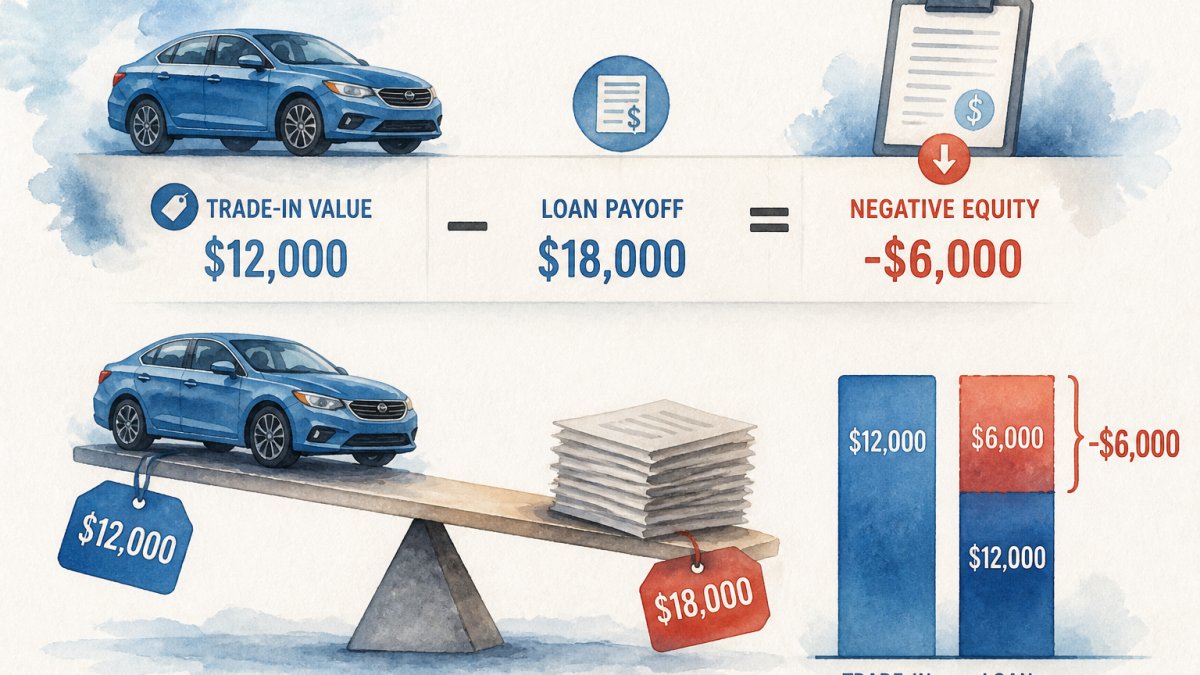
- The trade-in value from a third party. Get a written offer from a service like CarMax or Carvana first. That number is your floor when the dealer appraises your car.
Scripts that work
Negotiation is not about being aggressive. It is about being specific and unhurried.
- Opening: "I'm pre-approved through my own lender, so I'm only shopping on out-the-door price today. What's your best OTD number on this vehicle?"
- When they quote a monthly payment: "I'm not shopping on monthly payment. Give me the OTD price and the doc fee in writing."
- When they offer to beat your rate: "Great, put the APR and term in writing on a buyer's order and I'll compare it to my pre-approval." Then actually compare: a dealer can sometimes beat a bank rate, but they can also stretch the term to make the payment look smaller. Compare total cost, not payment.
- When they push add-ons: "I'll consider those after we agree on the OTD price." Add-ons are almost always cheaper elsewhere, and some, like gap insurance, you can buy from your own insurer for less.
The walk-away is your strongest move
Your pre-approval letter typically stays valid for 30 to 90 days, so you are not on the dealer's clock. If the OTD price is above your number, thank them, leave your phone number, and walk. Many buyers report a callback within 24 hours with a better number, the last week of the month is often the softest.
What not to do
- Do not hand over your pre-approval letter until you have agreed on the OTD price. The letter shows your maximum, and a skilled salesperson will anchor to it.
- Do not negotiate at the dealership on a Saturday afternoon when the showroom is full. Go on a weekday morning when the sales floor is quiet and the manager has time to say yes.
- Do not sign anything, including a "test drive agreement" or "intent to purchase", until you have read it. Some of these forms contain financing contingencies that lock you into the dealer's lender.
Private Party vs. Dealer: How Pre-Approval Works for Each
A pre-approval letter is not a blank check you can hand to anyone. Where you buy, a dealer or a private seller, changes what your lender will fund, how the money moves, and how much paperwork lands on your desk.
Dealer purchase
With a dealer, the finance office handles almost everything: you hand over your pre-approval letter, the dealer prepares a buyer's order, and your lender wires the funds directly to the dealership. The dealer processes the title transfer and collects sales tax and registration in most states. Expect a documentation fee (often $85 to $500) plus any dealer-installed add-ons.
Private party purchase
This is where buyers get stuck. A private seller is an individual, not a business: they cannot run your credit or process a title transfer, and they usually want cash or a cashier's check before handing over the keys. Your lender has to bridge that gap.
What to expect:
- Lender restrictions on the vehicle. Many lenders will not finance private-party vehicles older than a certain age or above a certain mileage, commonly 10 years or 100,000 miles, though this varies widely. Some lenders do not finance private-party sales at all. Confirm your lender's rules before you fall in love with a car.
- The lender pays the seller directly. You will typically need to provide the vehicle identification number (VIN), the seller's full legal name and address, a signed bill of sale, and a copy of the title. The lender then sends funds to the seller, by wire, cashier's check, or in some cases a draft the seller can cash at a branch.
- Title and lien handling. If the seller has an outstanding loan on the car, their lender holds the title. You and the seller will need to coordinate a payoff, sometimes through an escrow service, so the lien is released and a clean title is transferred to you. Do not hand over money for a car with an unreleased lien.
- You handle the DMV. In most states, you visit the motor vehicle office yourself to transfer the title and pay sales tax and registration. Some states require the seller's signature on the title in front of a notary. Check your state's rules before the sale.
- Payment timing. Because the lender pays the seller, there is often a gap of one to three business days between when you sign and when the seller gets paid. Some sellers will not release the car until funds clear. Agree on this in writing before the sale.
Side-by-side
| Factor | Dealer Purchase | Private Party Purchase |
|---|---|---|
| Paperwork | Dealer handles most | You handle most |
| Title transfer | Dealer processes | You visit the DMV |
| Lender payment | Wired to dealer | Wired or sent to seller |
| Vehicle age/mileage limits | Rarely an issue | Common lender restriction |
| Lien payoff | Dealer coordinates | You and seller coordinate |
| Inspection | Often included | You arrange and pay |
| Negotiation | Price plus fees | Price only |
| Sales tax | Collected by dealer | You pay at the DMV |
The inspection is non-negotiable
For any private sale, pay a mechanic you choose, not one the seller recommends, to do a pre-purchase inspection. Expect to spend $100 to $200 for a written report covering frame damage, flood history, odometer tampering, and pending recalls a test drive will never reveal.
One more thing: gap coverage
On a used car, the moment you drive it off the lot (or out of the seller's driveway), it depreciates. If you financed most of the purchase price and the car is totaled or stolen, your insurance payout may be less than what you still owe. Gap insurance covers that difference. Some lenders include it; others sell it as an add-on.
Troubleshooting a Denied Application and Protecting Your Documents
A denied application is not the end. Ask the lender why in writing. They must tell you the reason under the Fair Credit Reporting Act. Common reasons include a low score, high debt-to-income ratio, or thin credit history.
Fix what you can:
- Pay down credit card balances
- Dispute errors on your credit report
- Add a co-signer with strong credit
- Save a larger down payment
- Wait a few months and reapply
Frequently Asked Questions
How do I get preapproved for a used car loan?
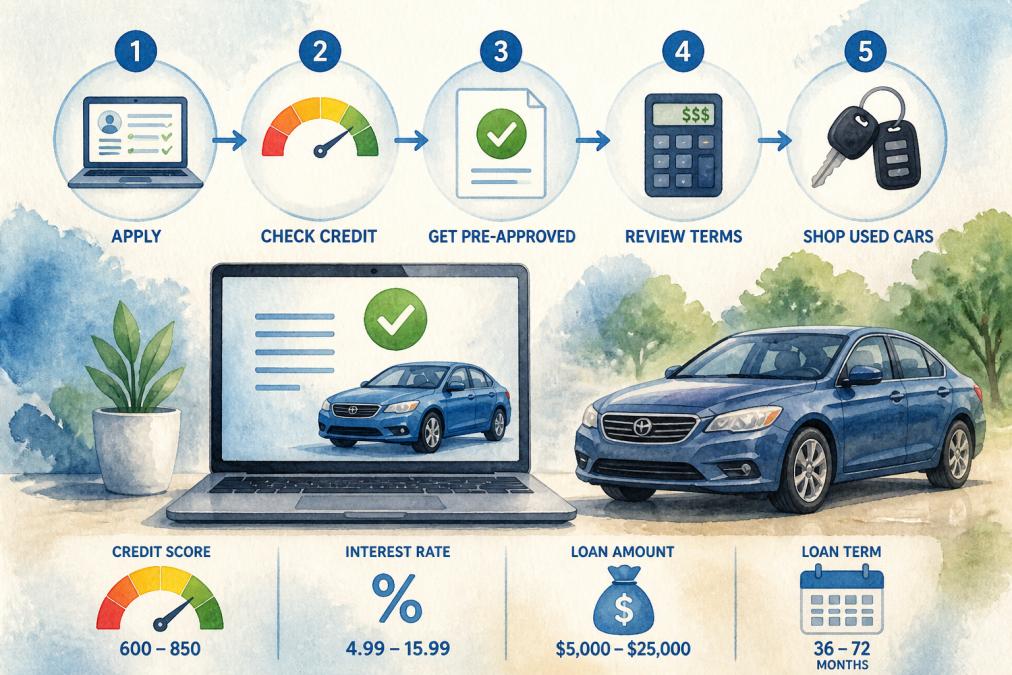
Start by checking your credit score and setting a realistic budget. Gather proof of income, residency, and vehicle details. Then apply online with multiple lenders or a dealership's financing portal. The process typically takes 15 to 30 minutes and results in a pre-approval letter you can use to shop. Remember that a pre-approval is not a final guarantee; the lender will verify information before closing.
What credit score is needed for car pre-approval?
Most lenders look for a credit score of at least 600, but some programs accept lower scores with a larger down payment or a co-signer. For used car financing for bad credit, expect higher interest rates and stricter income verification. Checking your credit report before applying helps you spot errors that could lower your score and improve your chances.
How long does the online pre-approval process take?
Online pre-approval usually takes 15 to 30 minutes to complete the application. Some lenders provide an instant decision, while others may take a few hours or up to one business day. Having your documents ready, such as pay stubs and proof of residency, speeds up the process. A soft credit pull is often used initially, so it won't affect your credit score.
What documents do I need for used car loan pre-approval?
You'll need a valid driver's license, proof of income (recent pay stubs or W-2 forms), proof of residency (utility bill or lease), and vehicle information including the VIN and mileage. If you're self-employed, have tax returns ready. Some lenders may also ask for a down payment amount and insurance details. Having these ready online makes the application smoother.
Getting pre-approved for a used car loan online takes planning, but it puts you in control of the deal. AutoSport USA makes it easy with online financing tools, fair trade-in valuations, and a wide inventory of quality used vehicles. Apply online today and see your options before you shop.