 how-to
Can You Trade In a Car With Negative Equity?
Last Updated: October 24, 2026
Quick Summary
You can trade in a car with negative equity by rolling the shortfall into your new loan, paying the difference in cash, or waiting and paying down the existing loan first. Rolling the balance works, but you start the new loan upside down again and pay more total interest. Get a written payoff quote and at least two trade-in appraisals before you decide.
- Calculate negative equity by subtracting your car's trade-in value from your loan payoff amount.
- Request a written payoff quote with a good-through date, usually valid for 10 to 30 days.
- In the example, rolling $6,000 into a new loan added roughly $7,470 in total cost versus paying cash.
- Most lenders cap the amount financed at a loan-to-value ratio, commonly between 110% and 125% of value for strong credit.
- A trade-in usually does not make sense when the only goal is a lower monthly payment.
Table of Contents
- What Negative Equity Means for Your Trade-In
- How to Calculate Negative Equity on a Car
- Verify the Numbers: Payoff Amount and Trade-In Value
- Rolling Negative Equity Into a New Car Loan
- A Negative Equity Trade-In Example, Run Three Ways
- How to Get Out of Negative Equity on a Car
- Contract Terms and Payment-Protection Traps to Check
- Get Your Trade-In Appraised Before You Decide
- Frequently Asked Questions
What Negative Equity Means for Your Trade-In
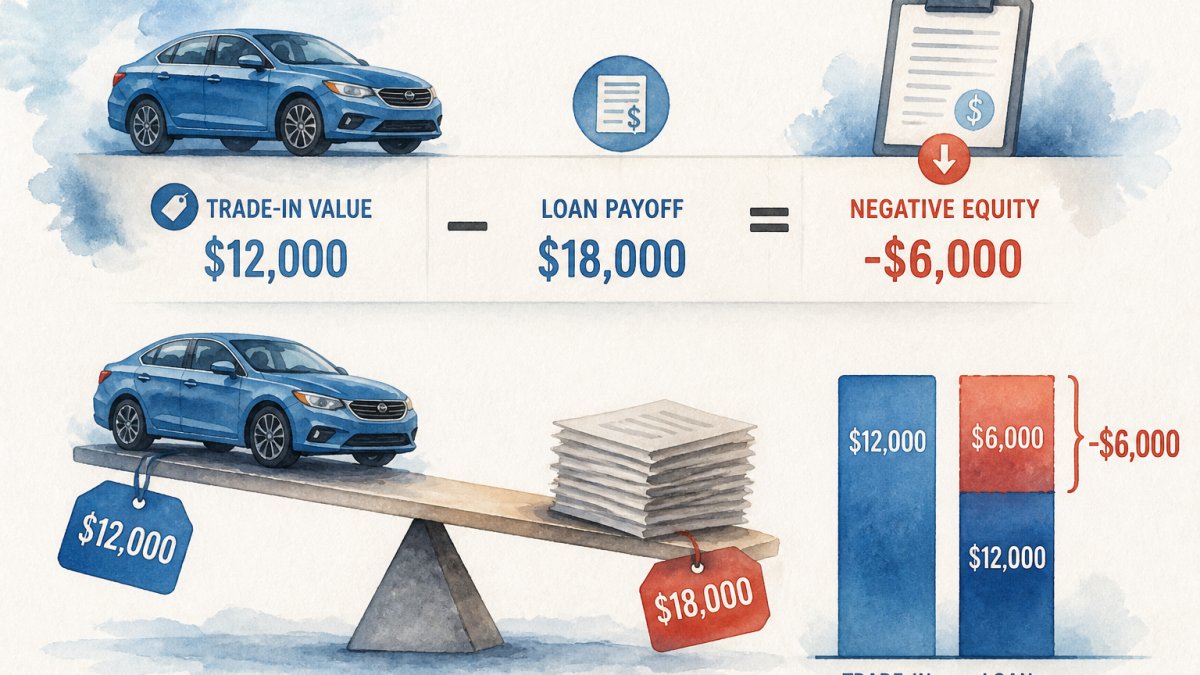
Negative equity means you owe more on your auto loan than the car is worth as a trade-in (Auto Trade-Ins and Negative Equity: When You Owe More than Your Car is Worth). If your loan payoff is higher than your vehicle value, you are "upside down," and that gap does not disappear when you hand over the keys. The good news is that you can still trade in a car with negative equity. You just need to understand the math before you sign anything. Below, we walk through how to trade in a car with negative equity step by step, including how to calculate the gap, verify the numbers, and compare your options.
How to Calculate Negative Equity on a Car
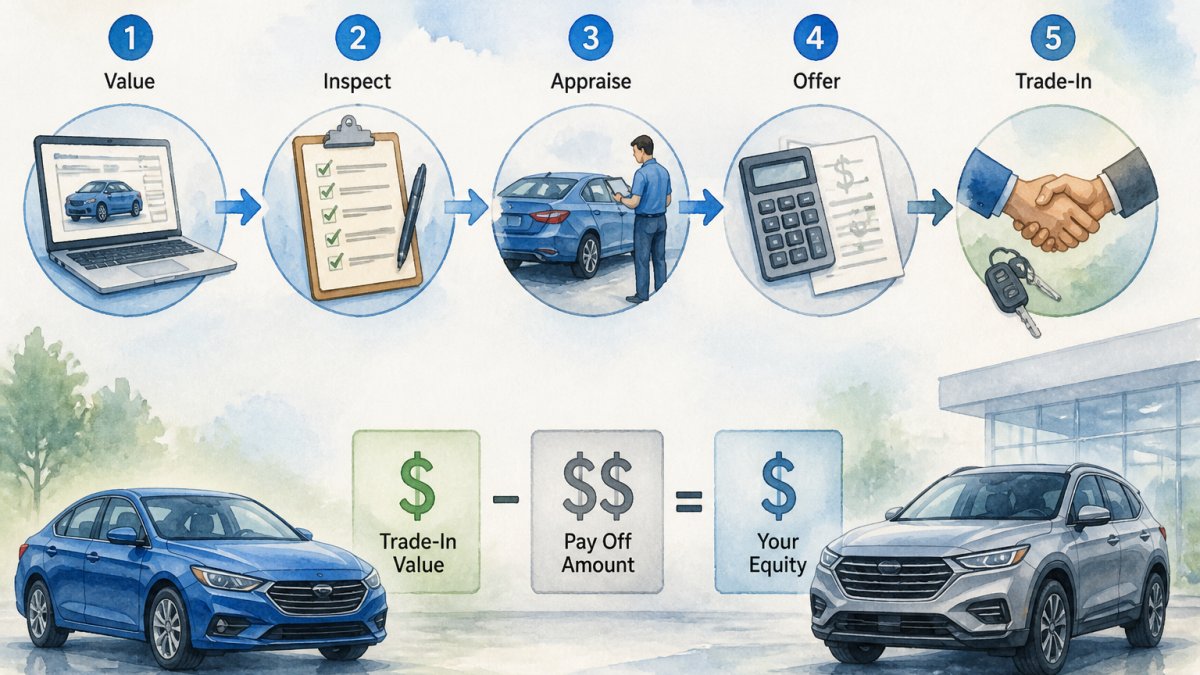
The formula is simple: subtract your car's trade-in value from your loan payoff amount. That difference is your negative equity.
Here is how to calculate negative equity on a car in three steps:
- Find your current payoff amount, not your remaining balance on the last statement.
- Get a written trade-in offer for the vehicle.
- Subtract the trade-in value from the payoff amount.
If the payoff is higher, you have negative equity. If the trade-in value is higher, you have positive equity. A common mistake is using the payoff figure from an old statement. Interest accrues daily, so the real number is usually a little higher.
Verify the Numbers: Payoff Amount and Trade-In Value
Guessing at either number is how deals fall apart at the finance desk. Verify both in writing before you negotiate.
Getting the Loan Payoff Amount in Writing
Call your lender and request a written payoff quote with a good-through date, usually valid for 10 to 30 days. Ask whether it includes per-diem interest and any early payoff fees. This written figure is what the dealer will use, and it protects you from surprises.
Confirming the Vehicle's Trade-In Value
Get at least two independent appraisals, and check which factors drive your car's trade-in value so you know what a fair offer looks like. Condition, mileage, accident history, and local demand all move the number. A dealer appraisal based on a quick walkaround is a starting point, not gospel.
Rolling Negative Equity Into a New Car Loan
Rolling negative equity into a new car loan means adding the shortfall to your new loan balance. It works, but it comes with a catch: you start the new loan owing more than the car is worth, which is called being upside down again. Lenders look at loan-to-value, and a large rollover can push the deal past their limits. A bigger balance also means a higher monthly payment unless you stretch the loan term, and a longer term raises your total loan cost. If the payment looks tight, review ways to lower your used car monthly payment before you commit.
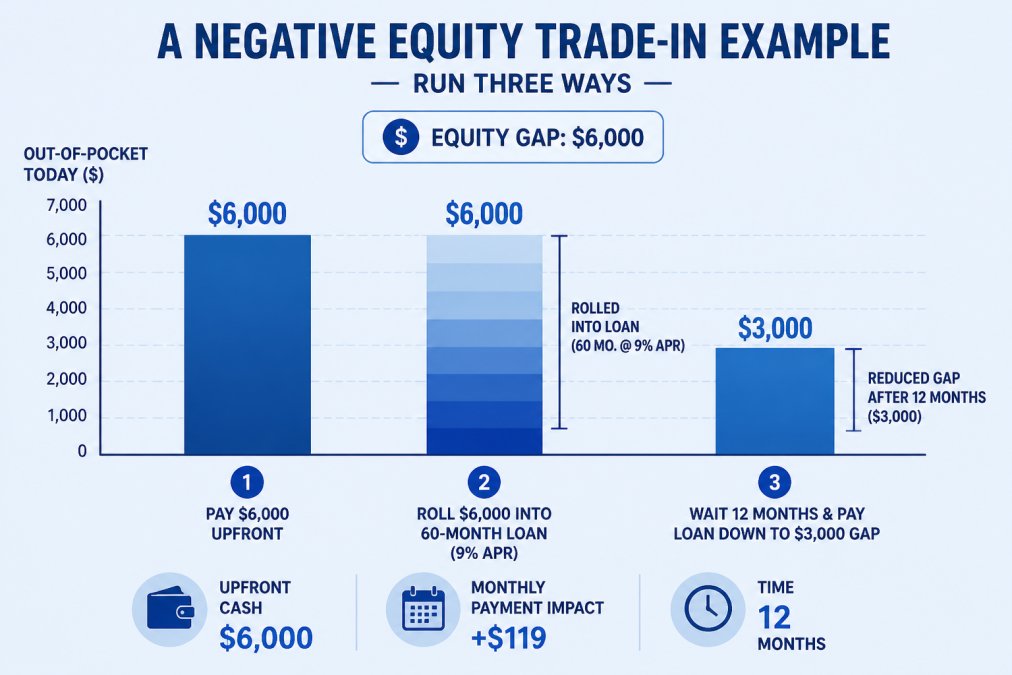
A Negative Equity Trade-In Example, Run Three Ways
Say you owe $18,000 on your current loan and your car is worth $12,000 as a trade-in. That is a $6,000 equity gap. Assume the replacement vehicle is priced at $25,000 before tax, title, and fees, and that a 60-month loan at 9% APR is available for a buyer with average credit. Here is how the three main paths compare when you run the numbers all the way to the end of the loan, not just to the new monthly payment.
| Path | Cash Due at Signing | Amount Financed | Monthly Payment (60 mo @ 9%) | Total Interest | Total Repaid |
|---|---|---|---|---|---|
| Pay the $6,000 difference | $6,000 | $25,000 | About $519 | About $6,140 | About $31,140 |
| Roll $6,000 into the new loan | $0 | $31,000 | About $644 | About $7,610 | About $38,610 |
| Wait 12 months, gap shrinks to $3,000 | $0 | $28,000 | About $581 | About $6,880 | About $34,880 |
Read the columns, not the monthly payment. Rolling the balance lowers the cash you bring to the deal but adds roughly $7,470 in total cost versus paying the difference, about $125 more per month for five years. Waiting a year cuts the gap in half, but only if the car's value holds and you actually make the extra principal payments; if the vehicle depreciates faster than you pay down the loan, the gap can stay flat or grow.
Two numbers decide which row you land in: the size of the gap and the APR you qualify for. Get a written payoff quote and at least two trade-in appraisals before you run these numbers, because a $1,000 swing in either direction changes the total by more than $1,000 once interest is added.
How to Get Out of Negative Equity on a Car
The fastest exit is to pay down the loan faster than the car depreciates. Make extra principal payments when you can, and keep the vehicle in good condition to protect its trade-in value. But "pay it down" is only one of several paths, and the right one depends on how big the gap is, how much cash you have, and how urgently you need a different vehicle.
Your options, ranked by total cost:
- Pay the difference out of pocket. Cheapest if you have the cash. You walk away with a clean title transfer and no added debt.
- Wait and pay down the existing loan. Slow but steady. Every principal payment shrinks the gap, and the car keeps losing value, the race is between your payments and depreciation.
- Sell privately. Often nets more than a dealer offer, but you must cover the payoff gap yourself, and you need the lender's payoff quote in hand before the buyer hands over a check.
- Refinance the existing loan. A lower APR or a shorter term can shrink the gap faster without a new vehicle purchase. This is the option most trade-in guides skip.
- Trade down to a cheaper car. A smaller new loan keeps the rollover manageable, but you still start upside down on the cheaper vehicle.
Lender Limits on Rolling Negative Equity
Lenders do not finance unlimited negative equity. Most cap the amount financed at a loan-to-value (LTV) ratio based on the vehicle's value, your credit profile, and the term. A common pattern is a ceiling somewhere between 110% and 125% of value for strong credit, with tighter limits for lower scores or older vehicles. If your rolled balance pushes the deal past that ceiling, the lender will require cash down to close the gap, the deal does not fail, it just needs more money at signing. Ask the finance manager for the maximum amount financed before you negotiate the trade, not after.
When a Trade-In Actually Makes Sense
Rolling negative equity is not automatically a mistake. It can be workable when:
- The current vehicle is unreliable or unsafe, and repair costs are climbing faster than the gap is shrinking.
- You have cash to cover part of the gap and only need to roll a smaller remainder.
- The replacement vehicle is priced well below your current car, so the new loan stays within lender LTV limits.
- You qualify for a low enough APR that the added interest is smaller than the cost of keeping a failing car on the road.
It usually does not make sense when the only goal is a lower monthly payment, when the gap is larger than the replacement vehicle's value, or when the new loan term would stretch past 72 months just to hit a payment target.
Weighing a dealer trade-in against an online buying service? Compare dealer trade-in vs online car buying services to see which exit fits your situation, and review ways to lower your used car monthly payment before you stretch a term to make the numbers work.
Contract Terms and Payment-Protection Traps to Check
Read the contract before you sign, and read it again at the finance desk. Watch for these traps:
- Payment-protection add-ons bundled into the loan without a clear yes from you
- Extended warranties priced above what the coverage is worth
- A loan term stretched past 60 months just to hit a payment target
- Gap insurance you may not need if you already have coverage
Every add-on raises your total loan cost. Ask for each line item in plain terms, and decline anything you do not understand. Learning how to negotiate used car financing terms keeps these extras from inflating your deal.
Get Your Trade-In Appraised Before You Decide
Before you choose a path, get a real number. Get a trade-in appraisal online so your negative equity math starts from an actual offer, not a guess.
Frequently Asked Questions
Is it possible to trade in a car with negative equity?
Yes. A dealer can pay off your existing loan and fold the difference into your next contract, a process called rolling negative equity. The catch is lender approval: most auto lenders cap how much they will finance above a vehicle's value, so a large equity gap can sink the deal or push you toward a cheaper replacement vehicle. Get a written payoff amount and a trade-in offer before you commit to anything.
How much negative equity can I roll over on a used car?
There is no single number, but lenders typically limit the total amount financed to a percentage of the vehicle's value, often somewhere around 110% to 125% for strong credit. On a used car the ceiling is usually tighter than on a new one because the collateral depreciates faster. Ask the finance office what loan-to-value limit applies to your file before you pick a replacement vehicle, since that limit decides which cars are even possible.
Is it better to pay off negative equity before trading in a car?
Paying the gap in cash is almost always the cheapest route, because you avoid financing the shortfall at interest over a full loan term. That said, it only makes sense if you have the cash without draining an emergency fund. If the gap is small and your current car no longer fits your needs, paying it off and starting clean keeps your next monthly payment lower and your loan term shorter.
Will a car dealer pay off negative equity?
The dealer does not absorb it. What happens is the dealer pays off your existing loan as part of the deal, then adds the shortfall to your new contract. That raises your monthly payment or stretches your loan term. Read the contract carefully, confirm the payoff figure in writing, and check whether any payment-protection products were added to close the gap.
Trading in a car with negative equity is workable when you know the gap, verify both figures in writing, and pick the path that fits your budget. At AutoSport USA, we offer trade-in valuations and online financing tools to make that process clearer. Our team walks you through your payoff, your trade-in offer, and your financing options so you can decide with real numbers in front of you. Get started with AutoSport USA and turn your upside-down loan into a plan you can afford.