 how-to
Used Car Loan Approval Process Explained for 2026
Table of Contents
- How the Used Car Loan Approval Process Works
- Used Car Loan Requirements Most Lenders Set
- Documents Needed for a Car Loan Application
- Car Loan Preapproval vs. Final Approval: What's the Difference?
- Used Car Loan Approval Time: What to Expect at Each Stage
- How Lenders Decide: Credit, Income, and Debt-to-Income
- If Your Application Is Denied: Practical Next Steps
- Frequently Asked Questions
Last Updated: October 13, 2026
How the Used Car Loan Approval Process Works
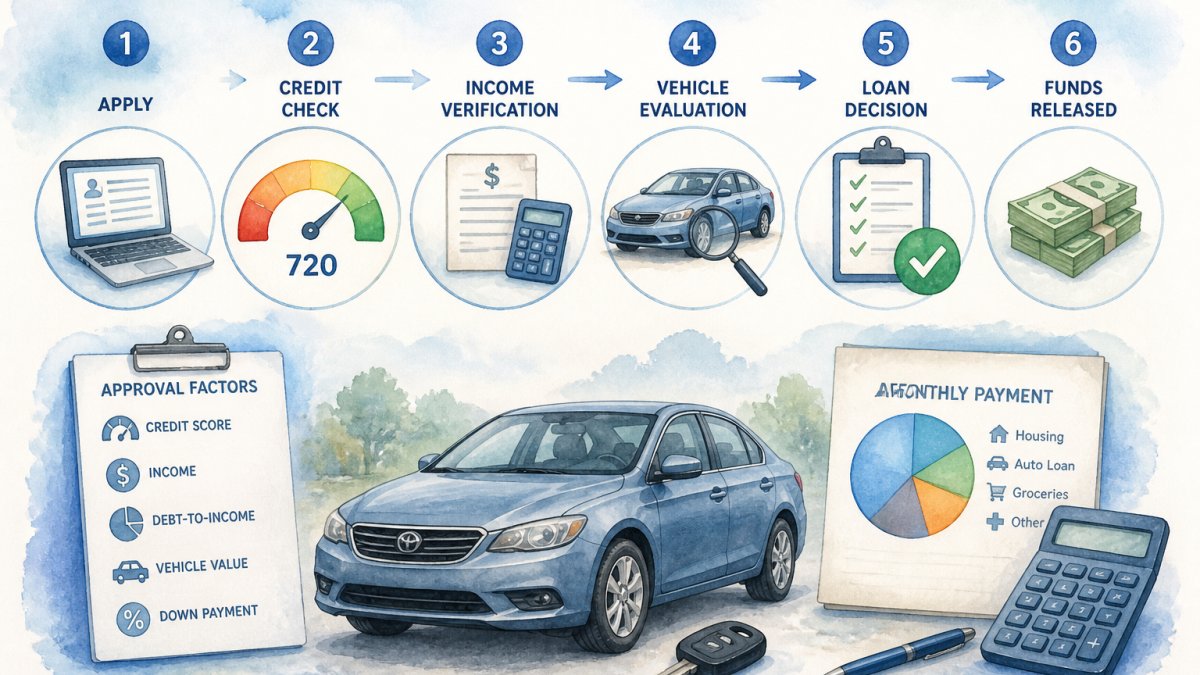
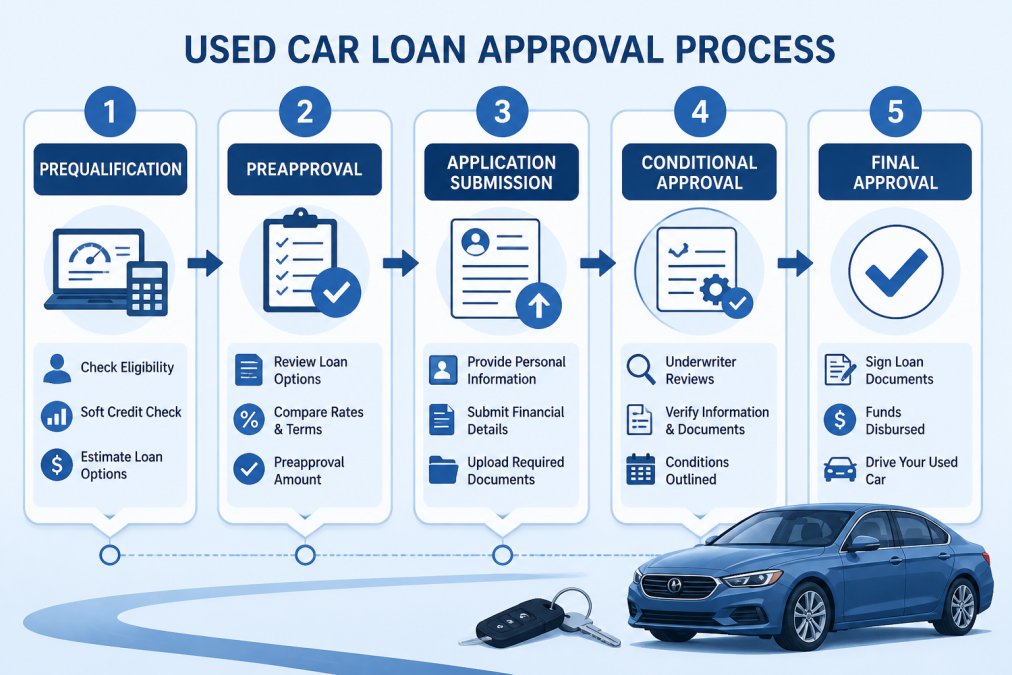
A used car loan approval is a step-by-step process, not a single yes-or-no decision. Most approvals move through five stages: prequalification, preapproval, application submission, conditional approval, and final approval.
Lenders want proof you can repay, proof the car is worth the money, and proof the paperwork matches reality.
The Five Stages From Application to Keys
- Prequalification - A quick estimate based on basic info. No hard credit pull.
- Preapproval - A lender reviews your credit and income, then sets a real loan amount.
- Application submission - You finalize the vehicle and submit full documents.
- Conditional approval - The lender approves you pending proof of insurance, income, or vehicle details.
- Final approval - All conditions are met. You sign and get the keys.
Most delays happen between stage one and stage five, not because lenders are slow, but because buyers show up unprepared.
Used Car Loan Requirements Most Lenders Set
Used car loan requirements are stricter than new car loans because the vehicle is the collateral and starts depreciating immediately. Lenders apply age, mileage, title, and value limits to the car, not just to you.
Many lenders cap loans at vehicles under a certain age and mileage, and limit how much they finance relative to the car's value, the loan-to-value, or LTV.
How Lenders Value a Used Car
Lenders use a book value, typically a wholesale or trade-in figure, then apply an advance limit. If the seller wants $18,000 and the book value is $15,500, the lender caps the loan at a percentage of $15,500, not $18,000.
That is why a car priced above book value is harder to finance, and why private-party sales are trickier: some lenders finance them only at a lower advance rate, and a few will not finance them at all.
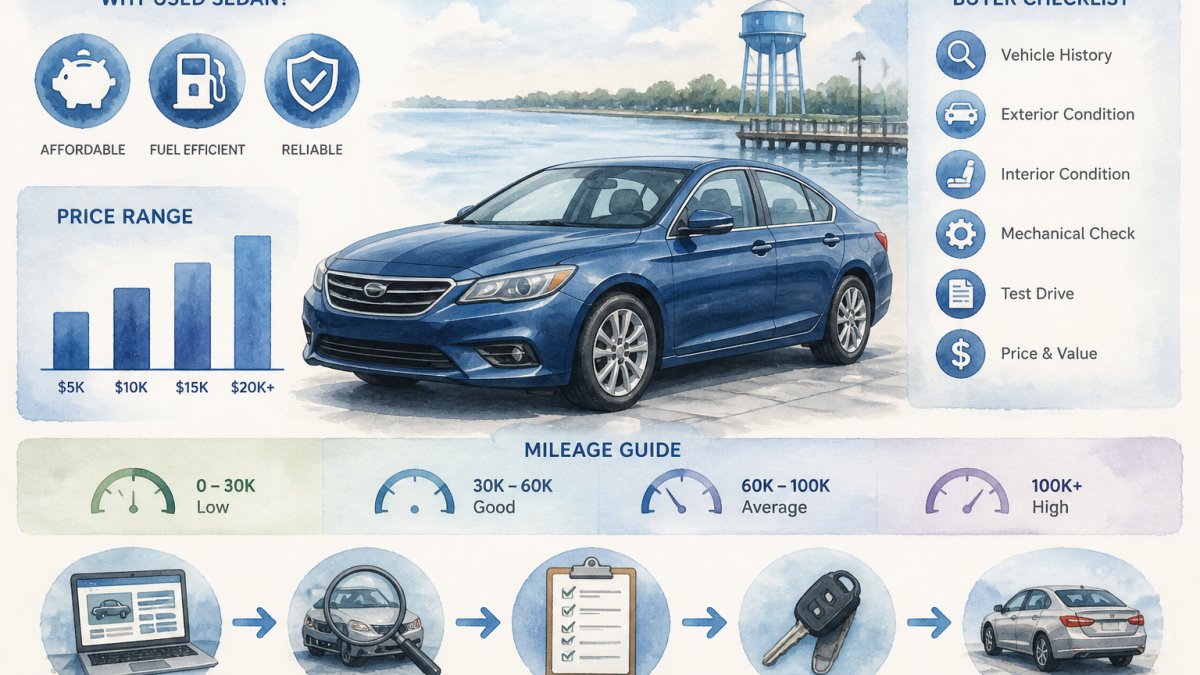
Vehicle Age, Mileage, and Loan-to-Value Limits
Typical lender guardrails include:
- Vehicle age: often under 10 years old at loan start, and some lenders require the car to be under 7 years old for the longest terms
- Mileage: commonly under 100,000 to 150,000 miles, with stricter caps on older vehicles
- Loan-to-value: usually capped below 125% of the car's book value, and often below 100% on older or higher-mileage vehicles
Limits vary by lender, some credit unions are flexible on older cars, others will not touch anything past seven years. The pattern: age, mileage, and term move together. As the car gets older, the lender shortens the term and lowers the advance, raising your monthly payment even if the price is low.
Title Status and Vehicle History
Title status is the most common used-car-specific disqualifier. A clean title means the car has not been declared a total loss or rebuilt after major damage.
A vehicle history report can reveal prior accidents, odometer rollback, or flood damage. Lenders increasingly pull these reports, and a serious prior accident lowers the book value they will use, and your maximum loan.
Loan Term and the Age-Mileage Trap
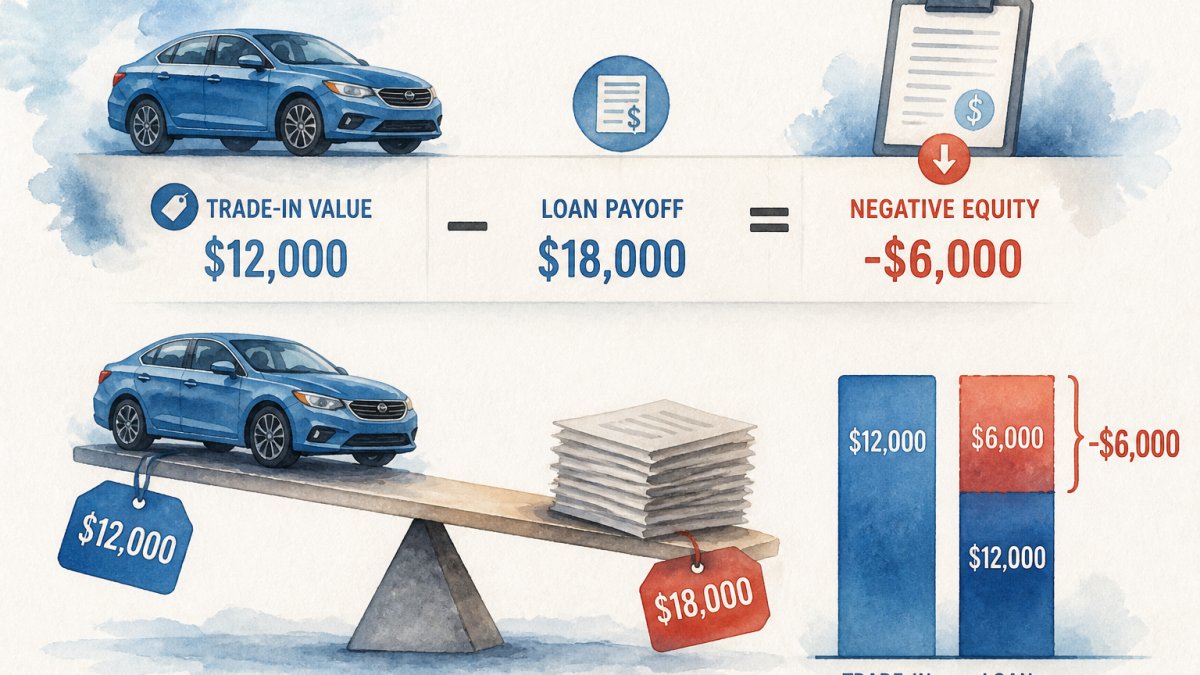
The longest advertised terms, 72, 84, even 96 months, are reserved for newer, lower-mileage vehicles. On a used car, a long term can leave you upside down, owing more than the car is worth.
A $14,000 loan on a 2016 sedan might be capped at 60 months, giving you a higher payment than the same amount on a 2022 model at 72 months.
Condition, Inspections, and Lender Requirements
Some lenders require a mechanical or photo inspection on older, higher-mileage vehicles before funding. Others require proof of insurance with the lender as lienholder before final approval. A few finance only dealer purchases, ruling out most private-party sales.
Condition affects value: body damage, a check-engine light, or mismatched tires can lower the car's valuation and your maximum loan.
How to Check Eligibility Before You Apply
Before you submit a full application, confirm three things with the lender:
- Model year and mileage, does the car fall inside the lender's caps?
- Title status, is it clean, and can the lender verify it?
- Book value and advance rate, what is the maximum the lender will finance on this car?
Those answers save you from a denial unrelated to your credit and tell you how much cash you need for the down payment.
Documents Needed for a Car Loan Application
The documents needed for a car loan are consistent across most lenders: proof of identity, income, residence, and insurance. Missing one is the most common reason an approval stalls.
Have these ready before you apply:
- Government-issued photo ID
- Recent pay stubs or bank statements
- W-2s or tax returns if self-employed
Car Loan Preapproval vs. Final Approval: What's the Difference?
Car loan preapproval vs. final approval comes down to certainty: preapproval tells you what a lender will offer based on your credit and income; final approval means the loan is locked and ready to fund.
| Stage | What It Means | Credit Check | Binding? |
|---|---|---|---|
| Prequalification | Rough estimate | Soft pull | No |
| Preapproval | Set loan amount | Hard pull | No |
| Conditional approval | Approved with conditions | Hard pull | Almost |
| Final approval | Loan ready to sign | Hard pull | Yes |
Preapproval gives you negotiating power, you walk in knowing your budget and rate. But it can still fall apart at final approval if the vehicle doesn't meet the lender's rules.
Used Car Loan Approval Time: What to Expect at Each Stage
Used car loan approval time ranges from minutes to a few days, depending on the stage and your preparation.
- Prequalification: a few minutes online
- Preapproval: same day to 24 hours
- Application review: 1 to 2 business days
Dealership financing can move faster because the finance office submits everything at once. Direct lending through a bank or credit union may take longer but can offer a lower rate.
How Lenders Decide: Credit, Income, and Debt-to-Income
Lenders weigh three things: credit history, income, and debt-to-income ratio.
Income verification proves you can make the monthly payment; lenders look for steady, documented income.
Debt-to-income ratio (DTI) compares total monthly debt to gross monthly income.
If your credit is thin or bruised, a larger down payment lowers the amount you borrow and reduces the lender's risk.
If Your Application Is Denied: Practical Next Steps
A denial is not the end of the road, but it signals you need to change something before reapplying. First, figure out which kind of denial you got, the fix differs for each.
There are two broad categories:
- Credit-based denial, the lender did not like your credit history, income, or debt-to-income ratio.
- Collateral-based denial, the lender did not like the car: too old, too many miles, rebuilt title, or priced above book value.
A credit denial means work on your profile; a collateral denial means a different car or lender. Reapplying with the same profile and car usually produces the same result.
Read the Adverse Action Notice
Under the Equal Credit Opportunity Act, a lender that denies your application must give you an adverse action notice stating the specific reasons, for example, "insufficient income," "excessive obligations in relation to income," or "unable to verify collateral value." The stated reason is the lever you pull next.
If the notice cites credit report information, you are entitled under the Fair Credit Reporting Act to a free copy of the credit report the lender used. The Consumer Financial Protection Bureau's guide to credit reports explains how to request it and how to file a dispute if something is inaccurate.
Fix What You Can Fix Quickly
Some denial reasons can be fixed in days; others take months. Prioritize the fast fixes:
- Credit report errors, a collections account that is not yours, a late payment reported in error, or a wrong balance. Disputes resolve in about 30 days, and removing an error can move your score.
- Debt-to-income ratio, paying down a credit card or small installment loan lowers your DTI and can flip a marginal denial into an approval.
- Down payment, a larger down payment lowers the amount financed and the lender's risk, and helps you stay under the advance limit.
Consider a Different Lender
Lenders do not all use the same credit score cutoff, DTI ceiling, or vehicle age limits. A denial at one bank is not a denial everywhere.
Be cautious with any lender advertising guaranteed approval with no credit check, those offers often carry very high rates, large fees, or required add-on products. Compare total cost, not just the approval.
Rate Shopping Without Wrecking Your Credit
Many buyers accept the first offer, fearing that shopping around hurts their credit. In practice, scoring models treat multiple auto-loan inquiries within a short window, commonly about 14 to 45 days, as a single inquiry, so you can compare offers.
Federal Trade Commission guidance on auto loans notes that shopping multiple lenders within a short window is treated as a single inquiry for scoring purposes, so comparing rates will not wreck your credit.
What to Do Before You Reapply
Before you submit another application:
- Get the adverse action notice and identify the stated reason.
- Pull your credit reports and dispute anything inaccurate.
- Calculate your DTI using gross monthly income and total monthly debt payments.
- Decide whether the problem was you or the car, and change the right one.
- Gather your documents so a second application does not stall on paperwork.
- Apply with more than one lender inside the rate-shopping window to compare offers.
If you are denied and you believe the reason was discriminatory or the lender violated the law, you can file a complaint with the Consumer Financial Protection Bureau or the Federal Trade Commission. That is a separate path from fixing your credit, and it does not stop you from applying elsewhere in the meantime.
Frequently Asked Questions
How long does it take for a used car loan to be approved?
Prequalification can take minutes online. A full preapproval usually takes the same day if your documents are ready. Final approval depends on the dealer submitting the signed contract and proof of insurance, which often happens within a few hours to one business day. Delays usually come from missing documents, a frozen credit report, or a vehicle that does not meet the lender's age or mileage limits.
What documents do you need to apply for a used car loan?
Most lenders ask for a government-issued ID, proof of income such as recent pay stubs or bank statements, employment information, proof of residence like a utility bill, and contact information. If you are trading in a vehicle, bring the title or lien release and current registration. Self-employed buyers may need two years of tax returns. Having these ready before you apply shortens the used car loan approval time significantly.
Can you get denied after preapproval for a car loan?
Yes. Preapproval is based on your credit and stated income, but final approval also depends on the specific vehicle. A lender can decline if the car fails an inspection, has a branded title, exceeds the lender's mileage limit, or if your debt-to-income ratio changes because you took on new credit. A preapproval is a strong signal, not a guarantee, so avoid opening new accounts or financing other purchases before you close.
Can you get approved for a used car loan with bad credit?
It is possible, though the terms will cost more. Lenders weigh your credit history alongside income stability, down payment size, and the vehicle's loan-to-value ratio. A larger down payment and a newer, lower-mileage car improve your odds. Some lenders specialize in second-chance financing. Expect a higher annual percentage rate, and ask for the total loan cost in writing before signing so you know what you are agreeing to.
A used car loan approval doesn't have to be a maze. The buyers who succeed are the ones who gather documents early, understand their DTI, and confirm the vehicle qualifies before signing anything. At AutoSport USA, our online financing tools and trade-in valuations let you start the process from home, and our team helps match you with lenders who work with your credit situation. Apply online and get a clear answer on your used car loan approval before you visit the lot.