 ultimate-guide
Is Buying a Used Hybrid Car Worth It in 2026?
Table of Contents
- Pros and Cons of Hybrid Ownership
- Hybrid Battery Health and Degradation
- Hybrid Battery Replacement Cost
- Hybrid vs Gas Car Maintenance Costs
- Used Hybrid Car Inspection Checklist
- Fuel Efficiency and Long-Term Savings
- Reliability and Mileage Sweet Spots
- Conclusion
- Frequently Asked Questions
Last Updated: September 25, 2026
Pros and Cons of Hybrid Ownership
Buying a used hybrid car worth it depends on your priorities and driving patterns. Hybrids combine an internal combustion engine with an electric motor and regenerative braking system, allowing them to switch between power sources automatically. This dual-system approach offers genuine advantages for certain buyers but comes with trade-offs that deserve careful consideration.
The main advantage is fuel economy. Hybrids excel in stop-and-go driving where regenerative braking captures energy otherwise lost as heat. City commuters and suburban drivers often see tangible savings at the pump compared to gas-only counterparts. Highway driving, however, diminishes this advantage since regenerative braking contributes less on consistent-speed routes.
The drawback is complexity. More systems mean more potential failure points. The hybrid powertrain warranty typically covers the battery pack and electric motor components, but once that coverage expires, repair costs can escalate quickly. Maintenance requirements also differ from traditional vehicles, requiring specialized knowledge and diagnostics tools that not all mechanics possess.
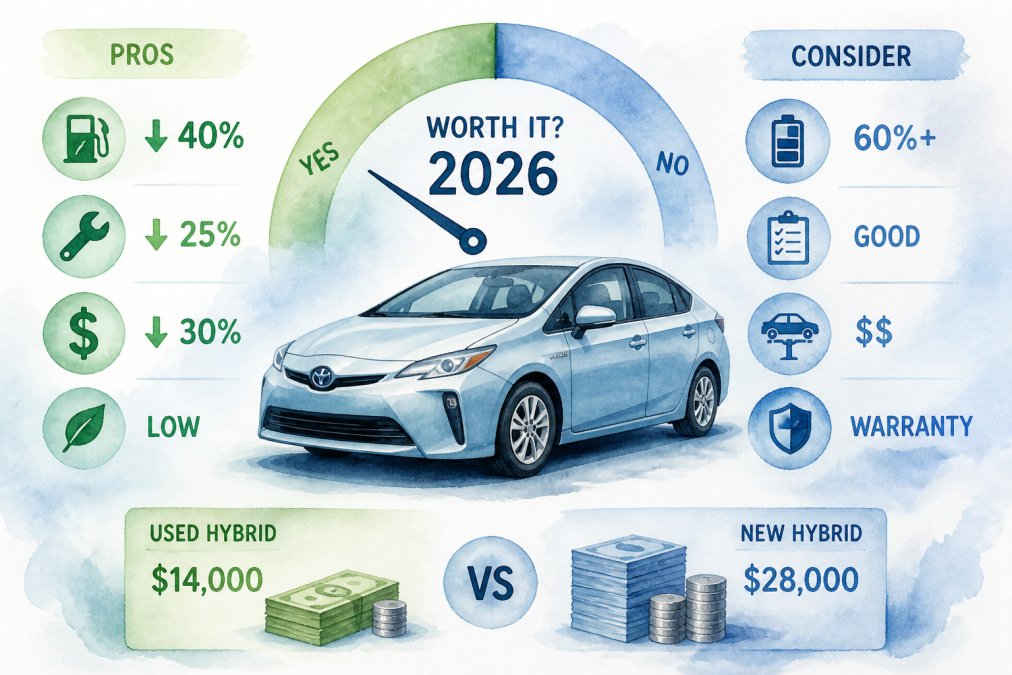
Depreciation patterns favor hybrids initially. Early adopters and eco-conscious buyers have historically driven strong resale values. However, used hybrid car worth it calculations shift once battery health becomes a question mark. A vehicle with a degraded battery pack loses value rapidly, sometimes dropping thousands of dollars in a single year if the state of health (SOH) declines noticeably.
Hybrid Battery Health and Degradation
Understanding battery degradation is critical for any used hybrid car purchase decision. Modern lithium-ion hybrid batteries don't fail suddenly, they degrade gradually over time and miles. Most manufacturers design hybrid batteries to retain 70-80% capacity after 10 years or 150,000 miles, though real-world performance varies by model, climate, and driving patterns.
Battery degradation accelerates in extreme temperatures. Vehicles operated in hot climates experience faster capacity loss than those in moderate regions. Cold climates present a different challenge: batteries perform less efficiently when cold, though the degradation rate may be slower. Frequent deep discharge cycles, common in aggressive hybrid driving, also accelerate wear on the battery pack.
The state of health (SOH) metric measures remaining battery capacity as a percentage. An OBD-II scanner with hybrid-specific capabilities can read this data, though not all scanners provide this function. Many dealers and independent shops now offer battery health diagnostics for a modest fee. A reading above 80% SOH generally indicates the battery has substantial remaining life. Below 70% SOH, replacement becomes a realistic near-term expense.
Nickel-metal hydride batteries, found in older hybrid models, degrade differently than lithium-ion packs. They tend to lose capacity more gradually but can develop individual cell failures. Lithium-ion batteries, used in newer hybrids, maintain more stable performance until they reach a threshold, then decline more sharply. This difference matters when comparing older versus newer used hybrid vehicles.
Hybrid Battery Replacement Cost
Battery replacement represents the largest potential expense in hybrid ownership. The cost varies dramatically by vehicle model, battery chemistry, and whether you choose OEM (original equipment manufacturer) or aftermarket components.
For most popular hybrid models, replacement costs range from $4,000 to $10,000 installed, though some luxury hybrids exceed this range. The inverter, the component that converts DC battery power to AC for the electric motor, adds another $1,500 to $3,000 if replacement becomes necessary. Labor typically accounts for 40-50% of the total battery replacement bill, as removing and reinstalling the battery pack is labor-intensive.
Aftermarket and refurbished battery packs offer lower-cost alternatives, typically running 30-50% less than OEM batteries. The trade-off is warranty length, OEM batteries usually carry 5-8 year warranties, while refurbished units may offer only 1-2 years. Some buyers find this acceptable for vehicles they plan to keep only a few more years.
The powertrain warranty on used hybrids matters significantly. If you purchase a certified pre-owned hybrid still under manufacturer warranty, battery replacement costs are covered. This warranty protection can be worth thousands, making CPO hybrids more attractive than private-party purchases for risk-averse buyers.
Hybrid vs Gas Car Maintenance Costs
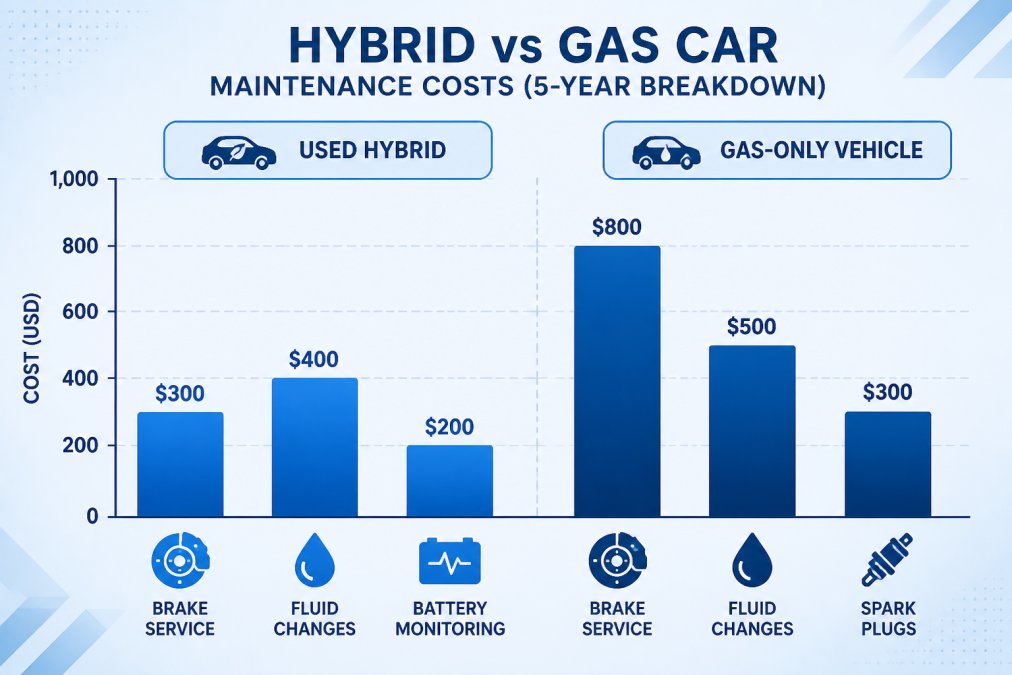
Hybrid maintenance differs meaningfully from traditional gas vehicles, and understanding these differences helps inform your purchasing decision. The common misconception is that hybrids require significantly more maintenance, in reality, the picture is more nuanced.
Brake service costs less frequently on hybrids. Regenerative braking means the friction brakes handle less stopping duty, reducing wear on brake pads and rotors. Many hybrid owners report brake pad replacement intervals of 100,000+ miles compared to 50,000-70,000 miles on gas-only vehicles. This single factor can save hundreds over vehicle ownership.
The trade-off appears in other systems. Hybrid-specific components like the inverter, high-voltage wiring, and battery thermal management system require specialized diagnostics and repairs. If these systems fail outside warranty, repair costs exceed typical gas-car maintenance. Additionally, transmission fluid, coolant, and other fluids may require more frequent changes in some hybrid models due to the demands placed on the cooling systems managing battery temperature.
Oil change intervals sometimes differ. Some hybrids can extend oil change intervals to 10,000 miles due to less engine stress during city driving, while others maintain traditional 5,000-7,500 mile intervals. Check your specific model's maintenance schedule rather than assuming extended intervals.
Spark plugs and air filters typically last longer in hybrids. The engine runs less frequently, reducing wear on these components. A hybrid's spark plugs might last 100,000+ miles versus 30,000-50,000 on a gas-only car. Over a vehicle's lifetime, this compounds into meaningful savings.
Used Hybrid Car Inspection Checklist
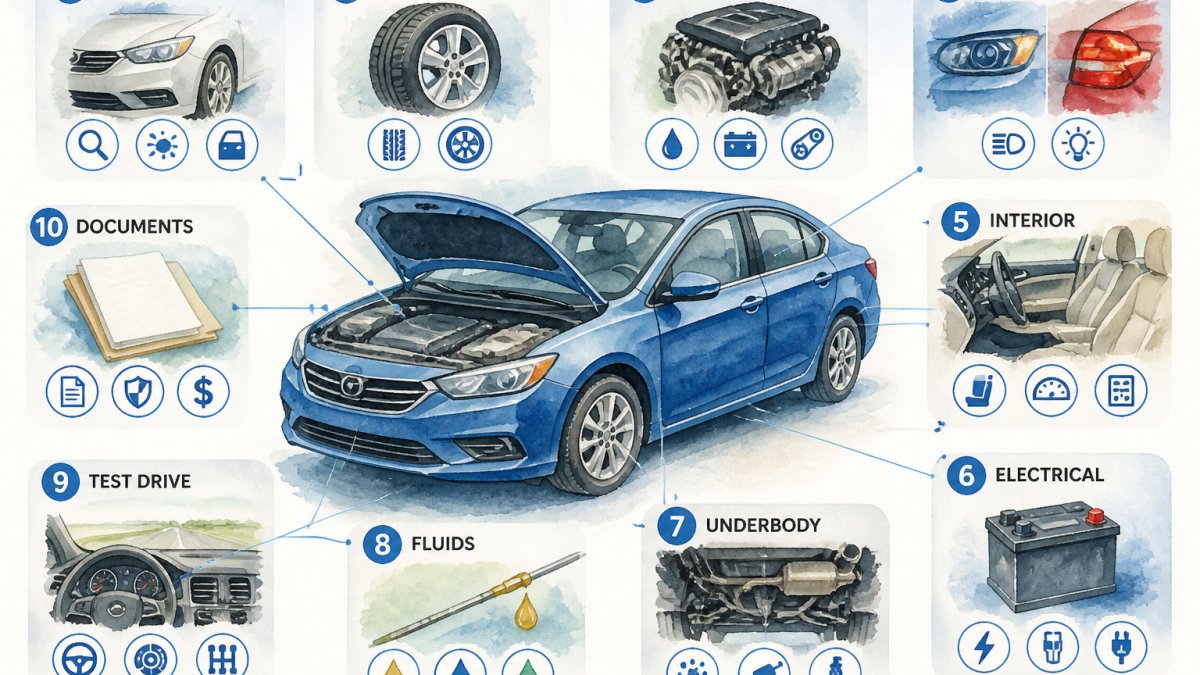
Inspecting a used hybrid car worth it requires attention to systems beyond what you'd check on a traditional vehicle. A thorough pre-purchase inspection protects your investment and reveals hidden issues before you commit.
Start with the battery health check. Request the vehicle's diagnostic report showing state of health percentage. If the seller doesn't have this data, visit a dealer or hybrid-specialist shop for a battery diagnostic before finalizing your purchase. This single check prevents most major problems.
Examine the engine compartment for corrosion around high-voltage components. The hybrid system uses thick orange cables and connectors that should be intact and corrosion-free. Any visible damage, loose connections, or burnt-smelling components indicate potential electrical issues.
Test drive the vehicle in varied conditions, city streets, highway, and parking lot maneuvers. Pay attention to how smoothly the engine engages and disengages. Listen for unusual noises from the engine bay when the gasoline engine starts. Hesitation during acceleration or rough idle can signal hybrid system problems.
Check the climate control system thoroughly. Hybrid cooling systems work harder than traditional ones, and failures are expensive. Ensure the air conditioning blows cold and the heating works effectively.
Review the maintenance records carefully. A well-documented service history on a used hybrid car indicates the previous owner understood the vehicle's specialized needs.
Fuel Efficiency and Long-Term Savings
Fuel economy represents the primary financial benefit of hybrid ownership, but real-world savings depend heavily on driving patterns. Understanding how hybrids actually perform helps you calculate whether purchase price and maintenance costs justify the fuel savings.
Reliability and Mileage Sweet Spots
Hybrid reliability has improved dramatically as the technology matured. Early hybrids (2000-2008) experienced more issues than modern versions, but even older models have proven surprisingly durable when properly maintained. Understanding which model years and mileage ranges offer the best reliability helps guide your purchasing decision.
Conclusion
Determining whether a used hybrid car worth it requires honest assessment of your driving patterns, budget, and risk tolerance. If you drive primarily in cities, plan to keep the vehicle 5+ years, and can verify battery health before purchasing, the financial case for hybrids is strong. Highway-heavy drivers or those seeking minimal maintenance complexity may find traditional gas vehicles more suitable.
Frequently Asked Questions
What happens to a used hybrid car if the battery dies?
A hybrid vehicle can still operate on its internal combustion engine if the high-voltage battery fails. However, you'll lose the electric motor's assistance, fuel efficiency drops significantly, and the regenerative braking system won't function. The vehicle becomes essentially a regular gas car with reduced performance. Battery failure is rare before 150,000 miles, but repair costs are substantial, typically $4,000 to $15,000 depending on the model and whether you choose OEM or aftermarket replacement.
How much does hybrid battery replacement cost for used vehicles?
Hybrid battery replacement typically ranges from $4,000 to $15,000, depending on the model, battery type (nickel-metal hydride vs. lithium-ion), and whether you choose OEM or third-party parts. Labor adds $1,000 to $3,000. Many hybrids come with powertrain warranties covering the battery for 8 years or 100,000 miles, which significantly reduces your risk if you buy certified pre-owned. Always request a vehicle history report and battery health assessment before purchase to understand the state of health (SOH) of the existing battery.
Which used hybrid models are the most reliable?
Toyota hybrids, particularly the Prius and Camry Hybrid, have the strongest reliability track records with many reaching 200,000+ miles. Honda Civic Hybrid and Accord Hybrid also perform well. Lexus hybrids (Toyota's luxury division) show excellent durability. These models benefit from mature hybrid technology, abundant parts availability, and strong repair support. Check the vehicle history report for any major repairs, and verify the battery's state of health before committing. Mileage between 80,000 and 120,000 miles often represents the sweet spot, past the initial depreciation but with significant remaining battery life.
Are maintenance costs really lower for used hybrids compared to gas cars?
Maintenance costs for used hybrids are typically 10-20% lower than gas-only vehicles over the first 5 years, primarily because regenerative braking reduces brake wear significantly. However, hybrid-specific repairs (inverter, electric motor, battery monitoring) can be expensive if needed outside warranty. Regular maintenance schedules are similar, but you'll spend less on brake service. Total cost of ownership depends heavily on the model, age, mileage, and whether major components are still under powertrain warranty. Factor in potential battery health monitoring costs.