 ultimate-guide
Best Places to Look for Used Vehicles
Table of Contents
- Where to Search for Used Vehicles
- Online Marketplaces vs. Local Dealerships
- Private Seller vs. Dealership Pros and Cons
- How to Inspect a Used Car Before Buying
- Understanding Vehicle Pricing and Market Value
- Used Car Financing Options
- Avoiding Scams and Protecting Yourself
- Making Your Final Decision
- Frequently Asked Questions
Last Updated: September 24, 2026
Where to Search for Used Vehicles
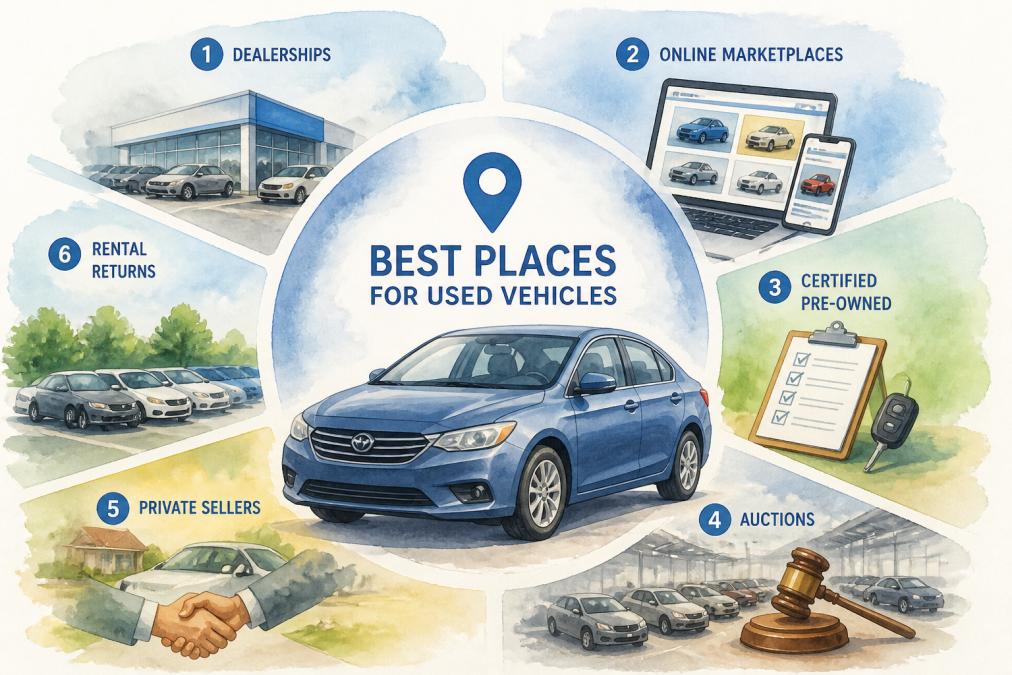
Finding the best places used vehicles are sold requires understanding where inventory lives and which platforms match your buying style. The landscape has shifted dramatically over the past few years. National online marketplaces now dominate the search process, but local options and private sellers still offer distinct advantages depending on what you're after.
Your search strategy should account for three key factors: inventory depth, pricing transparency, and how much direct control you want over the buying process. Some platforms excel at showing you thousands of options across multiple states. Others focus on local deals where you can inspect a car before committing. AutoSport USA, for example, combines a curated local inventory with online financing tools and trade-in valuations, giving you the convenience of remote shopping paired with hands-on support.
The reality is that most successful used car buyers don't rely on a single source. They cross-reference multiple platforms to compare pricing, verify vehicle history, and identify fair market value before making contact with a seller or dealership.
Online Marketplaces vs. Local Dealerships
Online marketplaces cast the widest net, while local dealerships offer personalized service and immediate access to inventory you can see in person. Each approach has distinct trade-offs worth understanding before you commit your time.
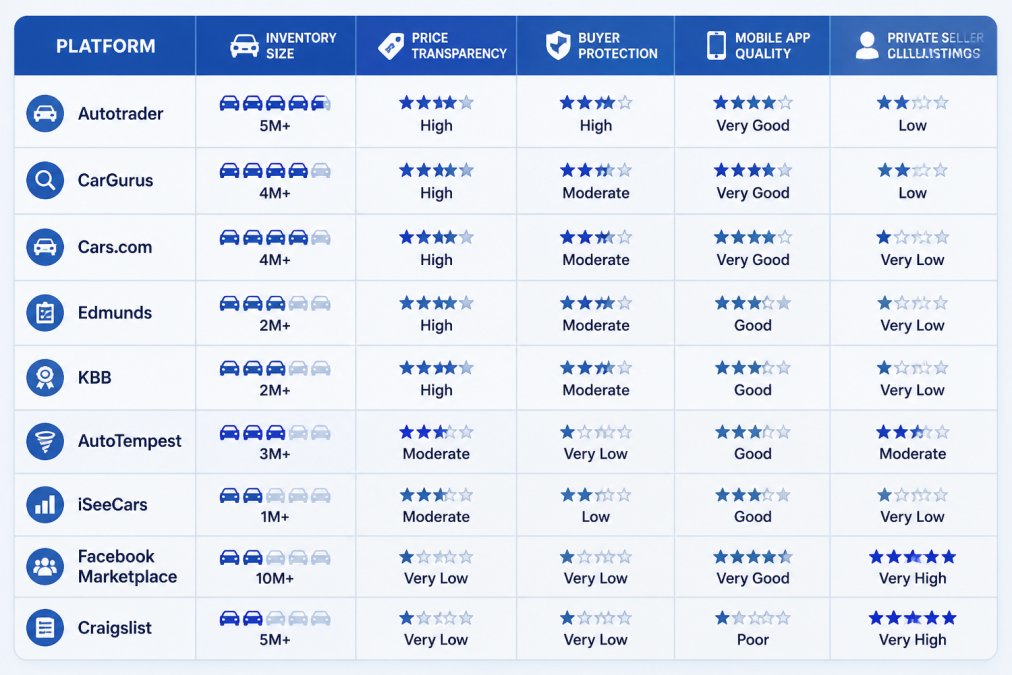
Autotrader and Cars.com function as massive listing aggregators, pulling inventory from dealerships nationwide and displaying it through powerful search filters. CarGurus adds algorithmic price analysis, rating each listing as a "Great Deal," "Fair Deal," or "Overpriced" based on market comparables. Edmunds emphasizes editorial content and vehicle reviews alongside inventory search. Kelley Blue Book provides the industry-standard Fair Purchase Price valuation tool, making it essential for understanding what a vehicle should cost in your region.
The advantage of online marketplaces is scope. You can filter by make, model, year, mileage, price range, and even specific features in minutes. You're not limited to what one dealership happens to have on the lot. The disadvantage is that you're swimming in volume, thousands of listings can feel overwhelming, and not all platforms vet their sellers equally.
Local dealerships, by contrast, offer curated inventory specific to your area. When you work with a dealership like AutoSport USA, you get direct access to vehicles you can inspect, test drive, and discuss financing with a person who knows the local market. The selection is smaller, but the vetting is typically more rigorous. Dealerships usually conduct pre-purchase inspections.
| Platform | Inventory Size | Price Transparency | Best For | Buyer Protection |
|---|---|---|---|---|
| Autotrader | Massive (national) | Moderate | Widest selection | Varies by seller |
| CarGurus | Large (national) | High (price ratings) | Deal hunters | Moderate |
| Cars.com | Large (national) | Moderate | Research + shopping | Varies by seller |
| Edmunds | Large (national) | High (pricing guides) | Research-focused buyers | Moderate |
| Kelley Blue Book | Large (national) | High (valuation tools) | Understanding fair value | Moderate |
| Local Dealership | Small (regional) | Variable | Personalized service | Higher (warranty) |
Private Seller vs. Dealership Pros and Cons
The choice between buying from a private party and purchasing from a dealership fundamentally changes your buying experience, risk profile, and negotiation use. Understanding the trade-offs helps you decide which path fits your situation.
Private Party Sales:
Buying directly from a private seller typically means lower prices. You're eliminating the dealership markup, which can range from several hundred to several thousand dollars depending on the vehicle. You also get direct access to the vehicle's history from the person who owned it, they can tell you about maintenance patterns, any quirks, and how the car was actually driven.
The downside is significant. Private sellers offer no warranty, no buyer protection, and minimal recourse if something goes wrong days after purchase. You inherit whatever mechanical issues exist. Title transfer can be complicated, and you're responsible for conducting your own inspection and verifying the vehicle history report. The risk of encountering a salvage title, odometer fraud, or undisclosed accident damage falls entirely on you. Platforms like Facebook Marketplace and Craigslist make finding private sellers easy, but they also attract scammers. You must be vigilant about meeting in safe locations, verifying the seller's identity, and never sending money before seeing the vehicle in person.
Dealership Purchases:
Dealerships provide professional vetting and buyer protection mechanisms. Most dealerships conduct pre-purchase inspections and disclose known issues. Title transfer is handled by the dealership, reducing paperwork hassle. If you discover a major problem within the warranty period, you have recourse.
The trade-off is price. You pay more at a dealership because the business has overhead, staff, and liability. The negotiation process can feel adversarial, salespeople use tactics designed to maximize profit. You may feel pressured to add extended warranties, gap insurance, or other add-ons you don't need. However, dealerships like AutoSport USA offer transparent pricing, professional trade-in valuations, and financing assistance that makes the process smoother.
How to Inspect a Used Car Before Buying
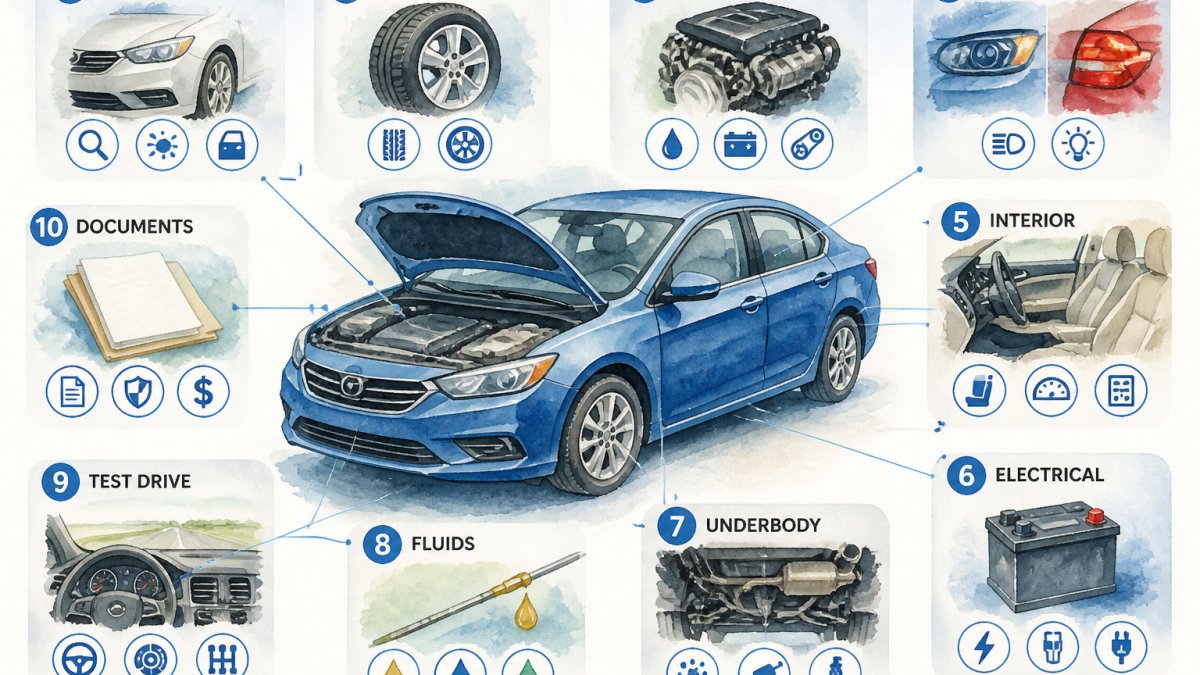
A thorough pre-purchase inspection protects you from inheriting mechanical problems and hidden damage. Whether you're buying from a private seller or a dealership, the inspection process is your best defense against costly surprises.
Start with the vehicle history report. Services like Carfax and AutoCheck pull data from insurance claims, accident reports, service records, and title registrations (Check car by VIN & get the vehicle history). A clean history report doesn't guarantee a perfect car, but it flags red flags like salvage titles, flood damage, or multiple owners. Request the VIN (Vehicle Identification Number) from the seller and run it through at least one history service before scheduling an in-person visit.
When you inspect the vehicle in person, examine the exterior for signs of repainting, rust, or mismatched panels, these suggest accident damage. Look at the odometer reading and cross-reference it against service records to detect odometer fraud. Check the tire tread depth and condition; uneven wear suggests alignment or suspension problems. Open the hood and inspect the engine bay for leaks, corrosion, or signs of overheating. Listen for unusual noises when the engine starts and runs.
During the test drive, pay attention to how the vehicle handles. Does it pull to one side? Are there vibrations or unusual sounds? Does the transmission shift smoothly? Test the brakes, steering, and all electrical systems. Drive it on highways and local roads to get a complete sense of performance.
If you're serious about a vehicle, hire an independent mechanic to conduct a pre-purchase inspection. This can save you thousands by identifying hidden mechanical issues. A mechanic's report gives you use in price negotiations and confirms whether the vehicle is worth the asking price.
Understanding Vehicle Pricing and Market Value
Knowing what a vehicle should cost prevents you from overpaying and gives you confidence during negotiations. Market value fluctuates based on make, model, year, mileage, condition, and local demand.
Kelley Blue Book's Fair Purchase Price tool is the industry standard for valuation. It accounts for regional pricing variations, current market trends, and vehicle condition. Enter the vehicle's details, and KBB provides a range showing what similar vehicles are selling for in your area. CarGurus provides similar data through its price analysis algorithm, flagging deals that are priced below or above market.
Depreciation patterns matter too. Some vehicles hold value better than others. Certified pre-owned vehicles command a premium because they've been inspected and typically carry extended warranties. A vehicle with higher mileage depreciates faster than one with lower mileage, even if they're the same year and model.
Local market conditions affect pricing. A pickup truck might be priced higher in rural areas where they're in high demand. A sedan might be cheaper in a region where SUVs dominate.
Used Car Financing Options
Most used car buyers need financing, and your options range from traditional bank loans to dealership financing to specialized lenders who work with buyers facing credit challenges.
Avoiding Scams and Protecting Yourself
The used car market attracts scammers who exploit information asymmetry and buyer urgency. Protecting yourself requires vigilance and a healthy dose of skepticism.
Making Your Final Decision
After researching platforms, comparing prices, inspecting vehicles, and understanding your financing options, you're ready to decide among the best places used vehicles are available. The best place to look for used vehicles depends on your priorities, whether you value selection, price transparency, buyer protection, or personalized service.
Frequently Asked Questions
What is the best place to look for used vehicles online?
The best place depends on your priorities. Autotrader and Cars.com offer the largest dealer inventories with strong search filters. CarGurus excels at price transparency with its deal-rating system. Edmunds and Kelley Blue Book are ideal for research and valuation. For private sellers, Facebook Marketplace and Craigslist offer local options. Many buyers use multiple sites, or AutoTempest to search them all at once, to compare the same vehicle across platforms and ensure they're getting a fair deal.
How do I verify the history of a used vehicle before buying?
Always request a vehicle history report using the VIN (Vehicle Identification Number). Services like Carfax and AutoCheck provide accident history, title status, odometer readings, and service records. Check the title status to confirm it's clean (not salvage or branded). Ask the seller for maintenance records and have a pre-purchase inspection performed by an independent mechanic. Verify the odometer reading matches the vehicle's age, and confirm the seller's identity matches the title. These steps help identify hidden damage, flood history, or curbstoning.
Should I buy from a private seller or a dealership?
Private sellers typically offer lower prices and more negotiation flexibility, but you assume all risk, no warranty, limited recourse if something goes wrong. Dealerships provide inventory variety and handle paperwork, but charge higher prices and may have less transparent pricing. Dealerships are safer for first-time buyers; private sellers work best if you have mechanical knowledge or can afford a pre-purchase inspection.
What financing options are available for used car buyers?
Traditional bank loans and credit union loans typically offer competitive interest rates if you have good credit. Dealership financing is convenient but often costs more. Online lenders and peer-to-peer platforms provide alternatives for buyers with less-than-perfect credit. Some buyers get pre-approved before shopping, which strengthens their negotiating position. Consider your down payment, monthly budget, and total loan term. Trade-in value can reduce the amount you need to finance. Compare interest rates across multiple lenders before committing, and read all terms carefully to avoid hidden fees.