 ultimate-guide
How to Finance Used Cars in 2026: A Complete Guide
Table of Contents
- Average Auto Loan Interest Rates 2026: What to Expect
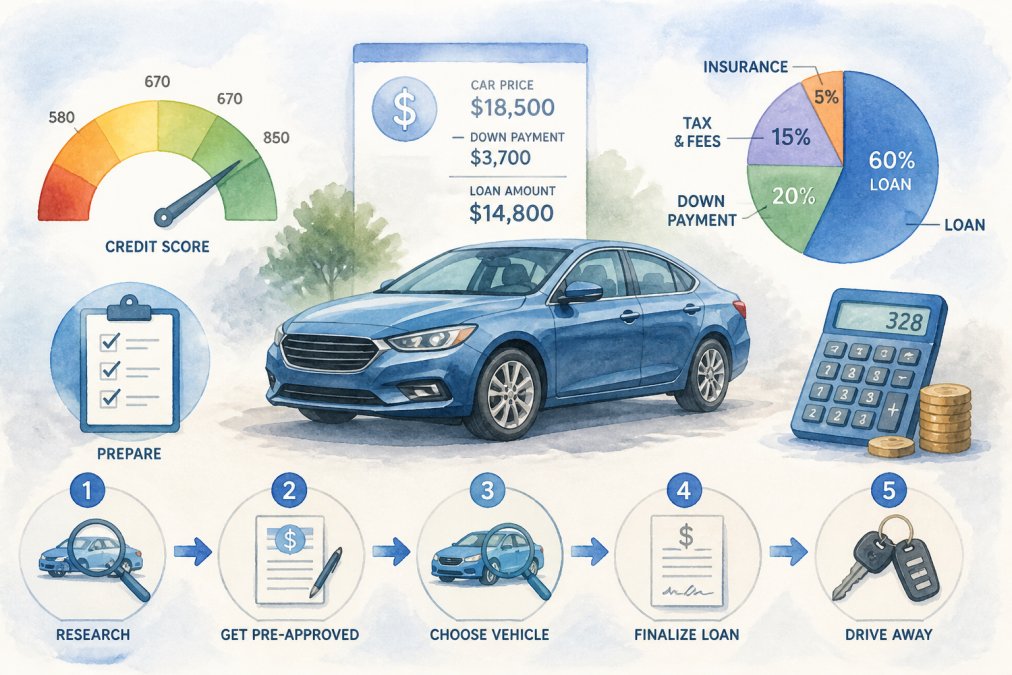
- How to Finance Used Cars: Step-by-Step Process
- Used Car Financing for Bad Credit: Real Options
- How to Calculate Monthly Car Payments Before You Commit
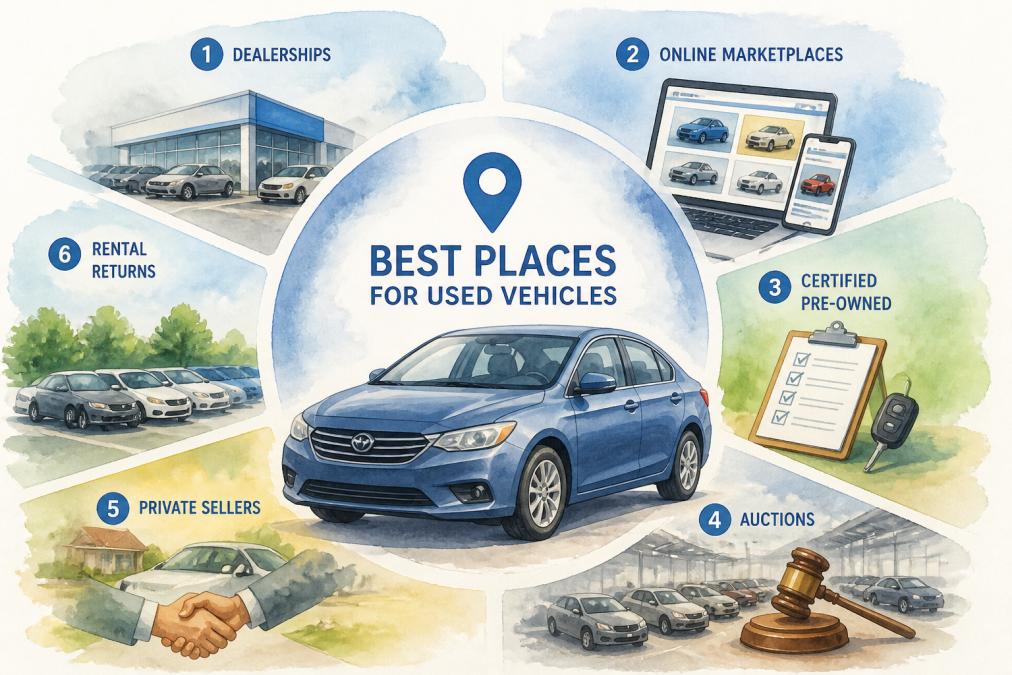
- Dealership vs. Private Party vs. Online Lenders
- Total Cost of Ownership: The Numbers Most Buyers Miss
- Frequently Asked Questions
Last Updated: September 10, 2026
Average Auto Loan Interest Rates 2026: What to Expect
Auto loan rates in 2026 reflect a market that has cooled from its recent peaks but still rewards borrowers who shop carefully. According to Federal Reserve consumer credit data, the annual percentage rate you're offered depends heavily on your credit score, the loan term, and whether the vehicle is new or used.
Used car loans typically carry higher rates than new car loans because the collateral depreciates faster and lenders take on more risk (federalreserve.gov). Shorter terms usually come with lower rates but higher monthly payments.
How to Finance Used Cars: Step-by-Step Process
Financing a used car is a sequence, not a single decision. The process runs from checking your credit to signing the contract, and each step affects the next.
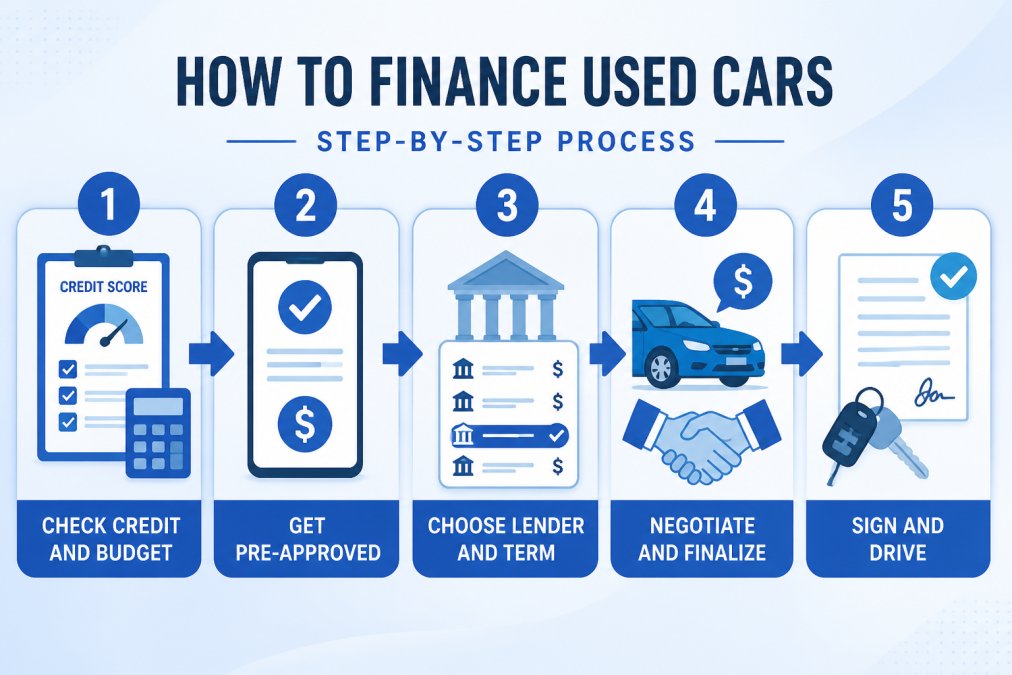
Step 1: Check Your Credit and Set a Budget
Pull your credit reports and scores before you talk to any lender. Your credit history determines your rate tier, and your debt-to-income ratio determines how much lenders will approve.
Set a budget that includes the monthly payment, insurance, fuel, and maintenance, not just the sticker price. A common mistake is shopping for the maximum the bank will approve rather than what fits your actual monthly cash flow.
Step 2: Get Pre-Approval for Used Car Loans
Pre-approval for used car loans tells you exactly how much you can borrow and at what rate before you step onto a lot. Prequalification uses a soft credit pull and gives you an estimate; full pre-approval uses a hard inquiry and produces a firm offer.
Having a pre-approval letter in hand turns you into a cash buyer in the dealer's eyes. It also gives you a benchmark to compare against dealer financing.
Step 3: Choose Your Lender and Loan Term
Compare at least three lenders: a bank or credit union, an online direct lender, and the dealership's finance department. Look at the loan term, origination fee, and whether a prepayment penalty applies.
A 36-month term keeps interest costs down (consumerfinance.gov). A 60- or 72-month term lowers the monthly payment but raises the total interest and puts you underwater on the loan longer.
Used Car Financing for Bad Credit: Real Options
Bad credit doesn't disqualify you, but it changes which lenders will work with you. Used car financing for bad credit typically comes through subprime lenders, buy-here-pay-here dealers, or credit unions with second-chance programs.
Expect a higher annual percentage rate and a larger down payment requirement. A common approach is to put down enough to keep the loan-to-value ratio below 100%, which reduces the lender's risk and improves your approval odds.
| Credit Tier | Typical Approval Odds | What Lenders Look For |
|---|---|---|
| Prime | Strong | Low DTI, stable income |
| Near-prime | Good | Smaller down payment accepted |
| Subprime | Moderate | Larger down payment, proof of income |
| Deep subprime | Limited | Specialty lenders, high APR |
Making a few months of on-time payments and then refinancing is a realistic path to a lower rate later.
How to Calculate Monthly Car Payments Before You Commit
The monthly payment formula is principal plus interest, divided across your loan term. You can run the numbers with an auto loan calculator, or work it out manually to understand what each variable does.
The four inputs that matter:
- Loan amount: vehicle price minus down payment and trade-in equity
- Interest rate: your APR, expressed as a decimal
- Loan term: number of months
- Sales tax and fees: often rolled into the financed amount
Increase the down payment or shorten the term and the monthly payment rises but total interest falls. Lengthen the term and the reverse happens. Run the calculation at three different terms before you agree to anything.
Dealership vs. Private Party vs. Online Lenders
Each financing route has real trade-offs, and the right one depends on your credit profile, the seller type, and how much legwork you want to do. The table below is a starting point, the mechanics behind each row are where deals are won or lost.
| Option | Pros | Cons | Best For |
|---|---|---|---|
| Dealership financing | One-stop process, works with imperfect credit, lender network includes captive finance arms | Rates can be marked up above the buy rate, add-on products bundled into the contract | Buyers who want convenience and are willing to pay for it |
| Private party | Lower purchase price, negotiable, no dealer doc fees | No dealer financing, you arrange the loan, title transfer is on you | Pre-approved buyers who can move fast |
| Online direct lender | Competitive rates, fast prequalification, no dealer markup | No help with the vehicle itself, funding can lag the sale | Rate-shoppers with good credit and a specific vehicle in mind |
Dealer Financing: Convenience With a Markup
When you finance at the dealership, the finance manager shops your application to a network of lenders and presents you a rate. That rate is often higher than the buy rate the lender quoted the dealer, the difference is dealer reserve, and it is negotiable. Ask the finance manager to show you the lender's approval sheet, or counter with a pre-approval from your own bank or credit union. Dealers are also the primary channel for add-on products like GAP insurance, extended service contracts, and tire-and-wheel coverage. None of these are required to buy the car, and all of them can be declined or shopped separately.
Private Party Financing: The Paperwork Nobody Explains
Financing a car from an individual seller is the route most guides skip, and it is where buyers get stuck. The core problem is that the lender is funding a purchase from a stranger, so it needs more documentation than a dealer deal requires.
A typical private-party loan file includes:
- Bill of sale signed by both parties, with the VIN, odometer reading, purchase price, and date
- Vehicle title in the seller's name, free of liens (or a lien release if it was financed)
- VIN inspection or photo verification, depending on the lender
- Proof of insurance naming the vehicle and the lender as loss payee
- Your income and identity documents, same as any other loan application
Timing is the hard part. Most direct lenders will not release funds until the title is clear and the paperwork is verified, which can take several business days. Sellers often want cash the same day. Two workarounds are common: a joint trip to the lender or a branch to sign and disburse in person, or an escrow-style arrangement where the lender wires funds once the signed title is received. Never hand over payment before you have the signed title in hand, and never let the seller keep the title "until the loan funds" without a written agreement.
One more constraint: some lenders cap private-party loans at a lower loan-to-value ratio than dealer loans, and a few do not offer private-party financing at all. Confirm eligibility before you fall in love with a car.
Online Direct Lenders: Fast, but You Do the Vehicle Work
Online lenders and credit unions with national footprints prequalify you in minutes with a soft credit pull, then convert to a full approval with a hard inquiry. The rate is usually fixed and not marked up, which is the main advantage. The trade-off is that you handle the vehicle inspection, the title work, and the seller coordination yourself, the lender funds the loan, not the transaction.
Whichever route you choose, separate the vehicle negotiation from the financing negotiation. Bundling them is how buyers lose track of which number they are actually agreeing to.
Total Cost of Ownership: The Numbers Most Buyers Miss
The purchase price is only the first number, and for most buyers it is not the largest one. Total cost of ownership adds depreciation, insurance, fuel, maintenance, repairs, and the cost of the money itself across the years you keep the car. Competitors stop at the loan; the loan is one line in a longer ledger.
The Six Cost Buckets
- Depreciation: the largest single cost for most used vehicles. A vehicle typically loses a meaningful share of its value in the first few years and then flattens. Buying a two- or three-year-old model lets the first owner absorb the steepest part of that curve.
- Financing cost: total interest paid over the life of the loan. A longer term lowers the monthly payment but raises this number, sometimes by thousands.
- Insurance: premiums track the vehicle's repair cost, theft rate, and safety record, not just its price. A cheap car with expensive parts can cost more to insure than a slightly pricier one with common parts.
- Fuel or energy: annual cost depends on miles driven and efficiency. At current pump prices, the gap between a 25 mpg and a 35 mpg vehicle is a real line item over five years.
- Maintenance and repairs: older vehicles need more of both. Budget for tires, brakes, fluids, and a timing belt or similar service if the mileage is near a known interval.
- Taxes and fees: sales tax, registration, title, and any state inspection fees. These are often rolled into the loan, which means you pay interest on them too.
Why 2026 Changes the Math
Used vehicle pricing has cooled from its peak, but the cost of borrowing and the cost of ownership have not moved in the same direction. Insurance premiums have risen across many markets, and repair costs have climbed with parts and labor. The practical effect is that a lower sticker price does not automatically mean a lower monthly cost of ownership. Run the full picture before you commit.
A Simple Five-Year Estimate
You do not need a spreadsheet to get close. Estimate each bucket annually, multiply by five, add the total interest from your loan, and compare two or three candidate vehicles side by side. The vehicle with the lower price frequently loses once insurance, fuel, and a known maintenance interval are included.
Our online financing tools let you see the real total cost and get pre-approved before you visit, so there are no surprises at signing.
Frequently Asked Questions
Is it worth buying used cars in 2026?
Used cars often make financial sense in 2026 because new vehicle prices remain high and depreciation hits hardest in the first two years. Certified pre-owned models offer factory-backed warranties, and average auto loan interest rates 2026 are competitive for buyers with fair credit. You avoid the steepest depreciation curve while still getting a reliable vehicle. The key is checking the vehicle history report and having a mechanic inspect it before you finance.
What is a good used car interest rate in 2026?
A good rate depends on your credit score, loan term, and whether you buy from a dealer or private seller. Borrowers with scores above 720 typically qualify for the lowest rates, while those with scores below 600 face higher annual percentage rates. Credit unions and online lenders often beat dealership financing for used cars. Always compare at least three offers and check the loan-to-value ratio before signing.
How does pre-approval for used car loans work?
Pre-approval for used car loans means a lender reviews your credit, income, and debt-to-income ratio and agrees to lend up to a certain amount before you shop. It usually involves a soft credit pull initially, so your score is not affected. Once approved, you get a loan amount and rate valid for a set period, often 30 to 60 days. This gives you negotiating power at the dealership because you are a cash buyer.
Can I get used car financing for bad credit?
Yes, used car financing for bad credit exists through subprime lenders, buy-here-pay-here dealerships, and some credit unions. Expect higher interest rate caps and larger down payment requirements. A cosigner with good credit can lower your rate significantly. Focus on rebuilding your credit history by making every payment on time. Some lenders report to all three bureaus, which helps your score recover faster.
How do I calculate monthly car payments accurately?
Use an auto loan calculator or the formula: M = P[r(1+r)^n]/[(1+r)^n-1], where P is principal, r is monthly interest rate, and n is number of payments. For example, a $20,000 loan at 7% APR for 60 months runs about $396 per month. Add sales tax, title fees, and gap insurance to see the true monthly cost. Keep your total debt-to-income ratio below 43% for the best approval odds.
What is the best way to finance a used vehicle?
The best approach is to get pre-approved through a credit union or online lender before you visit a dealership. This gives you a baseline rate and monthly payment to compare against dealer financing. Put at least 20% down to avoid being upside-down on the loan. Choose the shortest loan term you can afford to reduce total interest paid. Always read the contract terms for prepayment penalties and origination fees.
Financing a used car in 2026 comes down to preparation: know your credit, get pre-approved, and compare the total cost rather than the monthly payment alone. AutoSport USA makes that easier with online financing tools, transparent pricing, and trade-in valuations that show you the real numbers up front. Get started with AutoSport USA and drive away knowing exactly what you signed.