 how-to
How to Get a Fair Trade-In Offer on Your Car
Last Updated: October 30, 2026
Quick Summary
A fair trade-in offer is based on the car's retail value minus reconditioning costs and dealer margin. Get an online estimate, bring a written competing offer, and compare the full out-the-door price, not just the trade-in number.
- Mileage, condition, and local demand affect your offer more than the original sticker price.
- Get a written competing offer with an expiration date before you negotiate.
- Negotiate the new vehicle price first, then introduce the trade-in as a separate transaction.
- Get a payoff quote from your lender so you know whether you have positive or negative equity.
- Compare the out-the-door price with and without the trade to see your true trade value.
Table of Contents
- How Trade-In Value Is Determined
- Getting a Trade-In Appraisal Online and In Person
- Trade-In Value vs. Private Party Value
- Preparing Your Car and Documenting Maintenance
- Trading In a Car With a Loan: Payoff and Negative Equity
- How to Negotiate Trade-In Value With a Written Competing Offer
- Comparing the Full Deal and Your Next Step at Silverton Motors
- Frequently Asked Questions
How to get a fair trade-in offer on your car starts with knowing what the dealer sees when they look at your vehicle. Most trade-in offers come down to a few factors: market demand, condition, mileage, and the cost to get the car ready for resale.
Here is the key idea: a trade-in offer is not a guess. It is a calculation, and you can check it.
How Trade-In Value Is Determined
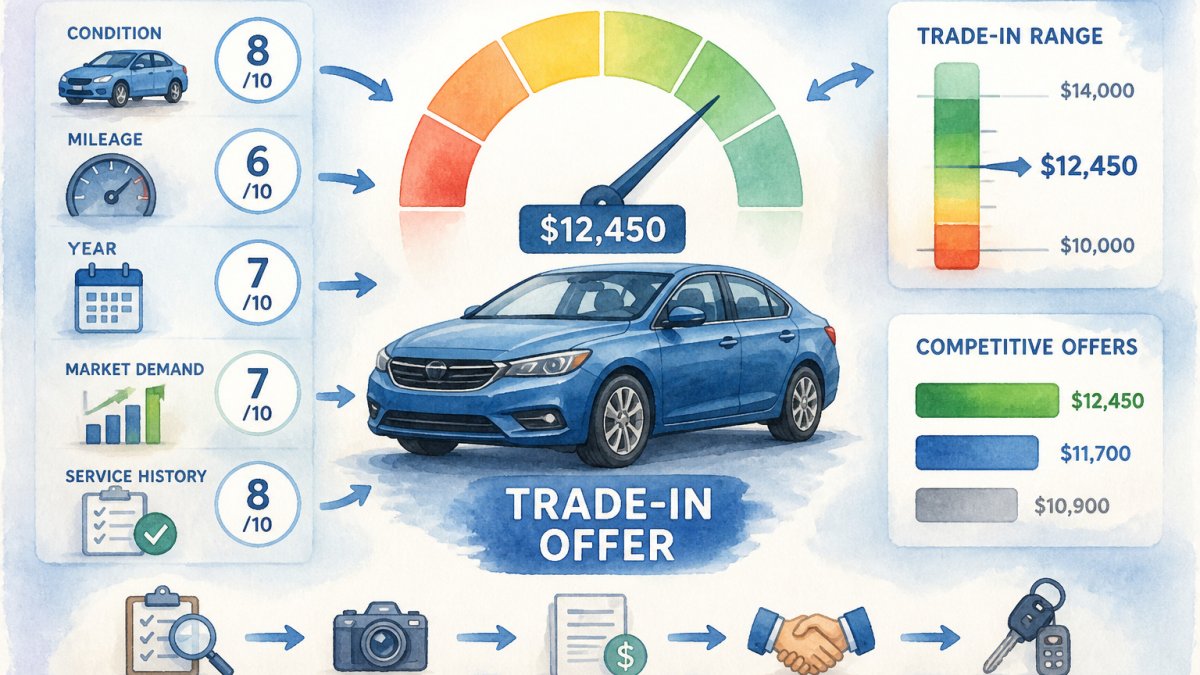
A trade-in value is the amount a dealer will pay for your car as part of a new or used vehicle purchase. Dealers start with what the car would sell for on their lot, then subtract the costs of buying, reconditioning, and reselling it.
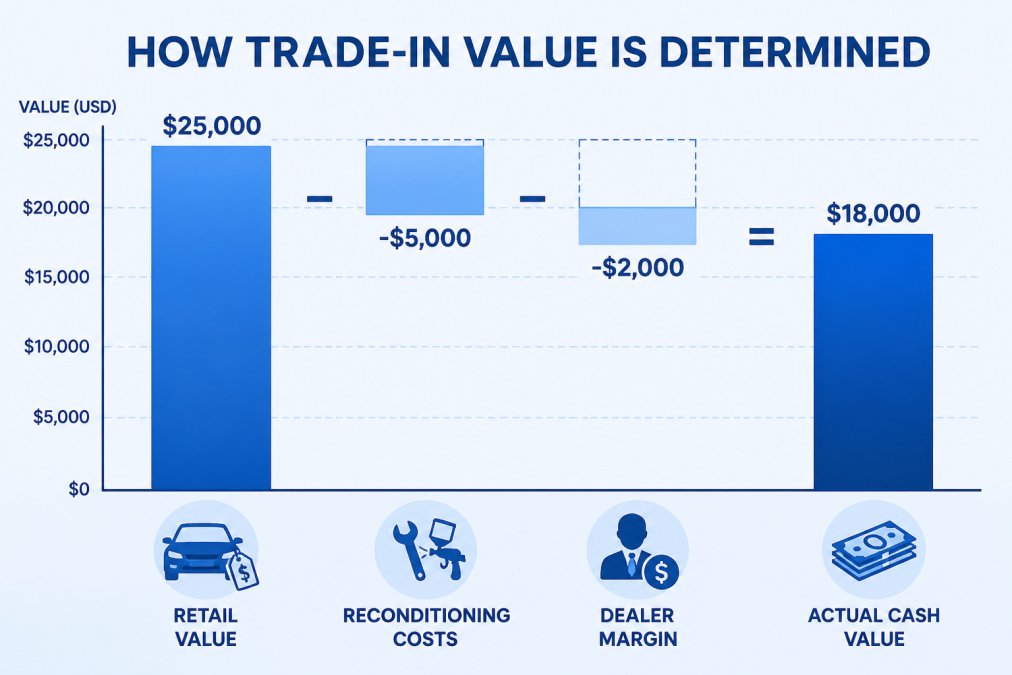
The offer is usually lower than retail value. That gap generally reflects the dealer's risk, the time a car sits on the lot, and the work needed to make it sellable.
- Retail value: what a buyer would pay the dealer for the car
- Reconditioning costs: repairs, cleaning, and inspection needed before resale
- Dealer margin: the profit needed to make the deal worthwhile
Factors That Affect Your Vehicle's Value
Several details move your offer up or down. Some you control, and some you do not.
- Make, model, and model year: popular models hold value better
- Mileage: lower miles usually bring a higher offer
- Condition: dents, scratches, interior wear, and tire tread all matter
A common mistake is assuming the car's original sticker price drives the offer. It does not. Age, condition, and demand matter far more.
Getting a Trade-In Appraisal Online and In Person
You can start with an online valuation tool to get a rough estimate, then confirm it with an in-person appraisal. Easy access to vehicle information and appraisal scheduling is available if you are ready to book one.
Many sellers find the best results come from doing both. You can reach us on Silverton Motors on Instagram for your next step.
Quick steps for an online appraisal:
- Enter your exact make, model, trim, and mileage
- Note any accidents, aftermarket parts, or cosmetic damage honestly
- Save a copy of the estimate for your records
Watch out: an online estimate that ignores real condition can overstate your car's value. An honest self-assessment saves time later.
Trade-In Value vs. Private Party Value
A private party sale usually brings more money than a trade-in. You handle the listing, the buyers, and the paperwork, so the extra cash is your reward for that effort.
The right choice depends on your priorities. If you want the process finished in a day, a trade-in makes sense. If you have time and want the highest return, a private sale is often worth the work.
Preparing Your Car and Documenting Maintenance
Preparation can raise your offer. A clean, well-kept car signals that it has been cared for, and that reduces the dealer's reconditioning estimate.
- Clean inside and out: remove personal items and wash the exterior
- Fix small problems: replace burnt-out bulbs and top off fluids
- Gather records: bring maintenance receipts and service history
Keep in mind that minor repairs do not always pay back. Compare the cost of a fix against the likely increase in your offer before spending money.
Trading In a Car With a Loan: Payoff and Negative Equity
If you still owe money on your car, the dealer must pay off the loan. The payoff amount may be higher or lower than the trade-in offer.
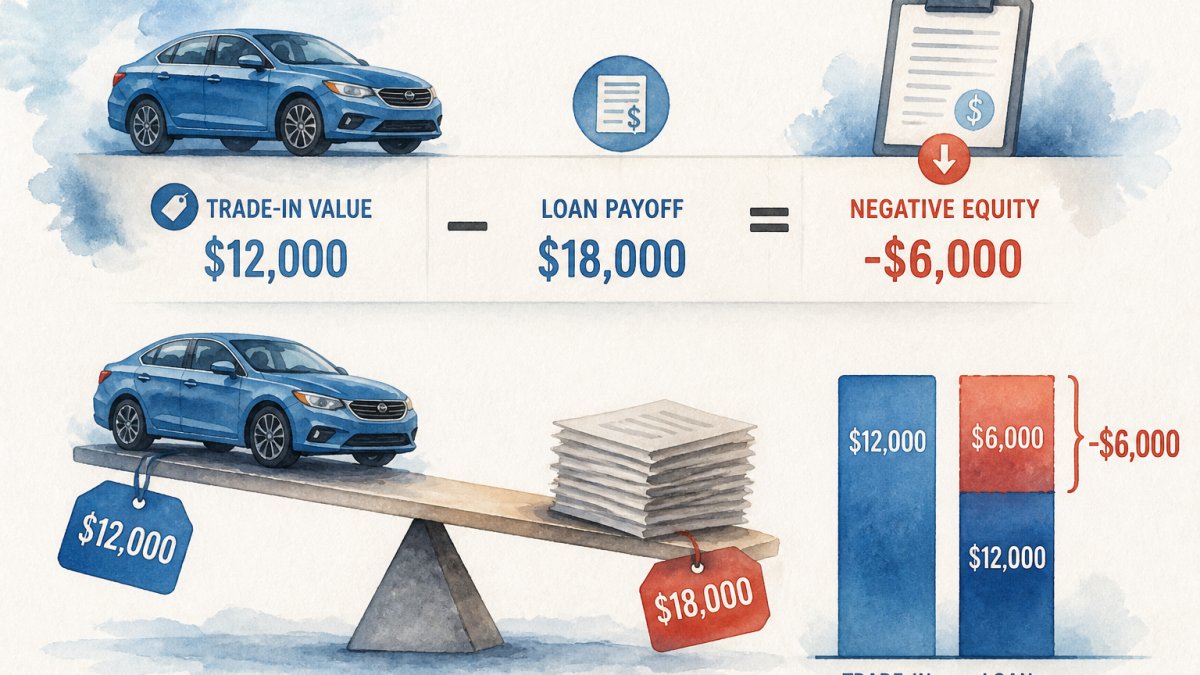
When you owe more than the car is worth, you have negative equity. The difference is often rolled into a new loan, which can raise your monthly payment and total cost.
How to Negotiate Trade-In Value With a Written Competing Offer
A written offer from another dealer or a reputable buyer is the single most useful tool you can bring to the table. It converts your request from a favor into a market comparison. Get it in writing, with a clear expiration date, before you negotiate.
What Counts as a Real Competing Offer
Not every number is leverage. A usable competing offer should include:
- The buyer's business name and contact information
- The vehicle's year, make, model, trim, and VIN
- The offer amount in USD and whether it is contingent on inspection
An online instant offer is a starting point, not a guarantee. Online buyers often reserve the right to adjust the number after an in-person inspection. A written offer from a competing franchised dealer, signed by a manager, generally carries more weight because it reflects an actual appraisal.
Documents to Bring to the Negotiation
Walk in prepared. A folder with the following items can keep the conversation focused on the number, not on paperwork delays:
- Your written competing offer (printed and on your phone)
- The vehicle's title or lienholder information
- Current registration and a valid driver's license
A Practical Negotiation Script
Use open questions first, then move to the competing offer. A common pattern that works:
You: "Before we talk numbers, can you walk me through how you arrived at your trade-in figure? I want to understand the reconditioning estimate and the market data behind it."
Dealer: "We use auction results and our reconditioning costs."
You: "That makes sense. I have a written offer of $X from [buyer], good through [date], based on an in-person inspection. Can you match it, or explain specifically where your number differs?"
Dealer: "We can't match that."
You: "I understand. Which part is different, the reconditioning estimate, the market comparison, or the margin? If we can agree on those inputs, I'm ready to move forward today."
Responding to Common Dealer Objections
- "That online offer isn't real, they'll drop it at inspection." Ask the competing buyer to confirm the offer in writing after inspection, or get a signed dealer appraisal. Then bring that document back.
- "We can't go higher on the trade, but we can discount the new car." Treat the two numbers as one deal. Ask for the out-the-door price on the new vehicle with and without the trade, and compare totals.
- "The trade number depends on financing with us." Ask for the trade allowance in cash terms, independent of financing, so you can compare it to your competing offer.
Separate the Trade-In From the Purchase
One of the most effective tactics is to negotiate the new-vehicle price first, in writing, before mentioning the trade. Once the purchase price is agreed, introduce the trade-in as a separate transaction. This prevents the dealer from moving profit between the two numbers, a higher trade allowance that is quietly offset by a higher vehicle price.
When to Walk Away
If the dealer will not match a legitimate written offer and will not explain the gap in concrete terms, you have your answer. A fair trade-in offer is one you can verify against the market, not one you have to take on faith.
Comparing the Full Deal and Your Next Step at Silverton Motors
A strong trade-in offer means little if the purchase price, taxes, and fees are high. The number on the trade-in line is only one input in a larger equation, and dealers know that buyers tend to fixate on it. The way to get a fair trade-in offer is to evaluate the entire transaction as a single package.
The Five Numbers That Make Up the Deal
Every trade-in transaction comes down to five figures. Write them down for each offer you receive:
- New or used vehicle price, the agreed price before taxes and fees
- Trade allowance, what the dealer is crediting for your car
- Payoff amount, what you still owe your lender, if anything
- Taxes and fees, sales tax, title, registration, documentation fee, and any add-ons
- Net difference, the amount you will actually finance or pay
The net difference is the only number that matters. A dealer who offers $1,000 more on the trade but charges $1,500 more for the vehicle is offering you a worse deal, not a better one.
How Trade-In Tax Credits Change the Math
In many states, the trade-in allowance reduces the taxable purchase price of the new vehicle. The exact rules vary by state, so verify the current treatment with your state's department of revenue or a tax professional before you rely on it.
A simple way to estimate the effect: multiply your trade allowance by your state's sales tax rate.
Negative Equity: Calculate Before You Commit
If you owe more than the trade allowance, the shortfall does not disappear. It typically gets rolled into the new loan, which raises your monthly payment and the total interest you pay.
- Positive equity: trade allowance minus payoff is greater than zero. You can apply the difference as a down payment.
- Negative equity: payoff minus trade allowance is greater than zero. That amount is added to the new loan balance.
Ask the dealer to show the negative equity as a separate line item on the worksheet. If the shortfall is large, consider waiting, paying down the loan, or selling privately to reduce the gap rather than financing it.
Online Offers vs. In-Person Appraisals
Online instant offers are convenient and can be useful leverage, but they are usually conditional. Most online buyers adjust the number after an in-person inspection for condition, history, or eligibility issues. In-person appraisals take longer but produce a firmer number. The strongest position is to have both: an online offer as a floor and an in-person appraisal as a verified comparison.
A Deal-Comparison Checklist
Before you sign, ask for the following in writing and compare across at least two dealers:
- Vehicle price before taxes and fees
- Trade allowance and any conditions attached to it
- Payoff amount and per-diem interest
If you are ready to see what your car is worth and compare it against vehicles on our lot, you can apply online and start the conversation with a clear view of the full deal.
The table below lists the five figures that make up any trade-in deal, so you can compare offers on the same basis.
| Figure | What it is | Why it matters |
|---|---|---|
| New or used vehicle price | Agreed price before taxes and fees | Sets the base for the whole deal |
| Trade allowance | What the dealer credits for your car | Only one input in the total |
| Payoff amount | What you still owe your lender | Determines equity or shortfall |
| Taxes and fees | Sales tax, title, registration, documentation | Can offset a higher trade number |
| Net difference | Amount you finance or pay | The only number that matters |
Frequently Asked Questions
How do car trade-ins work at dealerships?
At a dealership, you hand over your current car and the sales team appraises it, inspecting the condition, mileage, title, and history, then checks comparable vehicles in their local market. They make an offer based on what they expect to resell it for after reconditioning, minus their margin. The trade allowance is usually applied against the purchase price of the new or used car you are buying. Because the trade-in and the purchase are often negotiated together, it helps to agree on the trade value first, then discuss the price of the car you want.
Is trade-in value the same as actual cash value?
Not usually. Trade-in value is what a dealer will pay you, and it is typically lower than the car's retail value because the dealer must recondition the vehicle and make a profit. Actual cash value is an insurance and valuation term for what a comparable vehicle would sell for in the market, minus depreciation. Private-party value sits between the two. Knowing which figure you are looking at helps you judge whether an offer is fair.
Can I get a trade-in appraisal online?
Yes. Many dealers and online valuation tools let you enter your vehicle's make, model, year, mileage, trim, and condition to get an estimate, and some offer an instant cash offer good for a limited time. Online numbers are estimates, so the final offer depends on an in-person inspection of the vehicle's condition, accident history, and maintenance records. Ask whether the offer is conditional and how long it stays valid before you plan around it.
Should I negotiate my trade-in separately from the price of my next car?
Yes, when you can. Settle the purchase price of the car you are buying first, then negotiate the trade-in value as a separate figure. Combining the two makes it easy for the dealer to shift money between the trade allowance and the price without you noticing. Get a written trade-in offer and a written purchase price, then compare the total amount due, including taxes and fees, before you sign.