 listicle
Best Alternatives to Buying a New Car in 2026
Table of Contents
- Why Alternatives to Buying a New Car Make Financial Sense
- Certified Pre-Owned vs Used Cars: What's the Real Difference
- Vehicle Leasing and Subscription Models
- How to Inspect a Used Car Before Buying
- Best Used Cars for Daily Commuting
- Comparing Total Cost of Ownership Across Your Options
- Public Transportation and Mobility as a Service
- Public Transportation and Mobility as a Service
- Frequently Asked Questions
Last Updated: September 30, 2026
Why Alternatives to Buying a New Car Make Financial Sense
New car prices have climbed steadily, and the financial burden extends far beyond the initial purchase. Insurance, maintenance, depreciation, and financing costs accumulate quickly, making a new car one of the largest expenses a family will face in a given year.
This is where alternatives to buying a new car become compelling. Used vehicles, leasing, subscriptions, and public transportation alternatives can save thousands of dollars while providing reliable transportation.
The real question is which option aligns with your actual needs, budget, and lifestyle. Some benefit from subscription flexibility, others from certified pre-owned reliability, and still others from combining public transit with occasional rentals.
Certified Pre-Owned vs Used Cars: What's the Real Difference
Certified pre-owned (CPO) vehicles are used cars that have passed a manufacturer's inspection and come with a warranty. A standard used car is sold as-is, often without warranty protection, though some dealers offer limited coverage. The difference matters more than many buyers realize.
When you buy a certified pre-owned vehicle, the manufacturer has verified its condition against a detailed checklist covering engine, transmission, electrical systems, safety, and structure. A CPO vehicle includes a warranty (often 12+ months) protecting you if something fails shortly after purchase.
A used car from a private seller or independent dealer comes with no guarantees. You rely on the history report, your own inspection, and the seller's word. This yields savings if you know what to look for and accept the risk.
CPO costs more upfront but offers protection and verified condition. Used cars cost less but require more due diligence. For buyers lacking mechanical knowledge, CPO makes sense; for experienced buyers or tight budgets, a well-selected used vehicle often delivers better value.
Resources like Kelley Blue Book's CPO program listings help you compare certified vehicles across manufacturers and understand what coverage you're getting.
Vehicle Leasing and Subscription Models
Leasing means paying a monthly fee to use a car for a fixed period (typically 2-3 years), then returning it. Subscription models work similarly but with greater flexibility: you can change vehicles or cancel with shorter notice.
Leasing appeals to those wanting simplicity: your monthly payment covers insurance, maintenance, and roadside assistance. You drive a new vehicle with latest technology without worrying about depreciation or repairs.
Downsides include mileage limits (typically 10,000-12,000 miles/year), wear-and-tear charges, and no equity. Over time, leasing often costs more than buying a used vehicle.
Subscription services offer greater flexibility than leasing: change vehicles, pause, or cancel with 30 days' notice. Monthly costs are higher, but you gain freedom that leasing doesn't offer.
How to Inspect a Used Car Before Buying
Start with the vehicle history report. Services like Autotrader's vehicle history report integration let you check for accidents, title issues, and service records. A clean history doesn't guarantee the car is perfect, but a troubled history is a red flag. Look for multiple accidents, flood damage, or signs the vehicle was used as a rental or taxi.
Inspect the exterior and interior yourself. Look for mismatched paint (prior repairs), rust, and test all controls. Check for stains or odors indicating hidden damage.
The mechanical inspection is where most buyers stumble. Unless you're mechanically inclined, hire a pre-purchase inspection from an independent mechanic. This typically costs $100 to $200 but can save you thousands by identifying serious problems before you buy. The mechanic will test the engine, transmission, brakes, suspension, and electrical systems. They'll tell you what repairs are needed and what you might expect down the road.
Take the vehicle for a test drive on both highway and local roads. Listen for unusual noises, feel for vibrations, and pay attention to how the steering and brakes respond. A test drive reveals problems that a stationary inspection might miss.
Best Used Cars for Daily Commuting
Reliability matters most when you depend on a vehicle to get to work every day. You need a car that starts consistently, handles highway driving, and won't strand you with an unexpected repair bill.
Midsize sedans and compact SUVs dominate the used car market for commuters because they balance fuel efficiency, reliability, and affordability. Brands known for dependable used vehicles include Toyota, Honda, Mazda, and Hyundai. Models like the Toyota Camry, Honda Accord, Mazda6, and Hyundai Sonata have strong track records for longevity. These vehicles often run reliably well past 150,000 miles if maintained properly.
If you need more cargo space, compact SUVs like the Toyota RAV4, Honda CR-V, or Mazda CX-5 offer similar reliability with additional utility. These vehicles cost slightly more than sedans but hold their value well and appeal to a broad buyer base if you eventually resell.
For budget-conscious commuters, consider vehicles that are 5 to 7 years old rather than brand new. A 2019 or 2020 model year vehicle will cost significantly less than a 2026 model but will likely have many years of reliable service remaining. Use resources like Edmunds' reliability ratings and reviews to compare specific models and years before you buy.
Avoid vehicles with a history of transmission problems or engine issues. Research common problems for the specific year and model you're considering. A $15,000 used car with a known transmission defect becomes a $5,000 repair waiting to happen.
Comparing Total Cost of Ownership Across Your Options
The monthly payment is only one piece of the financial puzzle. Total cost of ownership includes everything: the purchase price, financing costs, depreciation, insurance, maintenance, fuel, and registration fees.
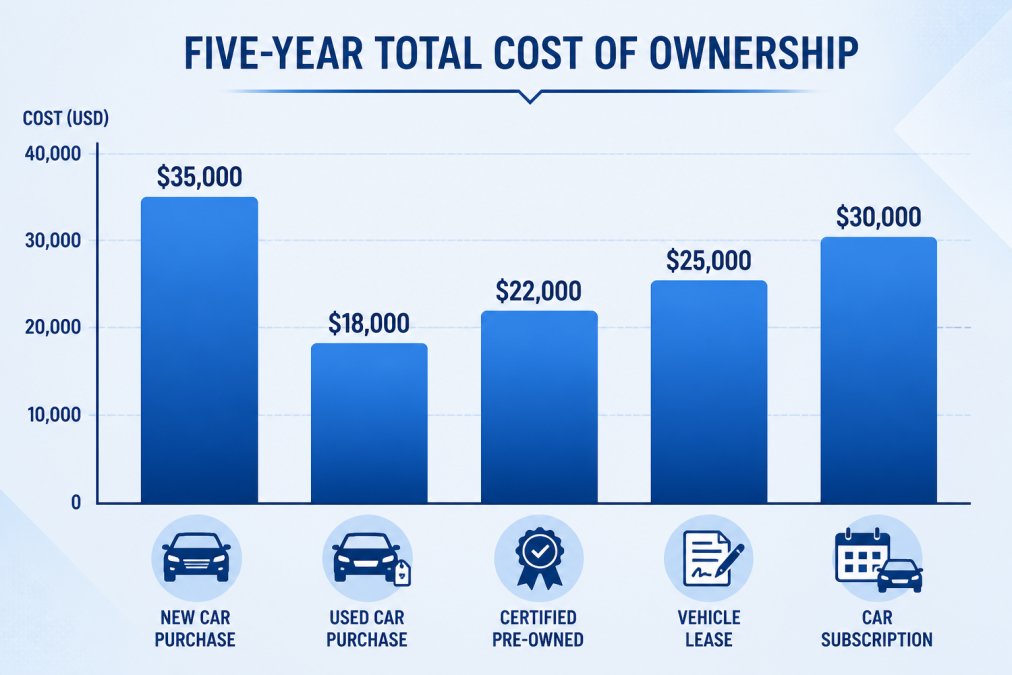
A new car depreciates rapidly, losing 20 percent of its value in the first year and another 15 percent by year three. A used car depreciates more slowly because the steepest decline already happened.
Public Transportation and Mobility as a Service
For some households, the answer to "alternatives to buying a new car" is simply not to buy one at all. Public transportation, ride-sharing services, and car-sharing platforms have made car ownership optional in many areas.
Public Transportation and Mobility as a Service
For some households, the answer to alternatives to buying a new car is simply not to buy one at all. Public transportation, ride-sharing services, and car-sharing platforms have made car ownership optional in many areas.
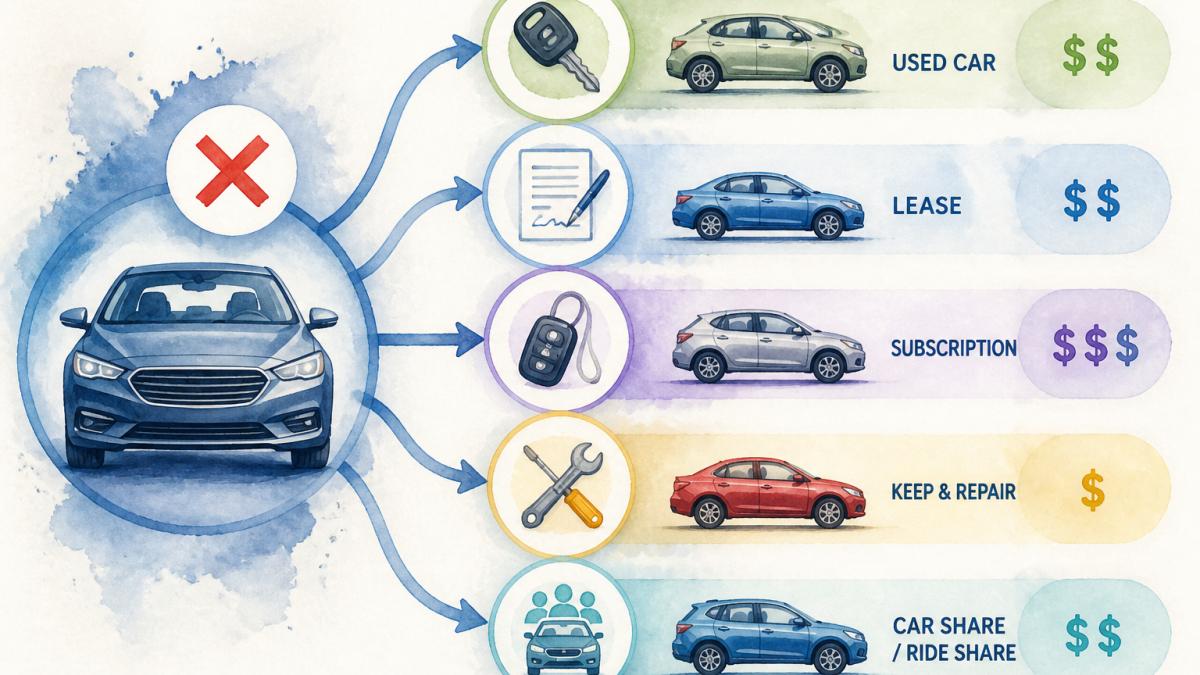
| Alternative | Best For | Monthly Cost Range | Long-Term Commitment |
|---|---|---|---|
| Used Car Purchase | Budget-conscious buyers, long-term owners | $300-$500 (financing) | 5-10 years |
| Certified Pre-Owned | Buyers wanting warranty protection | $350-$600 (financing) | 5-8 years |
| Vehicle Lease | Those who want new cars every 2-3 years | $400-$700 | 24-36 months |
| Car Subscription | Flexible users who want to change vehicles | $600-$1,200 | Month-to-month |
| Public Transit + Ride-Sharing | Urban dwellers with minimal driving needs | $100-$400 | None |
Frequently Asked Questions
Is it better to buy a used car or a new car in 2026?
Buying a used car typically costs significantly less over time due to lower depreciation, reduced insurance premiums, and lower registration fees. A used vehicle loses most of its value in the first three years, new cars depreciate fastest during this period. Used cars also have established reliability ratings and known maintenance histories. However, new cars come with manufacturer warranties and the latest safety features. The best choice depends on your budget, commute needs, and how long you plan to keep the vehicle.
Are certified pre-owned vehicles worth the extra cost compared to regular used cars?
Certified pre-owned (CPO) vehicles cost more upfront but offer significant peace of mind. CPO cars pass rigorous manufacturer inspections, come with extended warranties (typically 1-2 years), and have documented service histories. Regular used cars may be cheaper but carry higher risk of undisclosed repairs or maintenance issues. If you prioritize reliability and plan to own the car long-term, the CPO premium often pays for itself through avoided repair costs and lower insurance rates. For budget-conscious buyers, a well-inspected used car from a reputable dealer can offer similar value at lower cost.
What should I look for when buying a used car in 2026?
Check the vehicle history report (through Carfax or AutoCheck), inspect the body for rust or accident damage, test all electronics and safety features, and review maintenance records. Have a trusted mechanic perform a pre-purchase inspection, focusing on engine condition, transmission, brakes, and suspension. Verify the mileage matches the odometer, confirm the title is clean, and research common issues for that make and model year. Test drive on various road types to assess handling and performance. Always negotiate based on fair market value using tools like Kelley Blue Book or Edmunds before committing.
What are the best alternatives to car ownership for saving money?
Leasing costs less monthly than buying but includes mileage limits and wear-and-tear charges. Car subscription services offer flexibility without long-term commitment. Public transportation and ride-sharing reduce or eliminate vehicle ownership costs entirely. Mobility as a service (MaaS) platforms combine transit options in one app. For occasional drivers, short-term rentals work well. A hybrid approach, using public transit for commuting and owning a used car for weekend trips, balances cost and convenience. Calculate your total transportation budget and commute patterns to determine which option minimizes your long-term expenses.
How much can I save by choosing a used car over a new one?
Used cars typically cost 30-50% less than equivalent new models. Over five years, the total cost of ownership difference widens significantly because new cars depreciate fastest in years one through three. A three-year-old used vehicle has already absorbed the steepest depreciation curve, so its resale value remains more stable. Insurance premiums, registration fees, and loan interest rates are also lower for used vehicles. Using pricing tools like CarEdge or Edmunds helps you calculate exact savings based on the specific vehicle, financing terms, and your local market conditions.