 comparison
New vs Used Car Financing Options: 2026 Comparison
Table of Contents
- New vs Used Car Financing Options: 2026 Rate Comparison
- How Credit Score Impacts Auto Loan Rates
- Used Car Financing for Bad Credit: Realistic Options
- How to Get Pre-Affected for an Auto Loan
- The Hidden Costs of Used Car Financing
- Total Cost of Ownership: New vs Used Beyond the Loan
- Which Financing Option Fits Your Budget?
- Frequently Asked Questions
Last Updated: September 27, 2026
New vs Used Car Financing Options: 2026 Rate Comparison
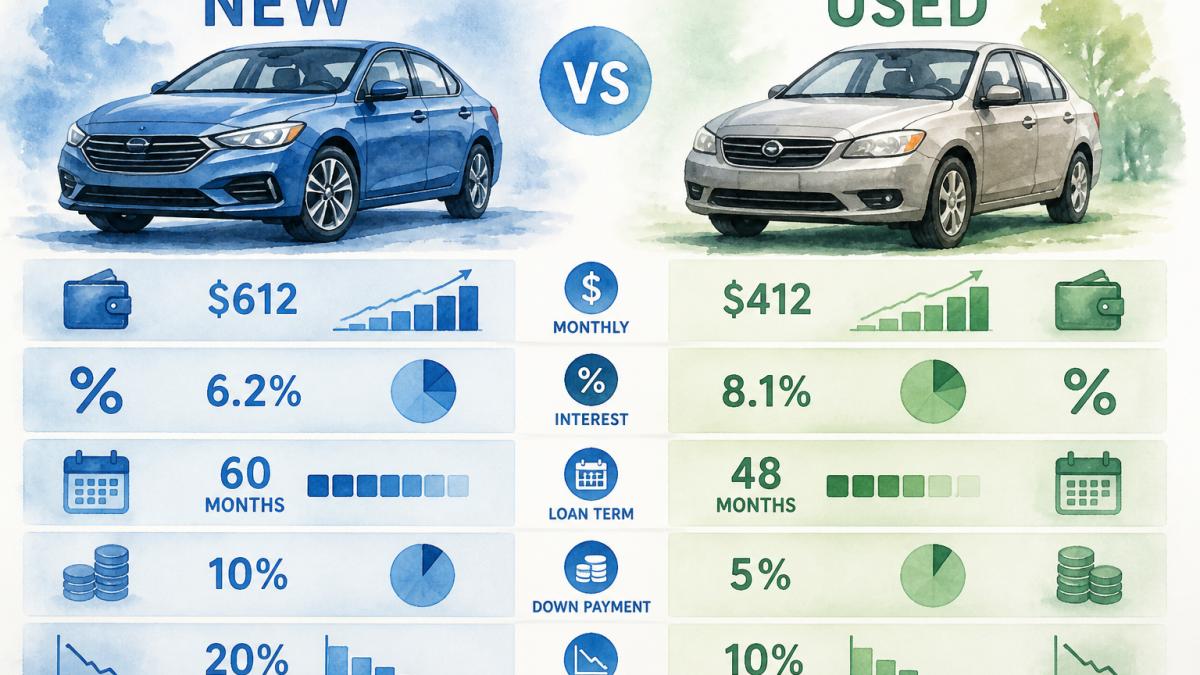
New vs used car financing options in 2026 come down to one blunt fact: you will almost always pay a higher interest rate on a used vehicle. Lenders price used car loans higher because the collateral loses value faster and carries more risk.
The gap is not small, either. According to Bankrate's auto loan rate tracker, used car APRs consistently run above new car APRs across every loan term. That spread is the single biggest reason a lower sticker price does not automatically mean a cheaper car.
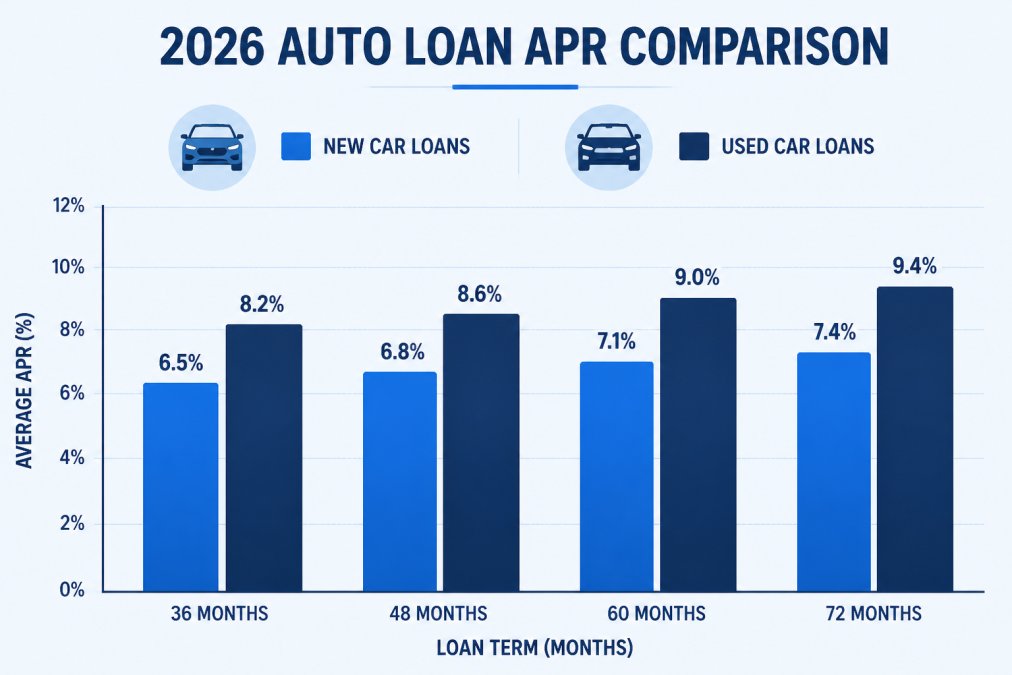
Current Average APRs for New and Used Auto Loans
New car loans typically carry lower annual percentage rates than used car loans, and the difference holds across every term length. A shorter loan term usually means a lower APR, but a higher monthly installment.
The reason is straightforward. A new vehicle is easier for a lender to value, and manufacturer incentives often subsidize the rate. A used vehicle has no such support, so the lender prices in more risk.
How Loan Terms Affect Your Monthly Installment
Longer loan terms lower your monthly payment but raise your total interest paid. A 72-month loan can stretch a payment into comfortable territory, yet you will pay interest for six full years on a car that keeps losing value.
Here is how term length changes the math on a $25,000 financed amount:
| Loan Term | Typical APR Range | Monthly Installment | Total Interest Paid |
|---|---|---|---|
| 36 months | Lowest | Highest | Lowest |
| 48 months | Low | High | Low |
| 60 months | Moderate | Moderate | Moderate |
| 72 months | Highest | Lowest | Highest |
Shorter terms win on total cost. Longer terms win on cash flow. Pick based on which one you can actually sustain.
How Credit Score Impacts Auto Loan Rates
Your credit score is the strongest single lever on your auto loan rate. Lenders sort borrowers into rate tiers by FICO range, and moving up one tier can cut your APR by a meaningful margin.
Rate Tiers by FICO Score Range
Most lenders use tiers that look roughly like this:
- Super prime (781-850): Best available rates
- Prime (661-780): Competitive rates, easy approval
- Non-prime (601-660): Higher rates, some conditions
- Subprime (501-600): Highest rates, larger down payment required
- Deep subprime (300-500): Limited options, dealer financing often the only path
The lesson: checking your score before you shop is not optional. It tells you which tier you are in and what to expect.
Used Car Financing for Bad Credit: Realistic Options
Used car financing for bad credit is possible, but the terms will reflect the risk. Buyers with damaged credit should expect a higher APR, a larger down payment, and stricter loan-to-value limits.
Subprime Lenders and What to Expect
Subprime lenders specialize in borrowers with lower scores. They approve more applications, but they charge for it. Expect:
- APRs well above prime rates
- Down payment requirements that can reach 20% or more
- Shorter maximum loan terms
- Proof of income and residency requirements
A credit union or a dealership with in-house financing can sometimes beat a subprime bank.
How to Get Pre-Affected for an Auto Loan
How to get pre-approved for an auto loan starts with a soft credit pull, not a hard one. Pre-approval tells you your rate and budget before you ever step onto a lot, which removes the pressure of dealer financing.
Documents You'll Need
Gather these before you apply:
- Government-issued photo ID
- Proof of income (recent pay stubs or tax returns)
- Proof of residence (utility bill or lease)
- Current insurance information
- References and, for some lenders, a down payment source
Having these ready speeds up underwriting and can shave days off the process.
The Hidden Costs of Used Car Financing
The hidden cost of used car financing rarely shows up in the advertised rate. It lives in loan-to-value ratios, add-ons, and the gap between what you owe and what the car is worth.
Loan-to-Value Ratios and Lender Risk
A loan-to-value ratio compares your loan amount to the vehicle's value. A high LTV means you owe close to or more than the car is worth, which raises lender risk and your rate.
Total Cost of Ownership: New vs Used Beyond the Loan
Total cost of ownership goes far beyond the monthly installment. It includes depreciation, insurance, maintenance, repairs, fuel or charging, and resale value, and it is where the used car argument usually wins, but not always, and not by as much as the sticker price suggests.
Depreciation Curve and Resale Value
A new car typically loses a meaningful share of its value in the first year, then the depreciation curve flattens over years two through five. A used car has already absorbed that first hit, so its resale value holds steadier in percentage terms. That is the quiet advantage of buying used: someone else paid for the steepest part of the drop.
Insurance, Maintenance, and Repair Costs
Insurance is not automatically cheaper on a used car. Premiums track repair cost, safety features, theft rate, and replacement value, not just purchase price. A used performance model can cost more to insure than a new commuter car.
Certified Pre-Owned (CPO) Financing
Which Financing Option Fits Your Budget?
The right financing option depends on your cash flow, credit, and how long you plan to keep the car. There is no universal winner, only the one that fits your numbers.
- Choose new financing if you qualify for the lowest APR tier, want the longest warranty, and plan to keep the car for years.
- Choose used financing if you want a lower purchase price and can accept a higher rate.
- Choose CPO financing if you want used pricing with warranty protection and a rate closer to new.
- Choose subprime or in-house financing if your credit is damaged and you need an approval path that still gets you on the road.
Frequently Asked Questions
How do interest rates differ between new and used car loans?
Used car loans typically carry higher interest rates than new car loans because lenders face more risk. A used vehicle has no manufacturer incentives, depreciates faster, and may have uncertain maintenance history. According to Bankrate data, the average APR for a 60-month new car loan is around 6.5%, while a used car loan for the same term averages near 8.2%. Your actual rate depends on credit score, loan term, and down payment. Shopping multiple lenders can help you find the most competitive car financing option for your situation.
What is the 20/4/10 rule for financing a vehicle?
The 20/4/10 rule is a budgeting guideline: put at least 20% down, finance for no more than 4 years, and keep total monthly vehicle costs (payment, insurance, fuel) under 10% of your gross monthly income. Following this rule reduces total interest paid and helps you avoid being upside-down on the loan. For used cars, a 20% down payment also lowers your loan-to-value ratio, which can lead to better financing terms from lenders. It's a simple way to keep your car affordable.
Is it better to buy a new or used car in 2026?
It depends on your priorities. New cars offer lower interest rates, manufacturer incentives, and the latest safety features, but they depreciate rapidly. Used cars cost less upfront, but you'll likely pay a higher interest rate and may face maintenance costs sooner. In 2026, certified pre-owned (CPO) vehicles bridge the gap with lower prices than new and often include warranty coverage. Run the numbers with an auto loan calculator to compare total cost of ownership, not just the monthly payment, before deciding.
What documents do I need to apply for financing at AutoSport USA?
To apply for car financing at AutoSport USA, you'll typically need a valid driver's license, proof of income (recent pay stubs or bank statements), proof of residence (utility bill or lease), and your Social Security number for a credit check. Having a down payment ready and knowing your trade-in value can speed up the process. You can start online with our secure application. Pre-approval helps you know your budget before you shop.
Can I get pre-approved for an auto loan with bad credit?
Yes, many lenders specialize in used car financing for bad credit. Start by checking your credit score and report for errors. Then apply with credit unions, online lenders, or dealership financing departments that work with subprime borrowers. Expect higher interest rates and possibly a larger down payment requirement. Getting pre-approved gives you a realistic budget and bargaining power. AutoSport USA works with multiple lenders to help find financing options even if your credit isn't perfect.
Financing a car should not feel like a gamble. AutoSport USA offers quality used vehicles, online financing tools, and trade-in valuations so you can see your real total cost up front. Get started with AutoSport USA and drive home with a payment that fits your budget.