 listicle
Best Used Trucks in Toms River: 2026 Buyer's Guide
Table of Contents
- How We Found the Best Used Trucks in Toms River
- Where to Shop: Local Dealers vs. Online Marketplaces
- Top-Rated Used Truck Models for Daily Driving
- Your Used Truck Inspection Checklist Before You Buy
- How to Boost Your Used Truck Trade-In Value
- Financing a Used Truck in NJ: What to Expect
- Final Checklist Before You Drive Off the Lot
- Frequently Asked Questions
Last Updated: September 6, 2026
How We Found the Best Used Trucks in Toms River
A used pickup truck is one of the smartest vehicle investments you can make, holding value better than most sedans while handling work, towing, and daily commuting with equal ease. Finding the best used trucks in Toms River comes down to matching the right model to your specific needs, whether that means towing capacity for a boat or 4WD for winter weather. In this guide, we break down the top-rated models, where to shop locally, and how to avoid costly mistakes before you sign.
The Toms River market offers a distinct advantage over national listings: local dealerships stock trucks that have lived through Jersey winters and coastal salt air, so rust and corrosion history matters more than a clean Carfax alone can tell you. Many buyers overlook this regional factor, focusing only on mileage and price.
Below, we'll walk through the models that consistently earn high marks for reliability, the inspection steps that separate good deals from money pits, and the financing realities of buying in New Jersey. We'll also cover how to maximize your trade-in value.
Where to Shop: Local Dealers vs. Online Marketplaces
Local dealerships remain a strong option for most buyers because they often offer vehicle history reports, certified pre-owned programs, and service departments. Online marketplaces like CarGurus local used truck listings and Autotrader truck inventory provide excellent price transparency and broad inventory reach, but they ultimately route you back to a dealer or private seller for the actual transaction.
The practical difference comes down to accountability. When you buy from a local dealer, you often have a physical location to return to if something goes wrong. Private sellers and distant online listings may not offer that safety net. For buyers who want to compare prices across multiple lots before visiting, marketplaces like Cars.com truck research tools and TrueCar local pricing data are useful research tools, not replacement for an in-person test drive.
A hybrid approach works best: use online listings to establish fair market value for the specific make, model, and trim level you want, then visit local lots with that number in hand. This gives you negotiating use while keeping the transaction local.
| Shopping Option | Best For | Key Tradeoff |
|---|---|---|
| Local dealership | Accountability, service support, trade-in deals | Inventory limited to one location |
| Online marketplace | Price comparison, wide selection | No physical recourse after purchase |
| Private seller | Lowest price potential | No warranty, no inspection guarantees |
Top-Rated Used Truck Models for Daily Driving
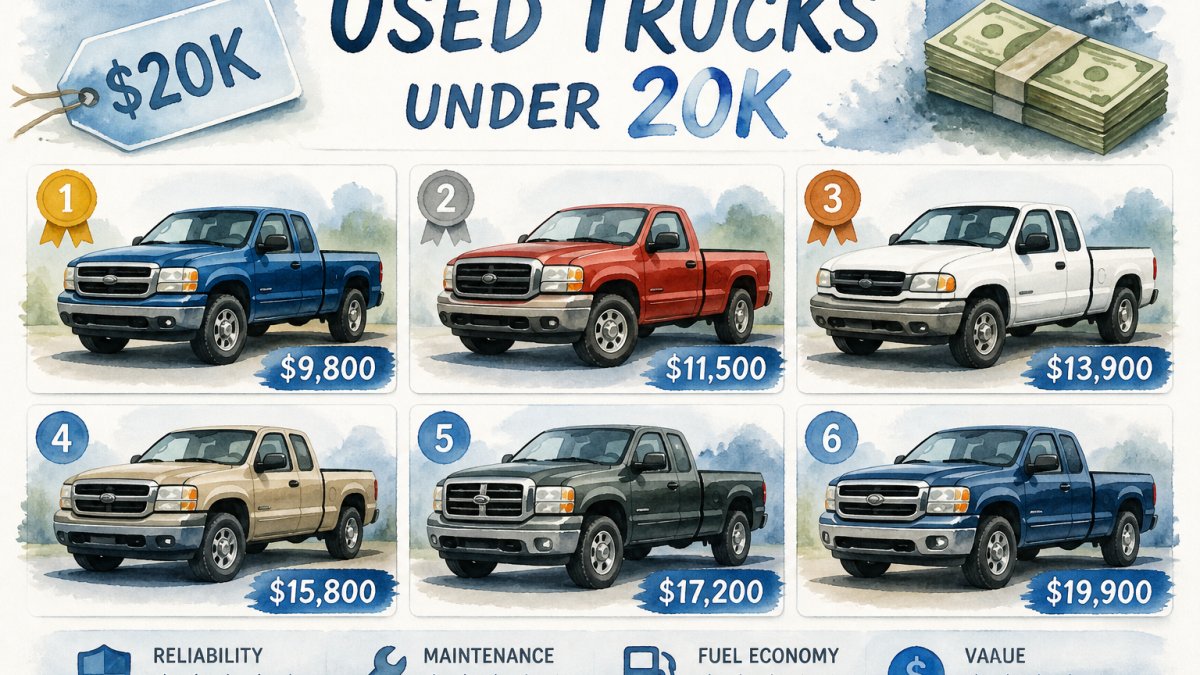
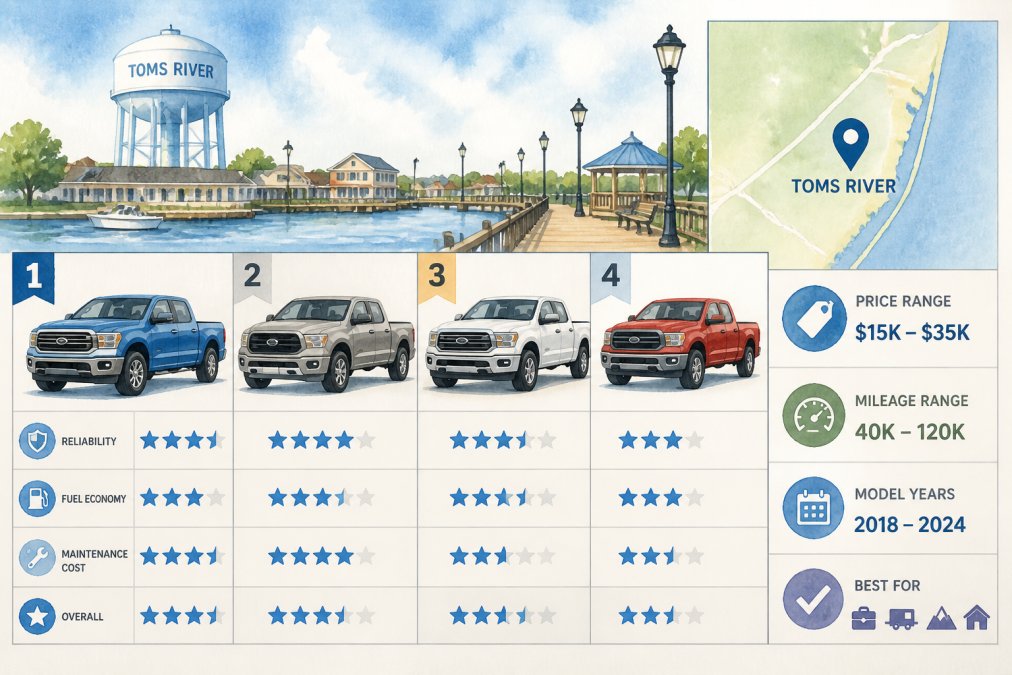
The Ford F-150, Chevrolet Silverado 1500, and Ram 1500 are popular half-ton segment leaders. These models are common in local inventory and combine strong towing capacity with comfortable ride quality and widespread parts availability. For buyers who prioritize fuel economy over raw capability, the Toyota Tacoma and Honda Ridgeline may offer better efficiency with slightly reduced payload.
US News used truck rankings consistently place the Toyota Tundra and Ford F-150 at the top for long-term reliability, citing their proven powertrains and lower cost of ownership over five years. The key specification to check on any used truck is the drivetrain configuration: 4WD adds resale value and winter capability but also adds weight and maintenance complexity. A 2WD truck with good tires handles most Ocean County commutes fine and costs less upfront.
Trim level matters more than many first-time truck buyers realize. An XL or base model F-150 lacks the towing package and trailer brake controller that come standard on higher trims, which can add significant cost if you need to retrofit them. Verify the towing capacity on the door jamb sticker, not the sales brochure.
Your Used Truck Inspection Checklist Before You Buy
A thorough inspection is an important step in buying any pre-owned truck, and it takes about 45 minutes if you work through it systematically. Used trucks that pass every check on this list are often good options.
Start with the frame and undercarriage, since coastal salt accelerates rust. Look for flaking metal, bubbling paint on frame rails, and excessive corrosion on exhaust components. Surface rust is normal; structural rust is a dealbreaker. Move to the body panels and check for mismatched paint, uneven panel gaps, or overspray in the door jambs, all signs of prior collision repair.
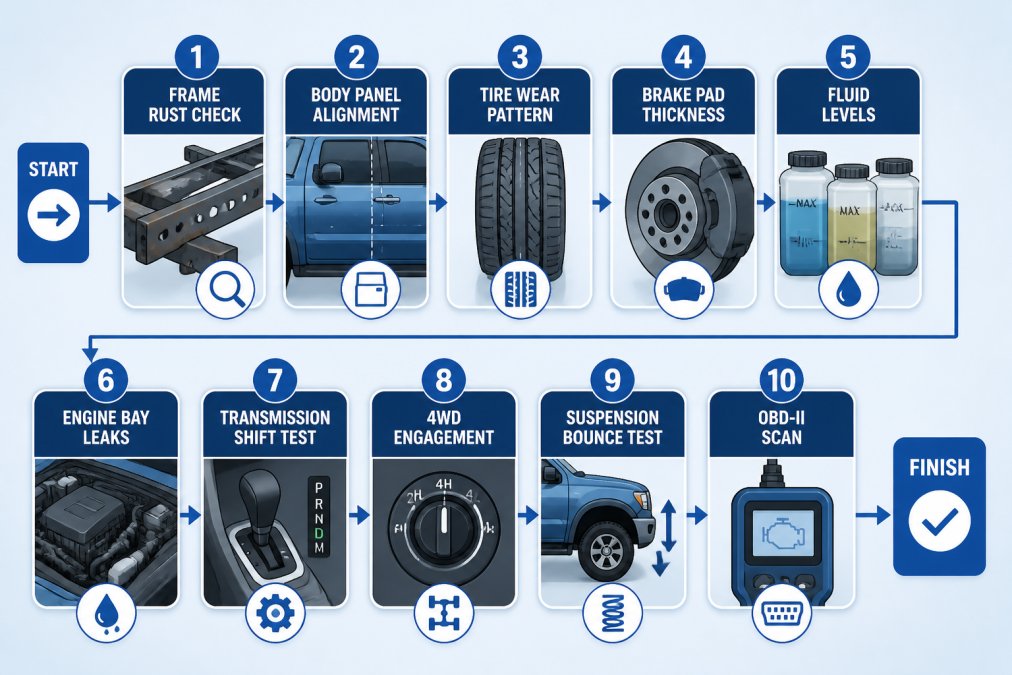
The mechanical checks require no special tools. With the engine cold, remove the oil filler cap and look for milky residue, which indicates coolant contamination. Check the transmission fluid on the dipstick while the engine idles in park. Test every 4WD range, including low range, on a straight gravel or dirt surface. Finally, pull the OBD-II codes with a $20 scanner from any auto parts store, or ask the dealer to run one in front of you.
How to Boost Your Used Truck Trade-In Value
Your current vehicle's trade-in value directly affects your budget for a used truck, and preparation steps can potentially add value to the offer. The appraisal process often weighs mechanical condition, cosmetic appearance, and service history. You can address these factors before you ever set foot on a lot.
Start with a deep cleaning, both interior and exterior. Dealers photograph every trade-in and factor first impressions into their offer. Remove personal items, vacuum thoroughly, and address minor cosmetic issues like cracked mirrors or burnt-out bulbs, which are cheap to fix but signal neglect to an appraiser. Gather every maintenance record you have; a documented oil change history can add verifiable value because it may reduce perceived risk.
Kelley Blue Book trade-in value guide recommends getting an instant cash offer from multiple sources before visiting a dealership, giving you a baseline number to compare against. Many buyers skip this step and accept the first offer presented. A quick online valuation can provide a baseline for comparison.
Financing a Used Truck in NJ: What to Expect
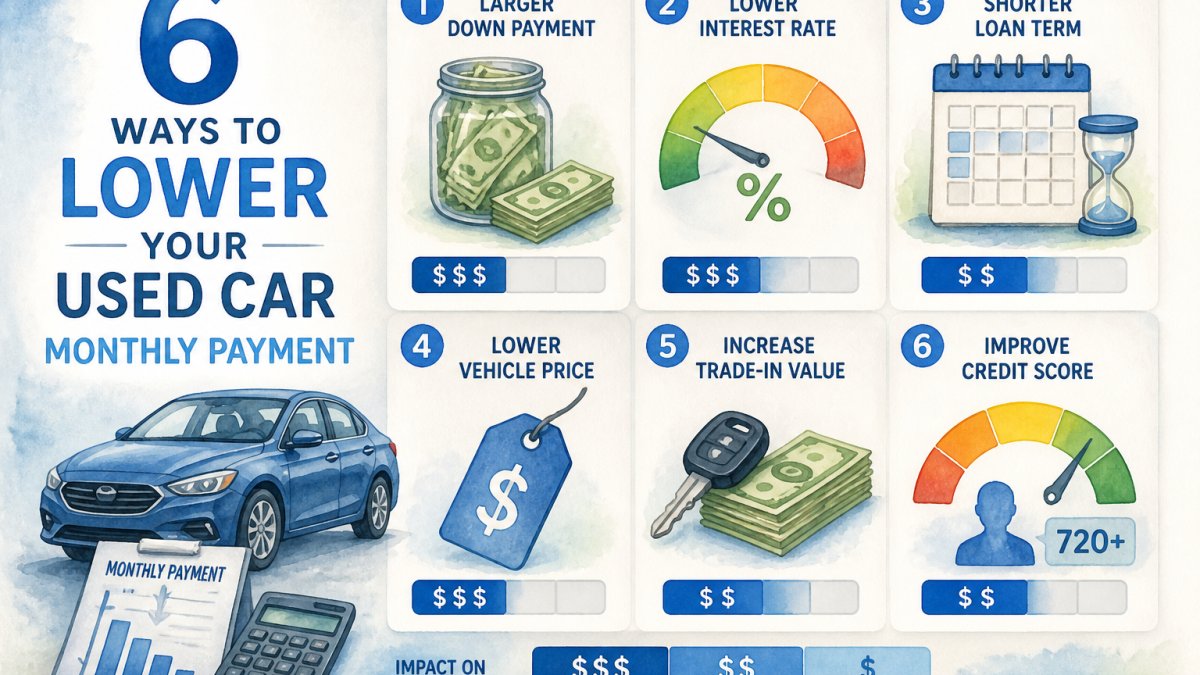
Financing a used truck in NJ follows the same basic structure as any auto loan, but the details matter more when you're buying pre-owned. Your credit score determines the interest rates available to you, with higher scores qualifying for significantly lower annual percentage rates. Down payment expectations typically range from 10 to 20 percent for used vehicles, though some programs allow less.
New Jersey adds sales tax, registration fees, and title transfer costs on top of the purchase price, so your total out-of-pocket exceeds the sticker number. Many buyers calculate their monthly payment against the truck price alone and find themselves stretched at closing. A realistic budget includes these additional costs plus immediate maintenance items like new tires or an oil change.
Credit challenges don't automatically disqualify you from financing. Many dealerships work with lenders who specialize in buyers with past credit issues, though the interest rates reflect that increased risk. Applying through a dealer's finance department can provide access to multiple lenders. You can also secure pre-approval from your own bank first to establish a baseline rate.
| Budget Item | Typical Timing | Notes |
|---|---|---|
| Sales tax | At purchase | Percentage of sale price |
| Registration fees | At purchase | Varies by vehicle weight |
| Down payment | At purchase | 10-20% of price |
| First month's payment | 30 days after signing | Confirm due date |
| Immediate maintenance | First 90 days | Tires, fluids, brakes |
Final Checklist Before You Drive Off the Lot
The moment before signing is your last chance to verify everything, and a final walkthrough prevents post-purchase surprises. Confirm that the vehicle history report matches the VIN on the dashboard and door jamb, then test every electronic feature: windows, locks, climate control, infotainment, and all lighting. A burned-out brake light is a minor fix, but a failing infotainment screen can cost hundreds to replace.
Review the out-the-door price line by line. You should see the truck price, sales tax, registration fees, and any dealer documentation fees itemized separately. Question any charge that wasn't disclosed during negotiations. Transparent pricing means the number you agreed to is the number on the contract, with no surprise add-ons.
Before you drive away, scheduling your first maintenance appointment for a fluid flush and full inspection can be a good practice. This can help establish a baseline and catch any issues that surface during the first weeks of ownership. A used truck that passes this final review can be a reliable option for daily driving, weekend projects, and everything in between.
Buying a used truck in Toms River doesn't have to feel like a gamble. The process comes down to knowing which models hold up, inspecting every vehicle with a critical eye, and understanding the full financial picture before you commit. At AutoSport USA, we make that process straightforward with a diverse inventory of quality used vehicles, online financing tools, and trade-in valuations that reflect your vehicle's true condition. Apply online today and find a used truck that fits your budget and your daily driving needs.
Frequently Asked Questions
What's the most reliable used truck to buy?
Full-size trucks from Toyota and Ford consistently rank high for reliability in the Toms River market. The Toyota Tundra is known for its engine longevity, while the Ford F-150 offers a balance of capability and a wide parts network. For daily commuting, consider a smaller truck like the Honda Ridgeline if you don't need maximum towing capacity. Before committing, always run a vehicle history report and have a mechanic perform a pre-purchase inspection.
What should I look for when inspecting a used truck in person?
Use a structured used truck inspection checklist to stay objective. Check the frame for rust or signs of a recent undercoating that might hide damage. Look for uneven tire wear, which indicates alignment or suspension issues. Test the 4WD system if the truck has it. Inspect the bed for dents and the tailgate for proper operation. Finally, take a long test drive that includes highway speeds to check for vibrations.
How do I determine the fair market value of a used truck?
Use online pricing tools like TrueCar or CarGurus to see what similar trucks are selling for in the Toms River area. Compare trucks with the same make, model, trim level, and similar mileage. Be sure to account for the vehicle condition and any included warranty. This data gives you a strong baseline for negotiating a fair price with the dealership.
What are the benefits of buying a used truck from a local dealership?
Buying locally in Toms River means you can inspect the truck in person and take a test drive. A local dealership often provides a service history and may offer certified pre-owned options with extended warranties. If issues arise after the sale, you have a physical location to return to for service. This direct relationship is usually easier than managing a transaction with a private seller or a distant online-only outlet.