 comparison
Dealer Trade-In vs Online Car Buying Services (2026)
Table of Contents
- Dealer Trade-In vs Online Car Buying Services: The Core Difference
- Online Car Offer vs Dealership Offer: Where the Numbers Come From
- Net Proceeds: Fees, Taxes, and Purchase Incentives
- Trade-In Tax Savings and How They Change the Math
- How to Negotiate a Car Trade-In (Even With an Online Offer in Hand)
- Documents Needed to Sell a Car or Complete a Trade-In
- Which Option Fits Your Priorities?
- Frequently Asked Questions
Last Updated: October 21, 2026
Dealer Trade-In vs Online Car Buying Services: The Core Difference
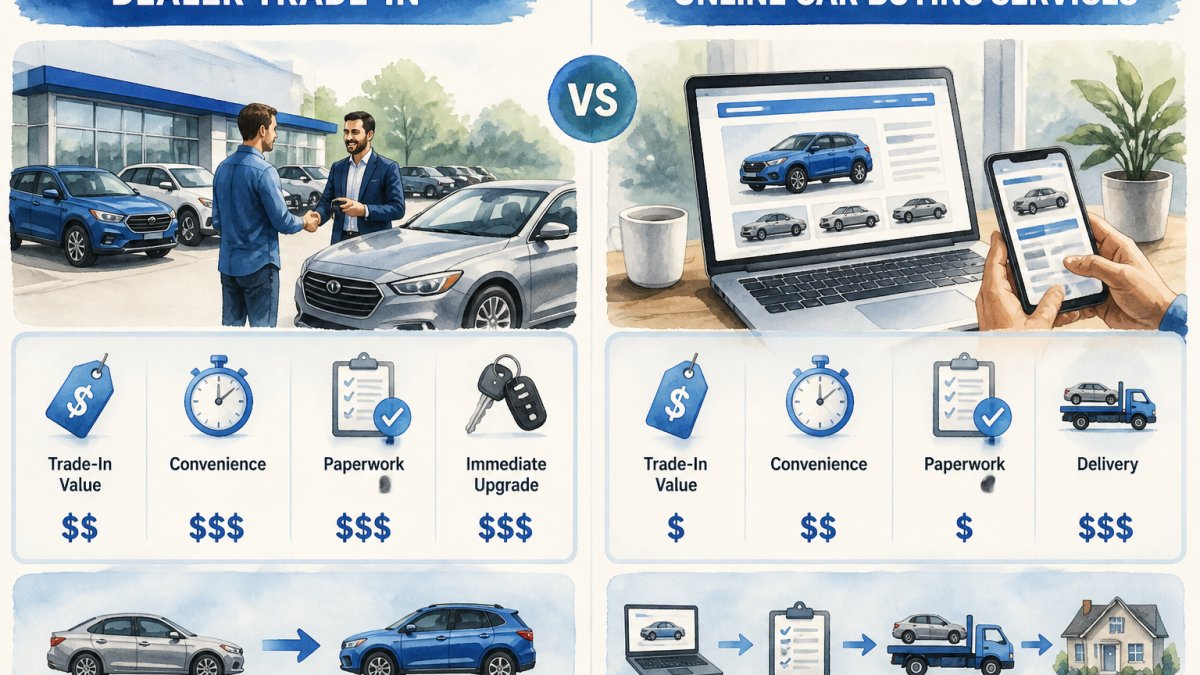
The core difference between a dealer trade-in and an online car buying service is control: a dealer inspection happens in person and the offer adjusts to condition, while an online offer starts high and is confirmed only after pickup or inspection.
Here is the short answer most guides bury: the online offer is usually an opening number, not a final one.
Below, we break down where each offer comes from, what actually lands in your pocket, and how to negotiate when you already have an online quote in hand.
Online Car Offer vs Dealership Offer: Where the Numbers Come From
An online car offer is generated from VIN data, vehicle history, and regional market data before anyone sees the car. A dealership offer is built the same way, then verified on the lot with a physical appraisal.
That difference explains most of the gap sellers notice. Online platforms price against broad market data and build in a cushion for the unknown. Dealers price against what the car will actually retail for on their lot, which means condition deductions get applied up front rather than after the fact.
Appraisal, Market Data, and Condition Deductions
A dealer appraisal checks the items that move value most: mileage, tire tread, paint and body panels, service records, warning lights, and title status. An online offer skips that step until pickup, which is where post-inspection adjustments show up.
A common mistake is treating the online quote as a locked number. In practice, an online offer can be revised downward at inspection for condition issues the remote quote could not see.
Net Proceeds: Fees, Taxes, and Purchase Incentives
Net proceeds are what you actually keep after loan payoff, transaction fees, and tax treatment, not the headline offer. This is the single number that should drive your decision, and it is where dealer trade-ins and online car buying services diverge most.
The headline gap is usually small. A dealer might offer $12,500 while an online service quotes $13,200. But the online quote is a cash sale with no sales tax credit attached, while the dealer trade-in reduces the taxable price of your replacement vehicle in most states. On a $32,000 replacement in a state with a 6% sales tax rate, a $12,500 trade-in credit saves roughly $750 in tax, which can erase most or all of a $700 headline gap.
The Fee Inventory
Build a line-by-line estimate for each path before you commit:
- Dealer trade-in: no separate selling fee, but expect the dealer's offer to already reflect reconditioning and lot margin. Payoff is handled at the finance desk, usually same day.
- Online car buying service: no seller fee in most cases, but confirm whether pickup, title handling, or expedited payment carries a charge. Payment timing is typically one to three business days after inspection and title verification.
- Private-party sale: listing fees, time cost, payment verification risk, and no tax credit unless your state allows a private-sale credit (few do).
Loan Payoff and Negative Equity
A remaining balance gets paid directly to your lender. Ask each path for the payoff quote date and the per-diem interest so the loan does not accrue extra days. If you are underwater, negative equity has to be rolled into the next loan or covered in cash, and an online cash sale gives you no next loan to roll it into, which is a decisive difference for upside-down sellers.
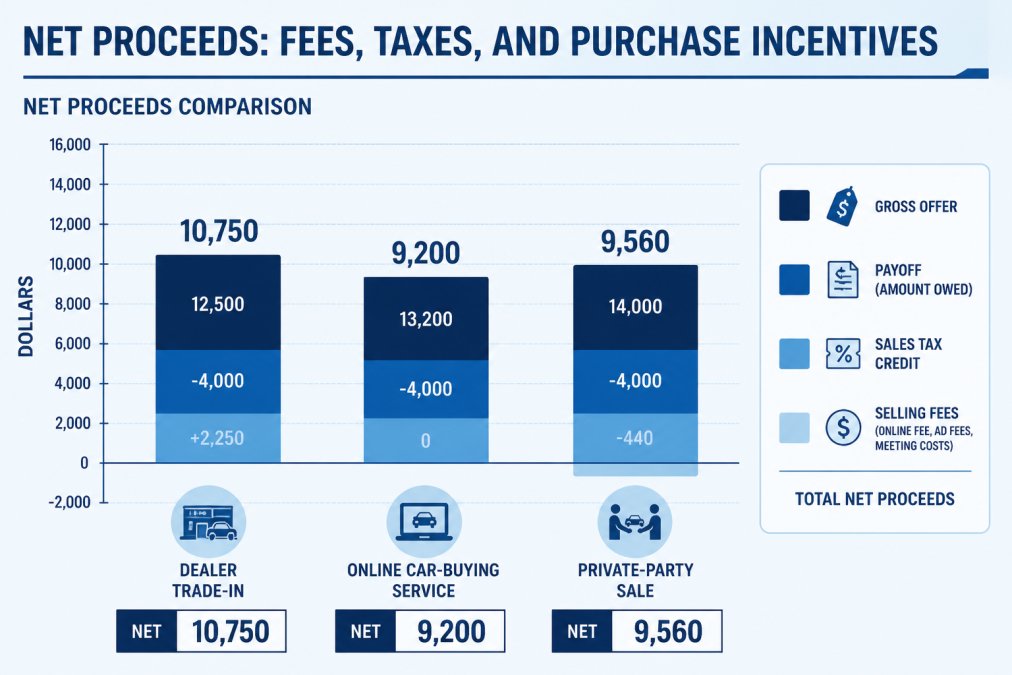
Confirm how each path handles a loan payoff in writing, including payoff timing and who sends the check to the lender. That single document prevents the most common post-sale surprise: a loan that accrues interest for an extra week while the title is in transit.
Trade-In Tax Savings and How They Change the Math
Trade-in tax savings come from reducing the taxable purchase price by your trade-in credit. Many states tax only the difference between the new vehicle price and the trade-in value, which lowers the sales tax you owe on the purchase.
Rules vary by state, so confirm the current treatment with your state motor vehicle agency before you decide. A cash sale through an online service does not reduce a purchase price, so no credit applies.
Run the math both ways. Compare the online offer against the dealer offer plus the tax credit, not against the dealer offer alone.
How to Negotiate a Car Trade-In (Even With an Online Offer in Hand)
An online offer is only leverage if it is real, current, and adjustable on your terms. Most sellers treat the quote as a number to wave around; the ones who get the best outcome treat it as a BATNA, a best alternative to a negotiated agreement, and they know exactly what it is worth after inspection.
Why the Online Quote Is Your BATNA, Not Your Ceiling
A dealer knows an online buyer will inspect the car at pickup and can revise the number downward for condition issues the remote quote could not see. That means your online quote is worth its post-inspection value, not its headline value. Before you walk into a dealership, read the adjustment clause and estimate what a realistic inspection deduction looks like, worn tires, a warning light, or a prior-accident entry on the vehicle history report are the usual culprits.
If the online quote is $13,200 and you expect a $600 inspection adjustment, your true BATNA is $12,600. Negotiate against that number, not the headline.
Sequence the Deal to Avoid the Four-Square
The classic dealership move is to blend trade value, vehicle price, financing rate, and monthly payment into one conversation so each concession hides the others. Break it apart:
- Agree the trade number first, in writing, with an expiration date.
- Negotiate the replacement vehicle price second, ideally against a written out-the-door quote.
- Discuss financing last, with a pre-approval from your own lender in hand as a benchmark.
- Confirm the tax credit is applied to the agreed trade value, not a lower post-negotiation figure.
Contesting a Post-Inspection Adjustment
If the online service revises its offer at pickup, ask for the itemized deduction and compare it against the dealer's appraisal line items. A common pattern is that the online adjustment and the dealer appraisal converge within a few hundred dollars, which tells you the market has spoken and the headline gap was mostly cushion. If the online adjustment is larger than the dealer's, you have grounds to push back or walk.
What to Bring to the Negotiation
- A printed online offer with its expiration date and adjustment policy
- A dealer appraisal in writing, itemized by condition
- Your lender's payoff quote, dated within the last few days
- A pre-approval from your own bank or credit union
- Service records that support your condition claims
The seller who wins this negotiation is not the one with the highest quote. It is the one who knows the post-inspection value of every offer on the table and keeps the trade, the price, and the financing as three separate conversations.
Documents Needed to Sell a Car or Complete a Trade-In
Selling a car requires proof of ownership, identification, and a clear title or lender payoff statement. Missing paperwork is the most common reason a deal stalls at the finance desk.
- Certificate of title, or lender payoff statement if financed
- Valid driver's license or state ID
- Current registration
- All keys and remotes
- Maintenance and service records
- Loan account number and payoff quote
- Lien release, if the loan was recently paid off
Bring everything to the first visit. It shortens the transaction and prevents a second trip.
Which Option Fits Your Priorities?
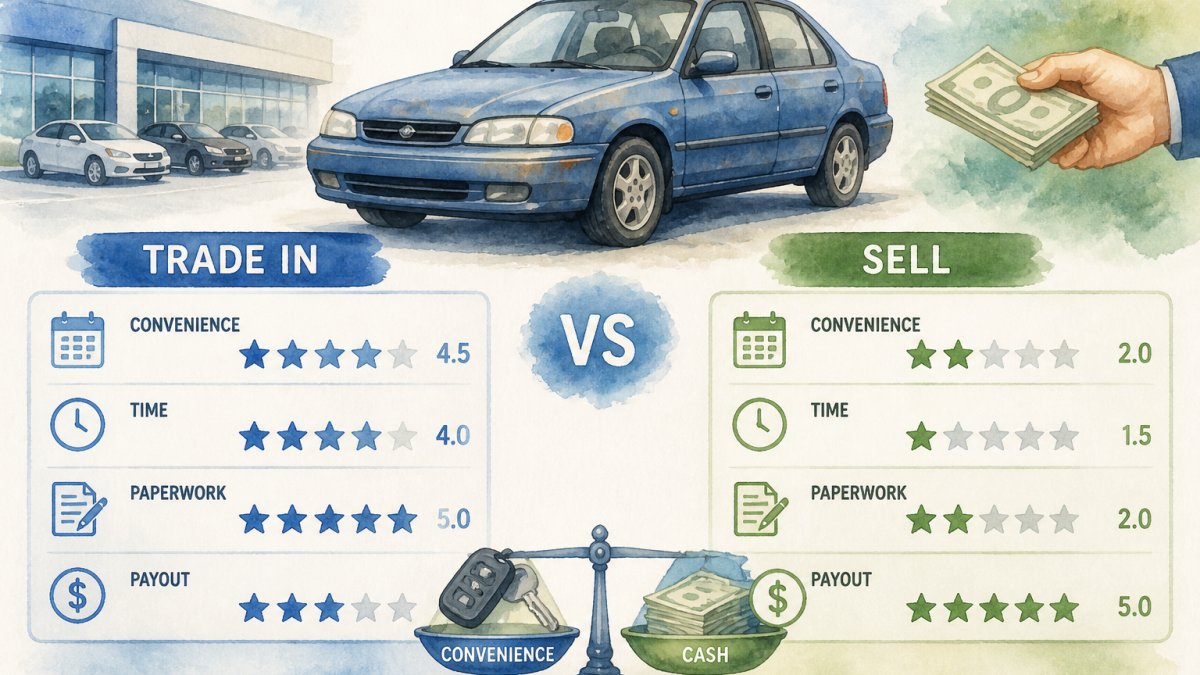
Choose a dealer trade-in if you are buying a replacement vehicle, want the tax credit, and value a single transaction. Choose an online car buying service if you want speed and are selling outright with no purchase attached.
| Priority | Dealer Trade-In | Online Car Buying Service |
|---|---|---|
| Speed | One visit, same-day | Days for pickup |
| Tax credit | Applies in most states | No credit |
| Offer accuracy | Verified in person | Adjusted after inspection |
| Paperwork | Handled at the dealership | You handle title transfer |
| Best for | Buyers replacing a vehicle | Sellers cashing out |
Private-party sale still wins on raw price, but it costs you time, safety risk, and payment verification. For most families replacing a daily driver, the trade-in credit and one-stop paperwork outweigh the extra few hundred dollars.
At AutoSport USA, we appraise trade-ins on site and apply the value directly to your next vehicle, with online financing tools to pre-qualify before you visit.
Frequently Asked Questions
Is it better to trade in a car at a dealership or sell it online?
It depends on what you value most. A dealer trade-in usually means less legwork: you hand over the keys, the dealer handles title transfer and paperwork, and in most states the trade-in credit reduces the sales tax on your next vehicle. An online car buying service may quote a competitive offer and handle pickup, but you often give up the tax credit and may see the offer adjusted after inspection. Compare net proceeds, not headline offers, before deciding.
Do online car-buying services pay more than dealerships?
Not always. An online car offer vs dealership offer can differ by hundreds or thousands of dollars on the same vehicle, and the higher initial number is not guaranteed. Online offers are frequently revised after a physical inspection for condition deductions like tires, paint, or warning lights. A dealer appraisal happens in person, so the number you agree on is typically the number you get. Get both quotes and compare final, post-inspection figures.
Can I use an online car offer to negotiate a dealer trade-in?
Yes, and it is one of the most effective tactics. Get a written online offer first, then bring it to the dealership and ask them to match or beat it. Dealers know you have alternatives, which often improves the appraisal. Keep the offer expiration date in mind, since most online quotes are valid for a limited window, and confirm whether the figure is contingent on inspection before you use it as leverage.
How do taxes affect a car trade-in?
In most states, the trade-in value is subtracted from the purchase price of the new vehicle before sales tax is calculated, which is the trade-in tax savings benefit. If you sell to an online service or a private buyer instead, you typically pay sales tax on the full purchase price of your next car. Rules vary by state, so confirm how your state handles trade-in credits before you choose a path.
What documents do I need to sell or trade in my car?
Bring the vehicle title (or lien release if you have a loan), a valid driver's license, current registration, and any loan payoff information including the lender's contact and account number. If multiple names are on the title, all owners usually need to sign. A maintenance record helps support your asking price. The dealer or online service handles the title transfer paperwork, but you should receive a copy for your records.
Comparing offers is smart, but the transaction that actually closes matters more than the highest quote on paper. AutoSport USA appraises your trade-in in person, applies the value toward your next vehicle, and lets you start financing online before you arrive. Get your trade-in valuation and apply online to see the real number, not an estimate.