 how-to
Streamlined Online Financing for Bad Credit: A Step-by-Step Guide
Table of Contents
- How Online Financing Works for Bad Credit Buyers
- Getting Pre-Approved: The Online Car Loan Pre-Approval Process
- Used Car Financing for Bad Credit: Comparing Your Options
- How to Value a Trade-In Online and Maximize Your Equity
- Steps to Simplify Your Application and Speed Up Approval
- Tips for Improving Your Approval Odds with Bad Credit
- What to Expect After Approval: Timeline and Next Steps
- Frequently Asked Questions
Last Updated: October 4, 2026
How Online Financing Works for Bad Credit Buyers
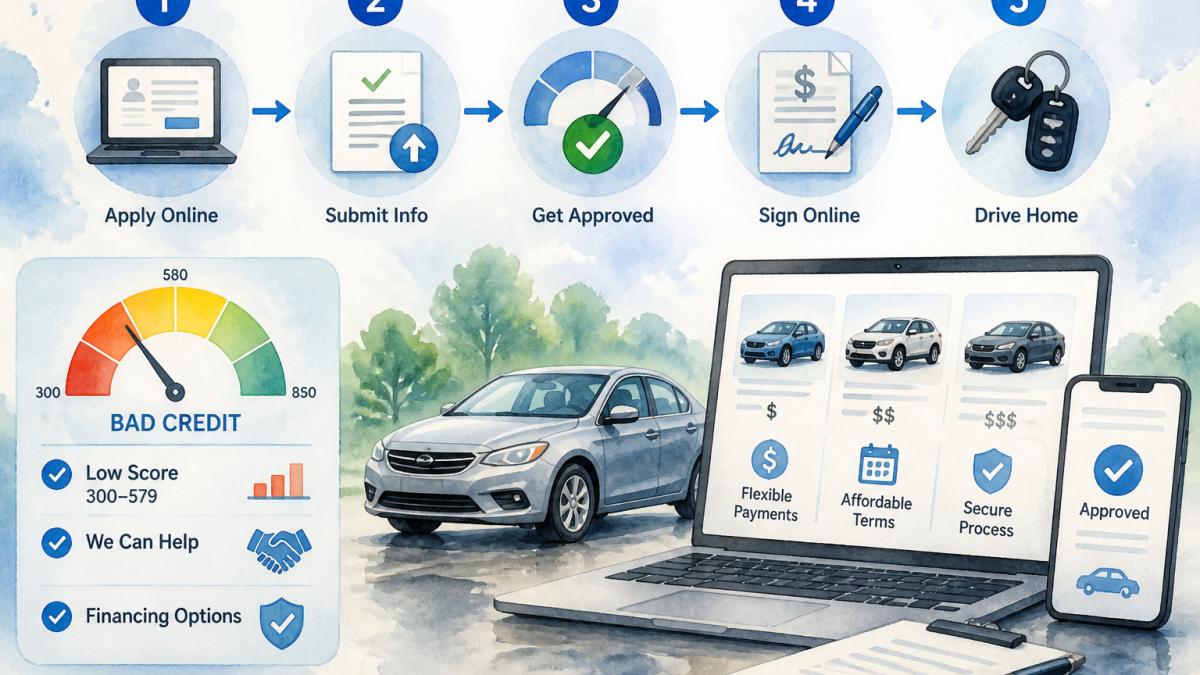
Online financing bad credit solutions have fundamentally changed how people with bad credit can buy used cars. Instead of walking into a dealership and hoping for approval, you can now get pre-qualified from home in minutes.
Here's what happens behind the scenes. You provide basic information, income, employment, existing debts, and your credit situation. The platform runs a soft credit inquiry, which doesn't damage your score. Within moments, you see which lenders are willing to work with you and what interest rates they're offering.
The integration of trade-in valuation into this process is equally important. Most online financing platforms now let you get an instant valuation of your current vehicle while you're shopping for your next one.
Getting Pre-Approved: The Online Car Loan Pre-Approval Process
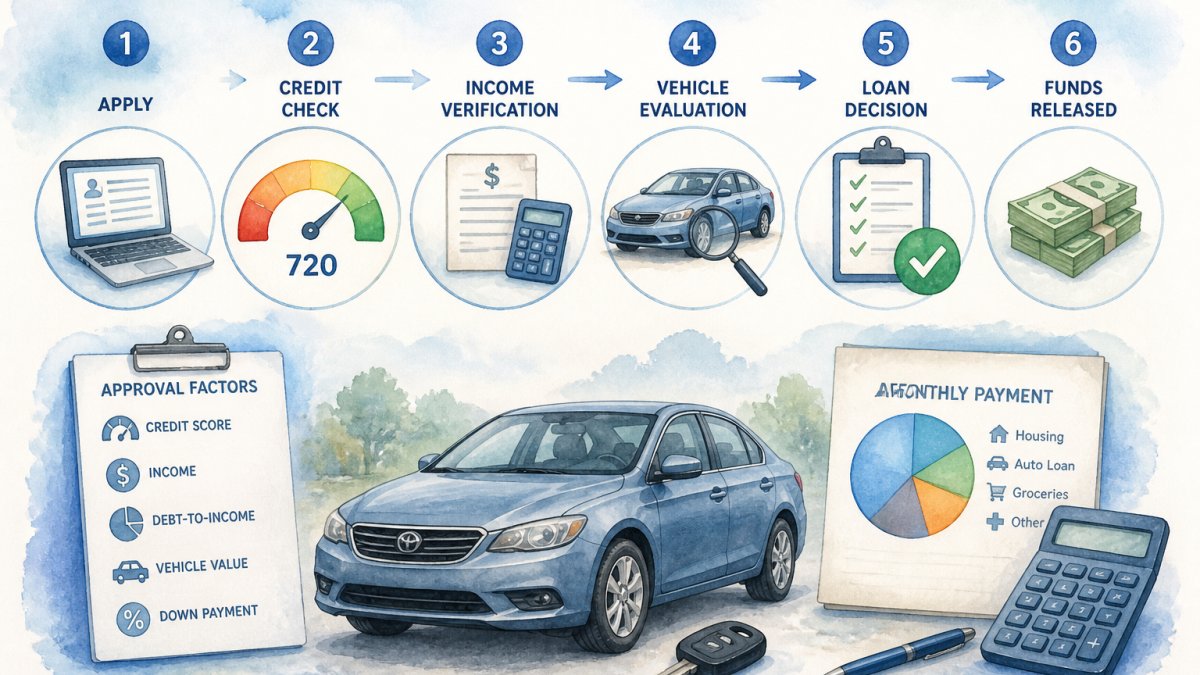
Pre-approval is your first real step toward getting financed. Unlike a simple quote, a pre-approval means a lender has reviewed your application and committed to lending you up to a specific amount at a specific interest rate. This approval is conditional on the vehicle meeting their requirements and your financial situation remaining unchanged, but it's far more concrete than a "maybe."
The online car loan pre-approval process typically takes less than 10 minutes. You'll need to provide your Social Security number, employment information, income details, and a summary of existing debts. The lender performs a soft pull on your credit report, which is invisible to other creditors.
What Pre-Approval Means for Your Credit
Pre-approval doesn't hurt your credit score. A soft inquiry has no impact on your credit rating, which is why you can safely shop with multiple lenders to compare rates. The moment you accept a pre-approval and move toward a hard application, that's when a hard inquiry occurs. One hard inquiry typically costs 5-10 points temporarily, but multiple inquiries within 14 days are treated as a single inquiry by most scoring models.
Pre-approval also gives you negotiating power at the dealership. You arrive knowing exactly how much you can borrow and at what rate. The dealership can't surprise you with inflated financing costs or push you toward a more expensive vehicle than you can afford.
Documents You'll Need to Gather
Before you apply, gather these essentials. You'll need recent pay stubs (typically the last two weeks), W-2s or tax returns from the past two years, and proof of residency like a utility bill or lease agreement.
You'll also need your Social Security number, driver's license, and information about any existing debts. Have your current vehicle's details ready if you're planning a trade-in: the year, make, model, mileage, and condition. Lenders want to verify you actually own the vehicle and understand its approximate value.
Having these documents ready before you start your application dramatically speeds up the process. Many people delay approval by days simply because they had to hunt down a pay stub or old tax return.
Used Car Financing for Bad Credit: Comparing Your Options
Your online financing bad credit options break down into two main categories: online marketplaces and dealership programs. Each has distinct advantages depending on your situation and timeline.
Online Marketplaces vs. Dealership Programs
Online marketplaces connect you with multiple lenders simultaneously. Some operate their own financing arms and integrate it directly with vehicle shopping, meaning you can browse cars, get pre-approved, and arrange delivery all on one platform.
Dealership programs, by contrast, work directly with their own finance teams or preferred lenders. The advantage here is personalized support. You work with a finance manager who understands your situation and can sometimes negotiate terms in ways an automated system cannot.
The tradeoff is speed versus relationships. Online marketplaces are faster and more transparent. Dealership programs offer human support and sometimes more flexibility on terms, but they require you to visit in person and navigate a longer approval process.
Interest Rates and Loan Terms to Expect
Interest rates for bad credit financing vary widely based on your specific credit profile, the vehicle's age and value, and your down payment size. Most subprime lenders operate in a range that reflects the borrower's credit situation.
Loan terms typically range from 48 to 84 months. Longer terms mean lower monthly payments but more interest paid overall. A 60-month loan is common for used car financing because it balances affordability with reasonable total interest costs.
Your down payment directly impacts your rate. A 20% down payment generally qualifies you for better terms than a 10% down payment. If you're trading in a vehicle, that equity counts as your down payment, which is why trade-in valuation matters so much.
How to Value a Trade-In Online and Maximize Your Equity
Trade-in valuation has moved entirely online. Platforms offer instant valuations based on your vehicle's year, make, model, mileage, and condition. Some services even use photos you upload to refine their estimates. This transparency eliminates the old dealership game where they'd lowball your trade-in to make up profit elsewhere.
Understanding Trade-In Equity vs. Negative Equity
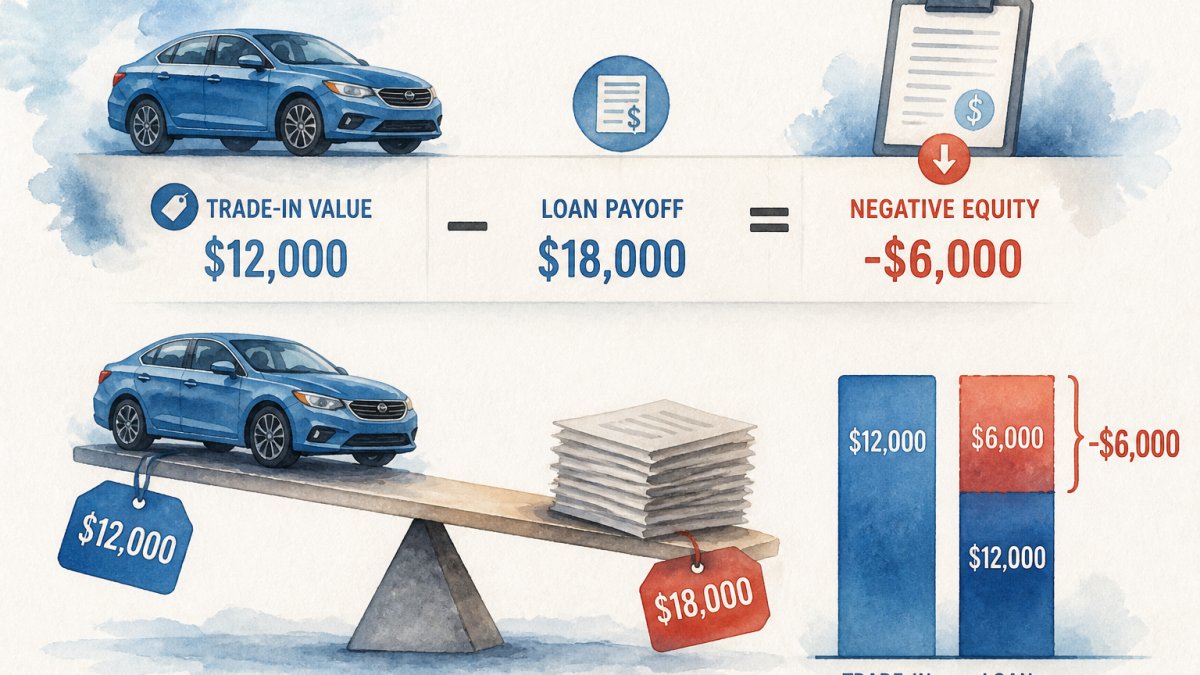
Trade-in equity is the difference between what your vehicle is worth and what you still owe on it. If your car is worth $8,000 and you owe $5,000, you have $3,000 in equity. That $3,000 becomes your down payment.
Negative equity is the opposite, you owe more than the vehicle is worth. If you owe $10,000 but the car is only worth $8,000, you're $2,000 underwater. Rolling that negative equity into a new loan means you're financing someone else's mistake, which is why it's critical to understand your position before trading in.
Many buyers don't know whether they have positive or negative equity. Pull up your loan paperwork and get an honest trade-in valuation before you apply for financing. This single step prevents costly surprises.
Digital Trade-In Valuation Tools and How They Work
Online valuation tools use algorithms that factor in your vehicle's age, mileage, condition, accident history, and regional market demand. These tools ask specific questions about mechanical condition, interior wear, and accident history. The more honest you are, the more accurate the valuation.
These tools are remarkably accurate for vehicles in average condition. They're less reliable for vehicles with significant mechanical issues or unusual modifications. If your vehicle has major problems, expect the final in-person appraisal to be lower than the online estimate.
The best approach is to get valuations from multiple sources. Check your local dealership and independent valuation tools. The variance between them tells you how much negotiating room exists. At AutoSport USA, we use industry-standard valuation data to ensure our trade-in offers are competitive and fair.
Steps to Simplify Your Application and Speed Up Approval
The entire process from application to approval can happen in 24-48 hours if you're organized. Most delays happen because applicants are missing documents or haven't clearly communicated their situation.
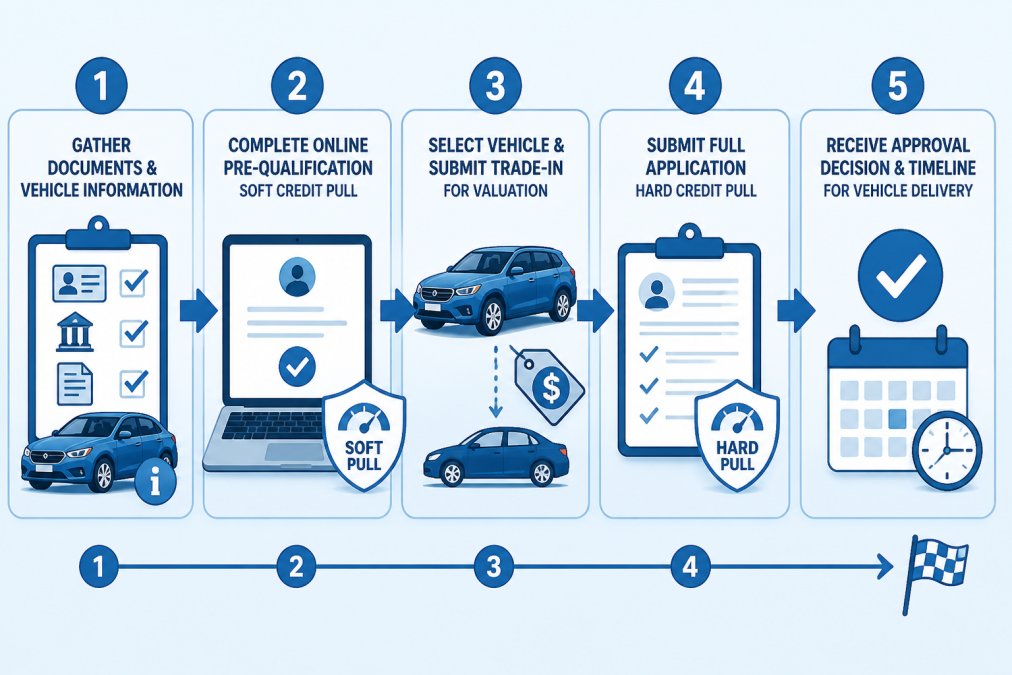
Preparing Your Financial Documentation
Start by gathering everything before you click apply. Your recent pay stubs, tax returns, proof of residency, and debt information should all be in one folder. If you're self-employed, have your profit-and-loss statement ready. If you've had recent income changes, write a brief explanation, lenders want to understand your financial story, not just the numbers.
Be honest about your credit situation. If you had a bankruptcy or major delinquency, have the explanation ready. Lenders who specialize in bad credit financing aren't surprised by these situations. What they care about is whether you've stabilized since then. A bankruptcy five years ago with clean payment history since is far less risky than a recent missed payment.
Submitting Your Application Safely Online
Use a secure, private internet connection when submitting financial information. Avoid public WiFi at coffee shops or libraries. Most reputable platforms use SSL encryption, indicated by the padlock icon in your browser's address bar.
Don't submit applications to multiple lenders simultaneously if you can help it. Each hard credit inquiry temporarily lowers your score. Instead, get pre-approved with one lender, then if you're unhappy with the rate, apply with another. Multiple inquiries within 14 days count as one inquiry, but spacing them out gives you time to evaluate each offer.
Keep copies of everything you submit. Screenshot your pre-approval letter, note the loan number, and save the lender's contact information. You'll need these details when you're ready to complete the purchase.
Tips for Improving Your Approval Odds with Bad Credit
Your credit score isn't the only factor lenders consider. Employment stability, debt-to-income ratio, and down payment size all matter significantly.
A larger down payment is your most powerful lever. If you can put 20% down instead of 10%, your approval odds improve dramatically and your interest rate likely drops.
Employment history matters more than income level. Lenders want to see stability. If you've been at your current job for at least two years, that's a strong signal.
Your debt-to-income ratio should be below 50% ideally. If you earn $3,000 monthly and have $1,200 in existing debt payments, your ratio is 40%. A new car payment of $400 would push you to 53%, which some lenders won't approve.
What to Expect After Approval: Timeline and Next Steps
Approval doesn't mean you own the car yet. It means the lender has committed to financing you, but the vehicle still needs to meet their requirements.
Once the vehicle is approved, you'll finalize the paperwork. Some platforms handle everything digitally and can arrange home delivery.
The timeline from approval to driving off the lot typically ranges from 2-7 days. Online retailers tend to be faster because they own the inventory.
After you drive away, your loan payments begin on the date specified in your contract. Make your first payment on time, this is your opportunity to start rebuilding credit.
Buying a used car with bad credit doesn't have to mean overpaying or settling for an unreliable vehicle.
Frequently Asked Questions
Can I get approved for a car loan online with bad credit?
Yes. Online lenders and dealership financing programs now approve borrowers with credit scores as low as 435-470. The key is using platforms that specialize in bad credit financing and submitting complete documentation upfront. Pre-qualification takes less than 2 minutes on most platforms and doesn't impact your credit score. Your approval odds improve significantly when you have a trade-in to reduce the loan amount and proof of stable income.
What documents do I need for an online car financing application?
Most online lenders require: valid government ID, proof of income (recent pay stubs or tax returns), proof of residency (utility bill or lease), employment verification, bank statements showing financial stability, and your current auto insurance information. If trading in a vehicle, have the title and odometer reading ready. Gathering these before you apply speeds up approval by 24-48 hours. Some platforms allow you to upload documents directly through their secure portal.
Does trading in a car help with bad credit financing?
Absolutely. A trade-in reduces the loan amount you need to borrow, which lowers your risk in the lender's eyes and improves approval odds. Even if your trade-in has negative equity (you owe more than it's worth), using an online valuation tool first shows lenders you've done your homework. A substantial down payment from a trade-in can mean the difference between approval and denial when your credit score is low. It also typically lowers your interest rate by 1-2 percentage points.
What's the difference between pre-approval and final approval for a car loan?
Pre-approval is a soft credit check that shows you qualify for a certain loan amount without affecting your credit score. It's valid for 30-60 days and gives you buying power immediately. Final approval happens after you select a specific vehicle and submit full documentation. The lender then performs a hard credit pull and vehicle inspection. Final approval typically takes 24-72 hours. If your credit situation changes between pre-approval and final approval, the lender may adjust your rate or terms.