 how-to
How to Sell a Car for Trade-In: A Step-by-Step Guide
Table of Contents
- How the Car Trade-In Process Works: A Step-by-Step Walkthrough
- Preparing Your Vehicle for Appraisal: A Checklist
- How to Negotiate a Trade-In Offer
- Trade-In vs. Private Sale: A Financial Comparison
- Trading In a Car with a Loan: Payoff and Equity Guide
- Common Mistakes to Avoid When Trading In Your Car
- Conclusion: Your Next Steps for a Smooth Trade-In
- Frequently Asked Questions
Last Updated: October 12, 2026
How the Car Trade-In Process Works: A Step-by-Step Walkthrough
Learning how to sell car for trade-in comes down to one idea: you hand the keys to a dealer, they pay off what you owe, and the remaining value comes off your next vehicle.
A car trade-in is a transaction where a dealership buys your current vehicle and applies its value toward your replacement vehicle.
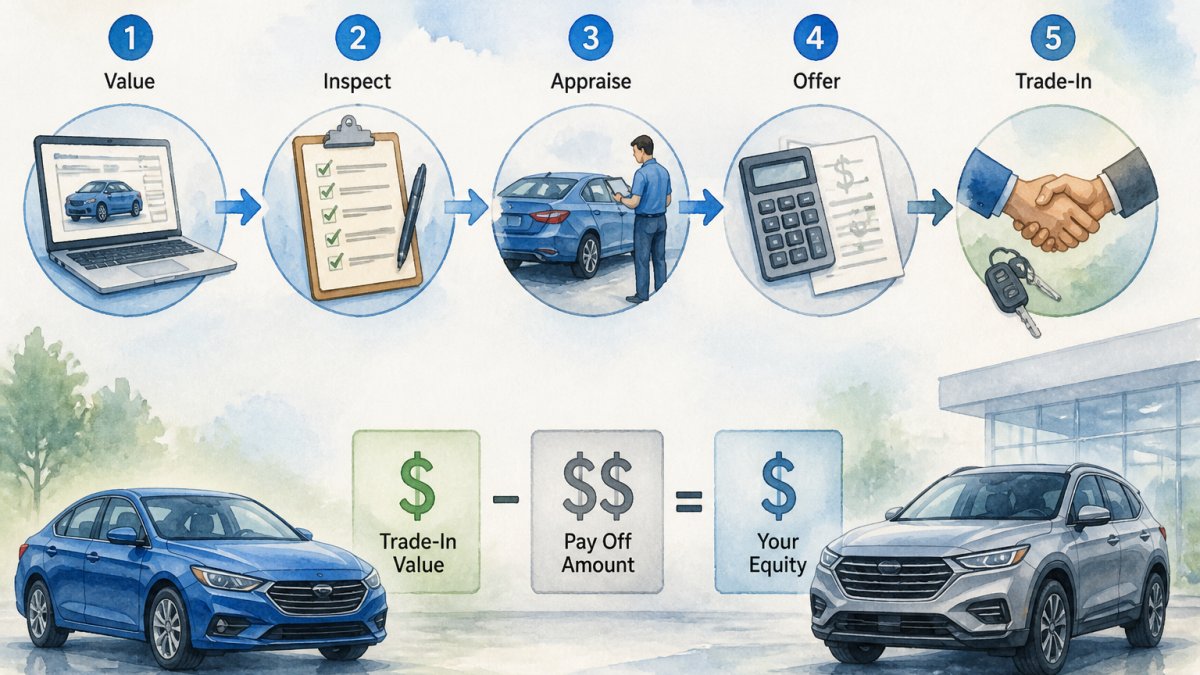
The process follows five steps:
- Estimate your car's trade-in value online
- Bring the vehicle in for an appraisal
- Review the dealer's written offer
- Negotiate the numbers
- Sign the paperwork and transfer ownership
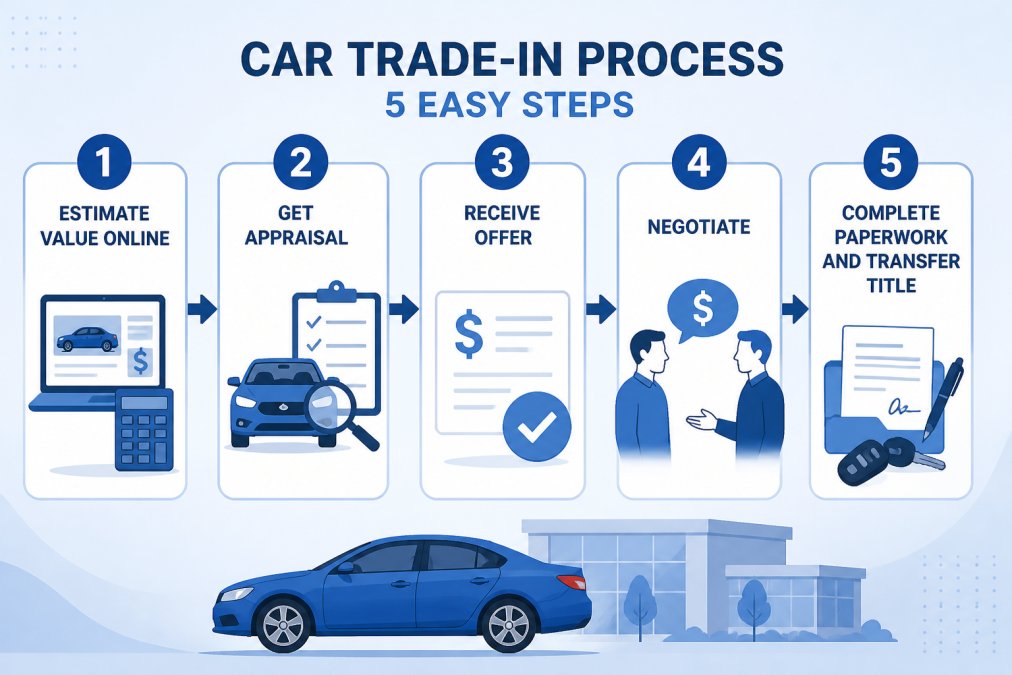
Step 1: Estimate Your Car's Trade-In Value
Start with a pricing guide like Kelley Blue Book trade-in values to get a ballpark range. Enter your make, model, year, mileage, and condition honestly.
The number you see is an estimate, not an offer. Dealers adjust it after they inspect the vehicle in person.
Gather a few data points before you go anywhere:
- Your odometer reading
- Recent maintenance records
- Any accident or repair history
- The vehicle's title status
Step 2: Get Trade-In Appraisal Online
You can get a trade-in appraisal online from most dealerships. Fill out a short form with your VIN and condition details, and you'll get a preliminary number within a day.
This online figure is a starting point. A real vehicle appraisal takes 20 to 30 minutes on site and accounts for things a form can't see.
Preparing Your Vehicle for Appraisal: A Checklist
A clean, complete car almost always appraises higher. You don't need to fix everything, but you should control what the appraiser sees first.
Work through this list the day before:
- Wash the exterior and clean the interior
- Clear out personal items and the trunk
- Gather the title, registration, and maintenance records
- Check that all lights, windows, and locks work
- Top off fluids and check tire pressure
Skip major repairs unless they're safety-related. You rarely get back what you spend on a new transmission or paint job.
How to Negotiate a Trade-In Offer
Negotiate the trade-in and the new vehicle as two separate deals. When dealers bundle them into one monthly payment, it's hard to tell whether you got a fair price on either one. The fix is to force the conversation into four separate numbers: trade-in value, new-car price, financing terms, and add-ons.
Separate the Four Numbers
Before you sit down, write these on a piece of paper and fill them in as the dealer talks:
- Trade-in value, the amount the dealer is crediting for your current vehicle
- New-car price, the out-the-door price before your trade is applied
- Financing, APR, term length, and any origination or documentation fees
- Add-ons, extended warranty, gap insurance, paint protection, nitrogen tires, etching
If the dealer only gives you a monthly payment, ask for each of these four numbers in writing. A monthly payment can hide a low trade offer behind a long loan term.
Review the Itemized Offer Line by Line
Ask for a written offer that shows the trade value and every deduction. Common deductions include:
- Reconditioning or "shop fees"
- Tires, brakes, or glass that need replacing
- Prior accident or paintwork adjustments
- Market adjustment or auction-fee estimates
Compare each deduction against what you know about the car. If the dealer claims $1,200 for tires but you replaced them last year, say so and ask for the deduction to be removed. Deductions are negotiable line items, not fixed costs.
Get Two or Three Written Quotes
Collect at least two or three written trade-in quotes before you commit. Sources include:
- Franchise dealers that sell your make
- Independent used-car lots
- Online instant-offer services (Carvana, CarMax, and similar)
- A wholesale buyer or auction-affiliated service
Written quotes give you leverage. When you mention a competing number, you don't have to name the dealer, just say, "I have a written offer for more than that." Dealers respond to documented competition far more than to verbal claims.
A Negotiation Script You Can Use
Here is language that keeps the trade and the purchase separate:
"I'd like to handle the trade-in first. What is your written offer for my car, with any deductions itemized? Once we agree on that number, we can talk about the price of the new vehicle."
If the trade number is low:
"I have a written offer from another dealer for more. Can you match it, or explain what's driving your number down?"
If the dealer tries to bundle:
"I'd rather keep the trade and the purchase as separate numbers. Can you show me both in writing?"
Know When to Walk
Be ready to leave. A dealer who won't put the trade number in writing, won't itemize deductions, or won't separate the trade from the purchase is telling you something.
A common pattern is that a slightly lower trade offer paired with a lower purchase price is the better overall deal. Run the math on the total out-the-door cost, not just the trade number.
Never accept a verbal trade-in number. Get every offer in writing, with the deductions listed, before you sign anything. Verbal quotes have a way of shrinking once you're in the finance office.
Negotiate four separate numbers, trade value, new-car price, financing, and add-ons. Ask for an itemized written offer, collect two or three competing quotes, and use the script above to keep the trade and the purchase from being bundled.
Trade-In vs. Private Sale: A Financial Comparison
A private sale usually brings a higher sale price, but it costs you time, paperwork, and risk. A trade-in pays less on paper and saves you all three.
| Factor | Trade-In | Instant Cash Offer | Private Sale |
|---|---|---|---|
| Typical payout | Good | Fair | Highest |
| Time to close | Same day | 1-2 days | Weeks |
| Paperwork | Dealer handles | Dealer handles | You handle |
| Sales tax credit | Often applies | Rarely applies | No |
| Scam risk | Low | Low | Higher |
The tax credit is the part most sellers miss. In many states, you only pay sales tax on the difference between your trade-in value and the new car's price.
Trading In a Car with a Loan: Payoff and Equity Guide
Trading in a car with a loan is normal, and it doesn't block the deal. The dealer requests a payoff quote from your lender and pays that amount directly. What most guides skip is the verification step, making sure the old loan is actually closed after you drive away.
Equity vs. Negative Equity
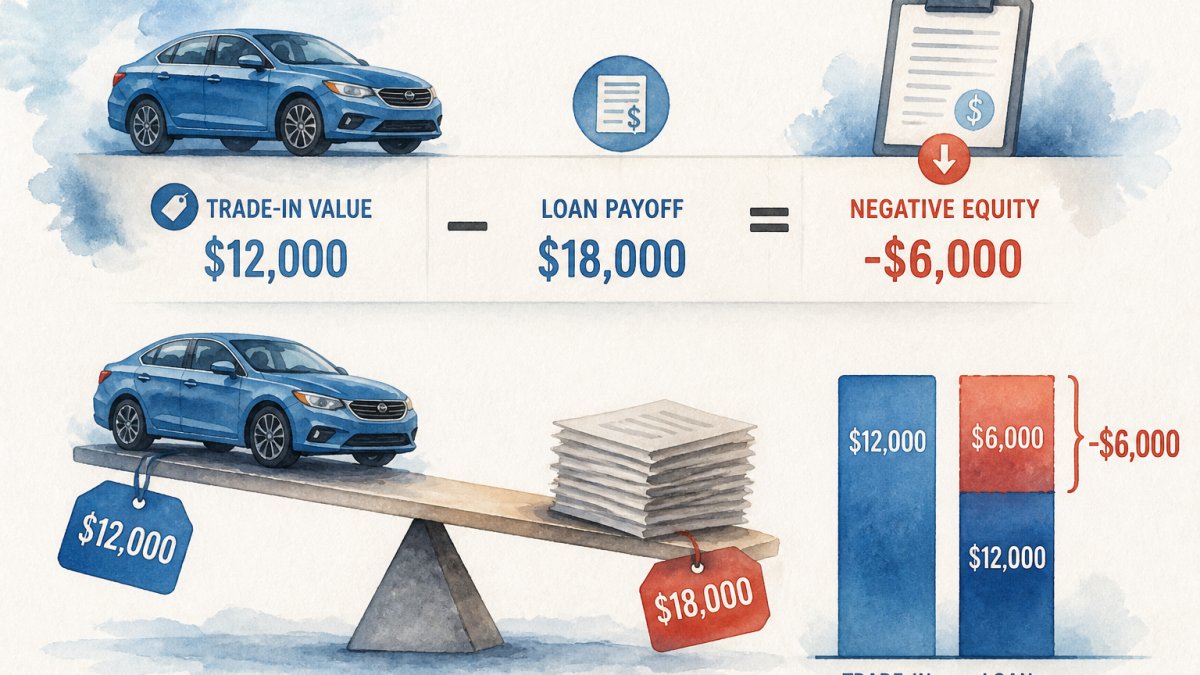
Equity is the difference between your car's value and what you still owe.
- Car worth $18,000, loan balance $12,000 → $6,000 positive equity
- Car worth $14,000, loan balance $19,000 → $5,000 negative equity
Positive equity goes toward your next vehicle or comes back to you as a check. Negative equity gets rolled into your new financing, which raises the amount financed and the monthly payment.
How to Get a Payoff Quote
Call your lender or log into your account and request a 10-day payoff quote. This is different from your current balance because it includes:
- The remaining principal
- Accrued interest through the payoff date
- Any prepayment penalties or processing fees
A 10-day payoff quote is valid for 10 days. If the deal closes after that window, the dealer needs a new quote. Ask your lender to email or fax the quote directly to the dealership's finance office so there's a paper trail.
The Payoff Workflow, Step by Step
- Get a 10-day payoff quote from your lender, in writing
- Share it with the dealer's finance office before you sign
- The dealer pays the lender directly, not you
- Any leftover equity goes toward your new car or is refunded to you
- The lender sends a lien release to you and to the state motor vehicle agency
- Verify the loan is closed, call the lender 10-14 days after the sale and confirm a $0 balance
Step 6 is the one most sellers skip. If the dealer is slow to fund the payoff, interest can keep accruing and you can end up with a small residual balance. A phone call two weeks later catches that before it hits your credit report.
Handling Negative Equity
If you owe more than the car is worth, the dealer rolls the difference into your new loan. That means you're financing the old car's shortfall on top of the new one. Two things to watch:
- Loan-to-value (LTV) limits. Many lenders cap how much negative equity they'll finance. A large gap may require a bigger down payment.
- Gap insurance. If you're upside-down on the new loan, gap insurance covers the difference between what you owe and what the car is worth if it's totaled. It's often worth the cost in this situation.
Leased Vehicles Work Differently
Trading in a leased car means you're buying out the lease, not paying off a loan. You'll need:
- A lease payoff quote from the leasing company (often called the buyout price)
- Any remaining lease payments
- Excess mileage and wear-and-tear charges, if applicable
- Disposition fees, which some lessors charge at buyout
Some leasing companies only allow the dealer to buy out the lease, not a third party. Confirm the buyout rules with your lessor before you shop the car around.
Documents to Keep
After the transaction, keep copies of:
- The signed trade-in or purchase agreement
- The payoff quote you received
- Proof the dealer funded the payoff
- The lien release from your lender
- The odometer disclosure statement
Get a 10-day payoff quote in writing, have the dealer pay the lender directly, and call the lender 10-14 days later to confirm a $0 balance. For leases, request the buyout price and confirm whether a third party can purchase the vehicle.
Common Mistakes to Avoid When Trading In Your Car
Most bad trade-in outcomes trace back to a handful of avoidable errors. Watch for these:
- Skipping the online estimate and walking in cold
- Accepting the first offer without comparing quotes
- Hiding damage or mechanical problems, which kills trust and the deal
- Negotiating the trade and the purchase as one number
- Forgetting to remove toll transponders and personal data
- Not confirming who pays the remaining loan balance
Conclusion: Your Next Steps for a Smooth Trade-In
The gap between a fair trade-in and a bad one usually comes down to preparation and timing. Get your online estimate, clean up the car, collect your documents, and compare at least two written offers before you commit.
Start with our online trade-in valuation, then browse our used inventory and use our online financing tools to see your options before you visit. Get started with AutoSport USA and turn your current vehicle into your next one.
Frequently Asked Questions
Can I trade in a car that I still owe money on?
Yes, you can trade in a car with an outstanding loan. The dealer will get a payoff quote from your lender and subtract that amount from your trade-in offer. If the offer is higher than what you owe, the difference goes toward your new vehicle. If you owe more than the car is worth (negative equity), that amount gets added to your new loan or paid upfront.
Should I trade in my car or try to sell it privately?
It depends on your priorities. A private sale often gets you a higher price, but you handle listing, showing, negotiating, and paperwork yourself. A trade-in is faster and simpler, and in most states you only pay sales tax on the difference between your trade-in value and the new car price. If you want speed and convenience, trade-in usually wins.
What should I do before trading in my car?
Clean the interior and exterior, gather maintenance records, get an online appraisal, and check your loan payoff amount if you still owe. Small cosmetic fixes like replacing wiper blades or touching up scratches can help, but skip expensive repairs. Get offers from at least two or three dealers so you have real numbers to compare.
How do I compare a trade-in offer with a private-sale price?
Look up your car's market value on a pricing guide, then get a dealer trade-in quote and an instant cash offer. Compare those numbers to what similar cars sell for in private listings. Factor in the sales tax savings from trading in, plus your time and effort for a private sale. The trade-in offer plus tax savings often closes much of the gap.