 comparison
How to Compare Car Dealerships Before You Buy
Last Updated: October 28, 2026
Quick Summary
To compare car dealerships, get a written out-the-door quote from each one using the same line items, then check reputation and financing terms. Compare total cost, not advertised prices, and get a pre-approval before you visit.
- Ask each dealer for a written out-the-door quote with the same line items.
- Check your state's cap on the dealer documentation fee before comparing.
- Treat dealer add-ons like etching and paint protection as optional until proven otherwise.
- Review recent reviews for recurring complaints about fees and the finance office.
- Get pre-approved for financing so you have a rate to test the dealer's offer against.
Table of Contents
- Why Comparing Dealerships Saves More Than Haggling Does
- Compare Out-the-Door Pricing, Not Advertised Prices
- How to Judge a Dealer's Reputation and Review Quality
- Used Car Financing: Get Pre-Approved Before You Visit
- Trade-In Value: Comparing Offers Across Dealers
- Used Car Inspection and Vehicle History Checks Before You Commit
- Booking Your Test Drive and Next Steps at AutoSport USA
- Frequently Asked Questions
Why Comparing Dealerships Saves More Than Haggling Does
A careful effort to compare car dealerships can help you evaluate the full terms of an offer. Compare fees, financing, and trade-in offers alongside the vehicle price.
Comparing dealerships before you visit lets you set terms on your own schedule. You can review inventory, pricing transparency, and reputation from home, so you can compare car dealerships without leaving your couch. This is especially useful for working families and commuters who cannot spend a weekend driving from lot to lot. Narrow your options using the criteria below.
Compare Out-the-Door Pricing, Not Advertised Prices
The advertised price is the starting point, not the final number. The out-the-door price is a way to consider the vehicle price and applicable fees and charges together.
Ask for a written quote before you commit to a visit.
Build a Normalized Quote Sheet
To compare quotes, you can use a consistent line-item format. Consider asking for:
- Vehicle selling price, the negotiated price before fees, not the MSRP or the advertised special.
- Dealer documentation fee, a flat charge for paperwork. Some states cap this fee; check your state's motor vehicle division rules before you compare, because a capped fee in one state and an uncapped fee in another are not comparable.
- Dealer add-ons and accessories, window etching, paint protection, nitrogen tires, pinstripes, and similar items. Treat every one as optional until proven otherwise.
- Manufacturer rebates and incentives, subtract these, but confirm whether the rebate is tied to dealer-arranged financing. A cash-back offer that requires a higher APR can cost more than it saves.
- Sales tax, calculated on the taxable price, which varies by state and sometimes by county or city.
- Title and registration fees, government charges that should be close to identical across dealers in the same jurisdiction.
- Trade-in credit, if you have a trade, list it as a separate negative line so it does not mask a higher vehicle price.
- Out-the-door total, the sum of the rows above.
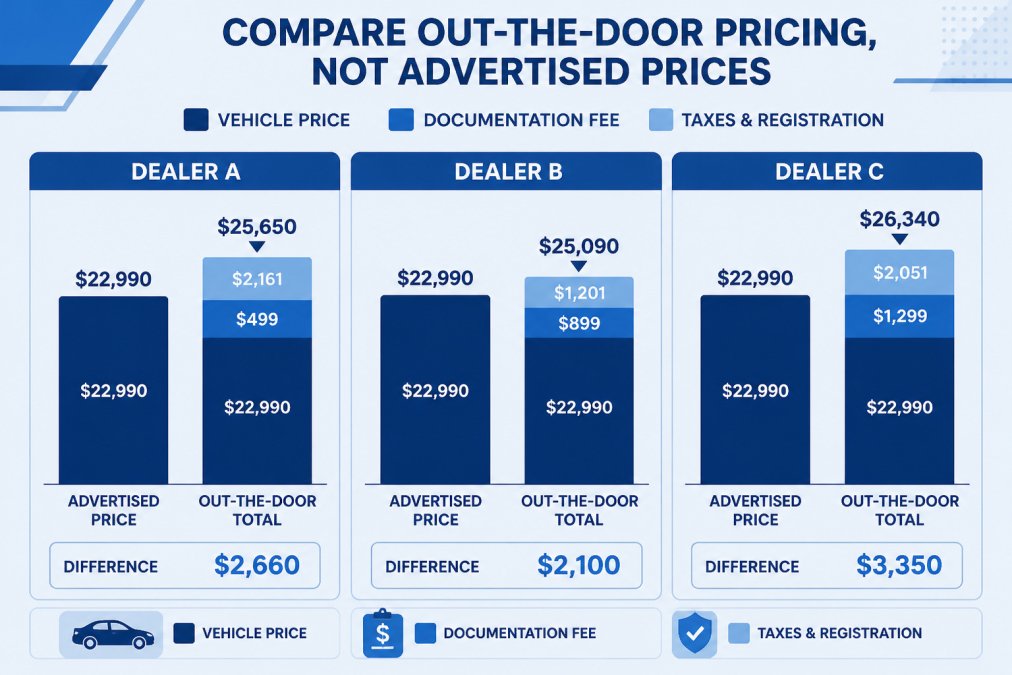
The Two Numbers That Break the Comparison
Two line items to consider in a side-by-side comparison:
Fees and Add-Ons to Ask About
Ask for an itemized quote:
Ask for the terms in writing before you sign.
Compare the Finance Office, Not Just the Sales Desk
Financing terms are another factor to consider. Compare the APR, loan term, and total repayment amount when evaluating an offer.
The article lists the line items to include when building a normalized quote sheet for comparing dealers.
| Line item | What to check | Note |
|---|---|---|
| Vehicle selling price | Negotiated price | Before fees, not MSRP or advertised special |
| Dealer documentation fee | Flat paperwork charge | Check whether your state caps it |
| Dealer add-ons | Etching, paint protection, nitrogen tires | Treat as optional until proven otherwise |
| Manufacturer rebates | Incentives | Confirm if tied to dealer-arranged financing |
| Sales tax | Taxable price | Varies by state, county or city |
| Title and registration | Government charges | Should be near identical in one jurisdiction |
| Trade-in credit | Separate negative line | Keeps it from masking a higher vehicle price |
| Out-the-door total | Sum of all rows | Basis for the comparison |
How to Judge a Dealer's Reputation and Review Quality
Reviews are useful, but only when you read them carefully. Review recency and volume are factors you can consider when reading reviews. Look for patterns rather than individual stories.
Focus on what reviewers say about pricing transparency, the finance office, and how the dealer handled problems after the sale. Repeated complaints about surprise fees or pressure tactics are a warning sign. Check whether the dealer responds to negative reviews, since a thoughtful response often says more than the review itself.
Also verify the dealer's listings across more than one platform. Inconsistent addresses, phone numbers, or inventory across sites can signal an outdated or unreliable listing.
Score Reputation on Five Dimensions
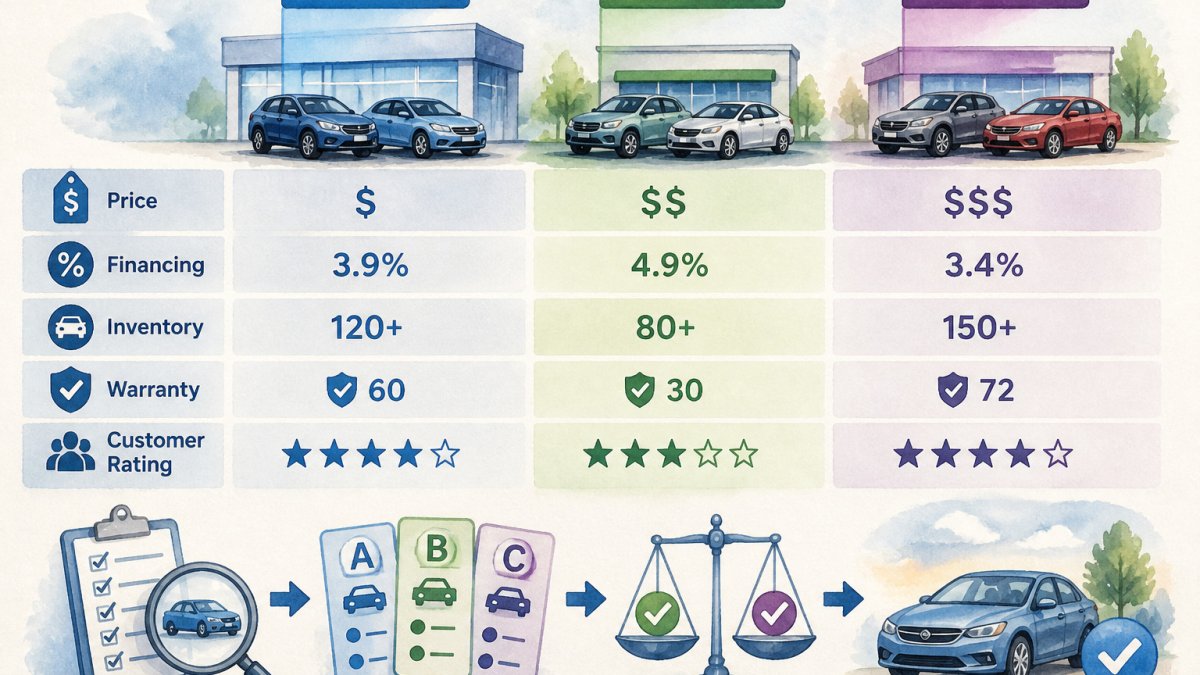
Star averages hide too much. Build a simple five-column scorecard for each dealer on your short list and fill it in from the same sources for every dealer:
- Recency. Look at reviews from the last 90 days, not the lifetime average. A store that was strong three years ago but has a cluster of recent complaints about the finance office is a different business today.
- Volume. A handful of reviews is noise. Look for enough recent reviews that a pattern is visible, and treat a sudden burst of five-star reviews posted within a few days as a possible solicitation campaign rather than a signal.
- Recurring complaints. Read the one- and two-star reviews and group them by theme: surprise fees, bait-and-switch on advertised prices, slow title work, pressure in the finance office, or poor service after the sale. One complaint is an incident; the same complaint from multiple reviewers is a pattern.
- Owner and manager responses. You can note whether a dealer responds to negative reviews and how it responds.
- Review-source spread. Check more than one platform, Google, the manufacturer's dealer locator, and independent review sites. A dealer with strong scores on one platform and weak scores on another deserves a closer look at the weak one.
Verify the Dealer, Not Just the Reviews
You can check relevant official sources for information about a dealer before visiting.
Also verify the dealer's listings across more than one platform. Inconsistent addresses, phone numbers, or inventory across sites can signal an outdated or unreliable listing.
Separate Sales Reviews from Service Reviews
If you plan to use a dealer for warranty work or maintenance, you can read service reviews separately from sales reviews.
Put the Scorecard Next to the Quote Sheet
Reputation is not a tiebreaker to apply after price. Put the five-dimension scorecard next to the normalized out-the-door quote sheet and the total repayment figure. The scorecard can help you organize the information you gathered about each dealer.
Used Car Financing: Get Pre-Approved Before You Visit
Arranging financing before you visit a dealer changes the conversation. A pre-approval from a bank, credit union, or online lender shows you what rate you qualify for. You can follow a step-by-step guide to getting pre-approved for a used car loan online before you visit. It also gives you a benchmark to test the dealer's financing offer against.
Credit history matters here. If you live in Toms River, our local guide to getting pre-approved for a car explains the process before you visit dealerships. If you have past credit issues, a pre-approval helps you learn your options before you spend time on a lot. AutoSport USA offers online financing tools. Compare financing terms as part of your decision.
Trade-In Value: Comparing Offers Across Dealers
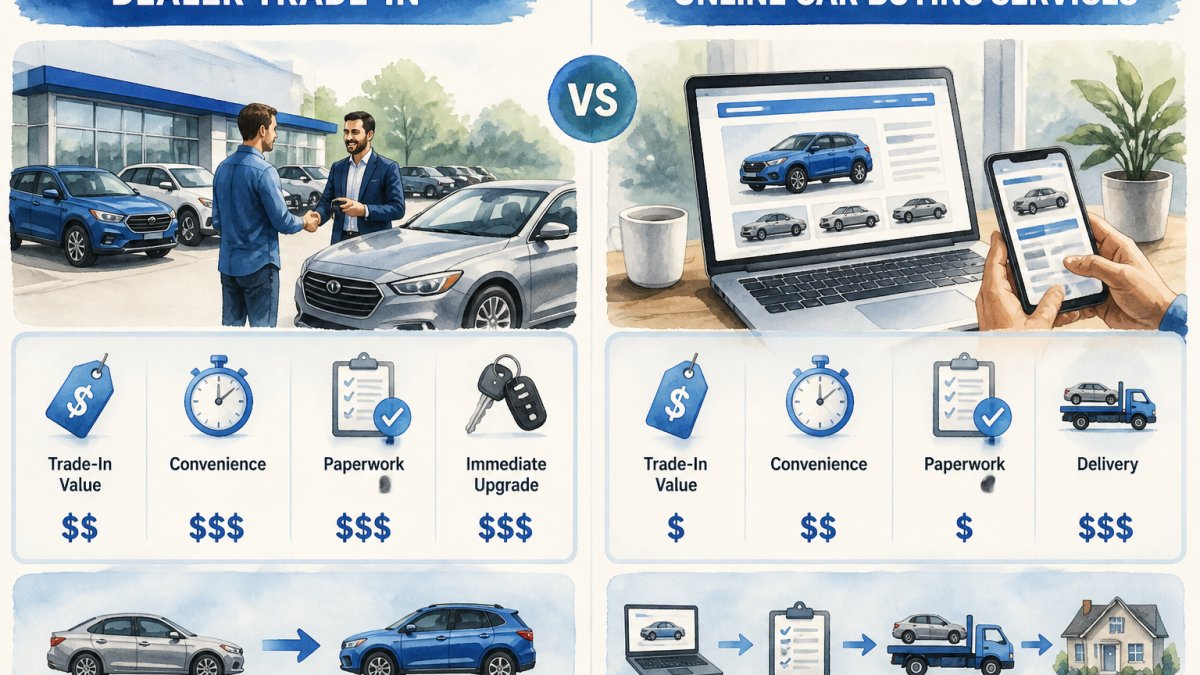
A trade-in valuation can help you consider an offer. Our comparison of used car appraisals and dealer offers explains how the two differ. Keep the trade-in value in mind alongside the vehicle price.
AutoSport USA offers trade-in valuations.
Used Car Inspection and Vehicle History Checks Before You Commit
Before buying a used vehicle, you can consider requesting a vehicle history report and an independent pre-purchase inspection (Buying a Used Car From a Dealer).
You can use information in a history report to guide questions about the vehicle. See how CARFAX and AutoCheck compare on accident history.
Booking Your Test Drive and Next Steps at AutoSport USA
Once you have narrowed your list, compare written out-the-door quotes, financing terms, and trade-in offers side by side. The dealer that is cheapest on paper is not always the best value once all the numbers are in.
When you are ready, apply online for financing. Bring a list of questions.
Frequently Asked Questions
How do I compare car dealerships?
Consider the vehicle price, financing terms, trade-in valuation, and available vehicle information when evaluating an offer.
Should I get financing before visiting a car dealership?
AutoSport USA offers online financing tools. Consider financing terms as part of your decision.
How do I compare a dealer trade-in offer with a private sale?
AutoSport USA offers trade-in valuations. Consider the trade-in value alongside the vehicle price when evaluating an offer.
What should I check before buying a used car from a dealer?
Consider asking questions about the vehicle's history and condition before you buy.