 blog
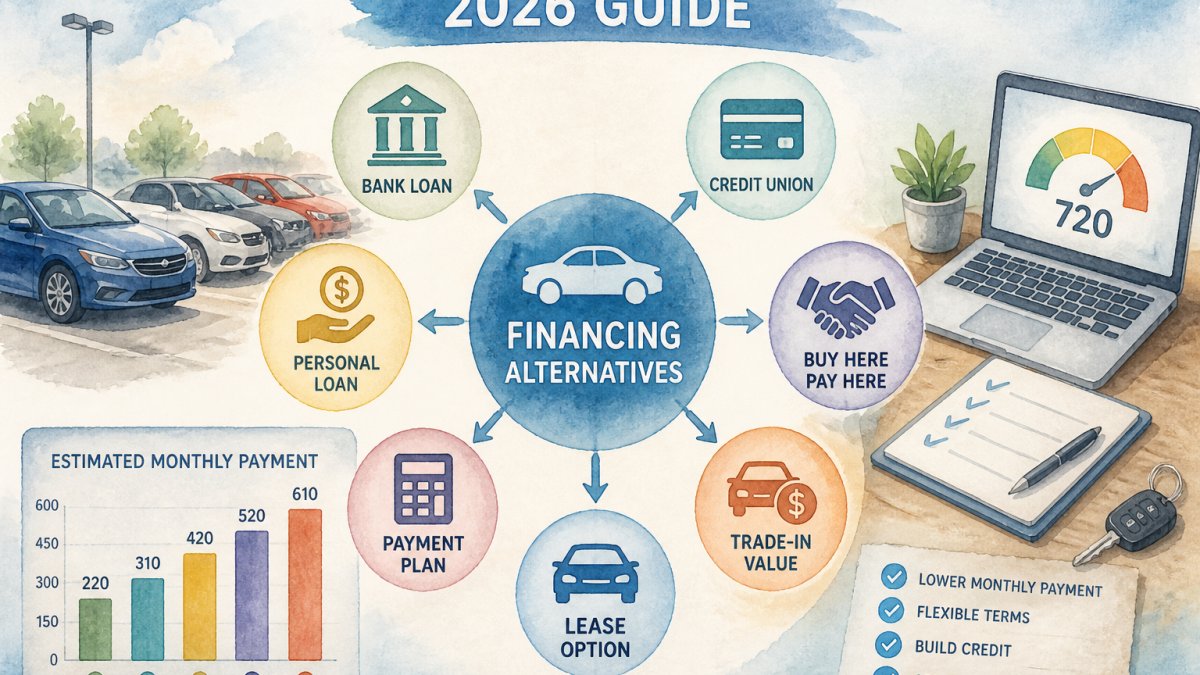
Lester Glenn Alternative for Financing: 2026 Guide
Table of Contents
- Why Buyers Seek a Lester Glenn Alternative for Financing
- How to Compare Dealership Financing Offers Side by Side
- Auto Loan Preapproval: Why It Changes Your Negotiating Position
- Used Car Trade-In Valuation and How It Lowers What You Finance
- Questions to Ask Before Financing a Used Car
- Financing Options for Shoppers With Credit Challenges
- Conclusion
- Frequently Asked Questions
Last Updated: October 15, 2026
Why Buyers Seek a Lester Glenn Alternative for Financing
Shopping for a Lester Glenn alternative for financing usually starts with one frustrating phone call: a buyer finds a car they like, then hears a monthly payment that never matches the advertised price. At AutoSport USA, shoppers across Ocean County trace this to three complaints: vague pricing, limited lender choices, and pressure to decide on the spot.
What Makes Dealership Financing Feel Restrictive
Franchise dealership finance departments typically work from a short list of preferred lenders, a list that exists for the dealer's convenience, not yours. The rate quoted often depends on which lender the finance manager runs first, and the final contract bundles in add-ons that were never discussed upfront. The Consumer Financial Protection Bureau's auto loan guidance recommends comparing at least three financing offers before signing, yet most buyers accept the first number they're shown.
What an Independent Dealer Offers Instead
An independent used car dealer works with a wider network of banks and credit unions, so you get more than one rate to compare. AutoSport USA publishes its financing tools online, so you can apply before walking onto the lot and arrive with numbers in hand.
How to Compare Dealership Financing Offers Side by Side
Comparing dealership financing offers means lining up the same loan amount and term across every lender, then judging on total cost rather than the monthly figure. A lower payment stretched over more months is often the more expensive loan.
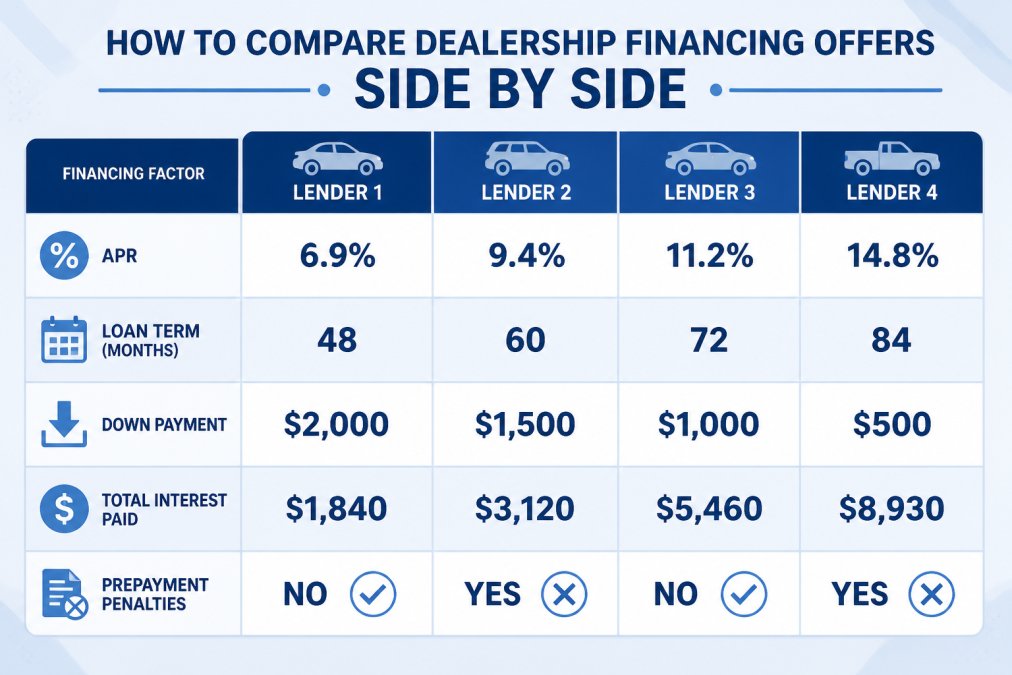
The Numbers That Actually Matter Beyond the Monthly Payment
Ask for four figures in writing: the APR, the loan term in months, the total interest you will pay, and whether the contract carries a prepayment penalty. A 72-month loan can drop your payment while quietly adding thousands in interest.
| Factor | What to Ask For | Why It Matters |
|---|---|---|
| APR | Rate in writing, before signing | Sets your true borrowing cost |
| Loan term | Total months, not just payment | Longer terms raise total interest |
| Total interest | Dollar figure over full term | Reveals the real price of the loan |
| Prepayment penalty | Yes or no | Determines if early payoff costs you |
| Add-ons | Itemized list | Gap insurance and warranties inflate cost |
Auto Loan Preapproval: Why It Changes Your Negotiating Position
Auto loan preapproval is a lender's written commitment to fund your purchase up to a set amount, based on a review of your credit and income. Prequalification, by contrast, is only an estimate.
Walking in with preapproval turns you into a cash buyer in the dealer's eyes. AutoSport USA offers online financing tools so you can see where you stand before visiting the lot. Federal Trade Commission guidance on buying and financing a car notes that shoppers who arrange financing in advance have more use to decline expensive dealer add-ons.
Used Car Trade-In Valuation and How It Lowers What You Finance
Used car trade-in valuation is the process of appraising your current vehicle's market value so its equity can be applied to your next purchase. The larger the trade credit, the smaller the loan you need, and the less interest you pay over the full term.
How a Trade-In Value Is Actually Determined
A trade-in appraisal is not one number, it is four inputs stacked together:
- Wholesale auction data. Appraisers start from what comparable vehicles sell for at wholesale auction, adjusted for your region. This is the floor, not the offer.
- Condition and mileage. Mechanical condition, tire tread, windshield chips, warning lights, and odometer reading all move the number. A vehicle 20,000 miles over the expected average for its age is worth meaningfully less.
- History and title status. A clean title and no reported accidents support a higher offer. A branded title, salvage, rebuilt, flood, or lemon, can cut the value sharply and may make some lenders unwilling to finance the vehicle.
A common pattern is a gap of several thousand dollars between the highest private-party listing online and the trade-in offer you receive, the convenience and tax treatment you are paying for.
Positive Equity vs. Negative Equity
Two numbers drive the math: what your car is worth and what you still owe.
- Positive equity. Your car is worth more than the remaining balance. The difference acts as a down payment and reduces the amount you finance.
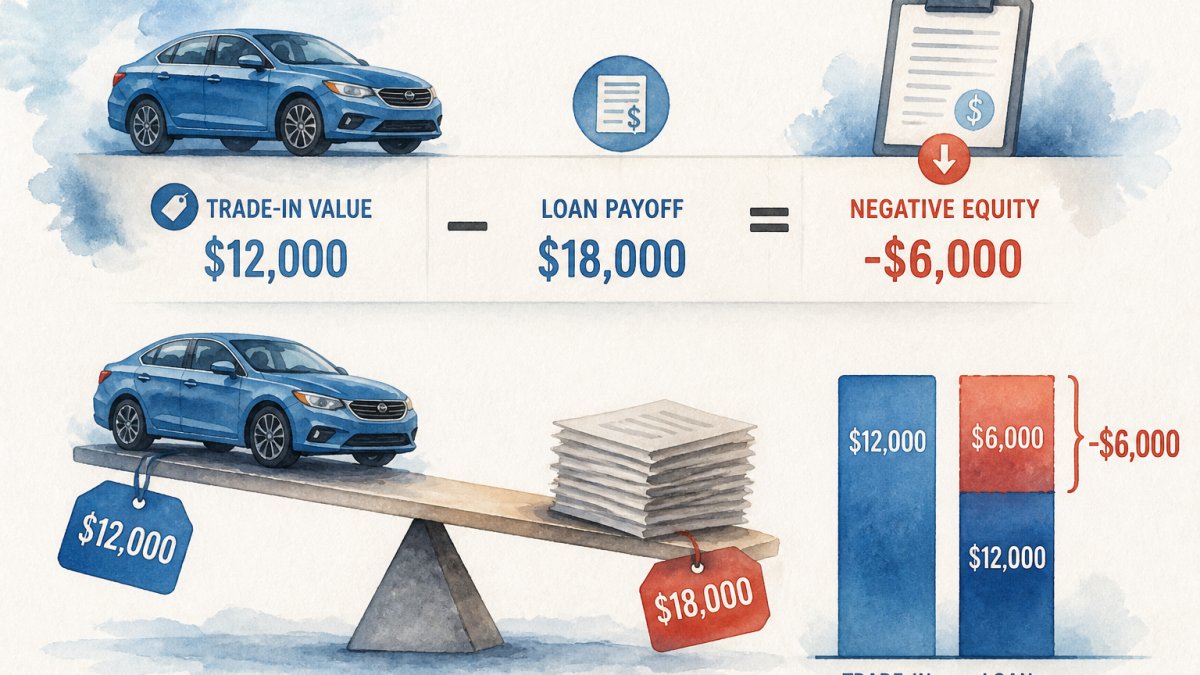
- Negative equity. You owe more than the car is worth. The difference, being "upside down", gets rolled into the new loan, raising your payment and loan-to-value ratio and potentially pushing you into a higher rate tier.
If you are upside down, ask the finance office to show the negative equity as a separate line item on the worksheet. Rolling it in silently is how buyers end up financing thousands more than the sticker price suggests.
The Sales-Tax Detail Buyers Miss
In most states, the trade-in value is subtracted from the purchase price before sales tax is calculated. A $9,000 trade credit therefore reduces both your loan and the taxable amount. A private-party sale does not always get that treatment, which is one reason a slightly lower trade-in offer can still beat selling the car yourself.
What to Bring to the Appraisal
To get the most accurate valuation, bring:
- The title, or the payoff information from your current lender if the car is financed
- Both keys and any remotes
- Service records, if you have them
How the Trade Credit Flows Through the Loan
The math is straightforward once you have both numbers:
- Purchase price of the new vehicle
- Minus trade-in value
- Minus cash down payment
- Plus taxes, title, registration, and any dealer fees
- Equals the amount financed
Every dollar added at step 2 or 3 reduces step 5, and the interest you pay on every remaining month.
Questions to Ask Before Financing a Used Car
The right questions before financing a used car all point at the same target: the total cost of the loan, not the sticker price.
- What is the exact APR, and is it fixed or variable?
- How many months is the loan, and what is the total interest paid?
- Does the contract include a prepayment penalty?
Financing Options for Shoppers With Credit Challenges
A credit challenge does not close the door on financing. It changes which lenders will consider your application, what rate they offer, and how much they ask you to put down, three levers worth understanding before you apply.
The Lender Tiers You Are Actually Shopping Across
Auto lenders fall into a few broad categories, and where you land determines your rate range and down payment requirement:
- Prime lenders. Banks and credit unions serving buyers with strong credit. Lowest rates, strictest approval standards.
- Near-prime lenders. For buyers with minor past issues, a few late payments, a thin file, or a recent collection. Rates sit above prime.
- Subprime and specialty lenders. These lenders serve buyers with significant credit challenges. Higher rates and larger down payments, but far more flexible approval standards.
Independent dealers typically work with several lenders across these tiers, so a single application can produce more than one offer. A franchise dealer's finance department usually works from a shorter preferred list.
What Moves Your Rate and Down Payment
Lenders weigh a handful of factors when pricing a higher-risk loan:
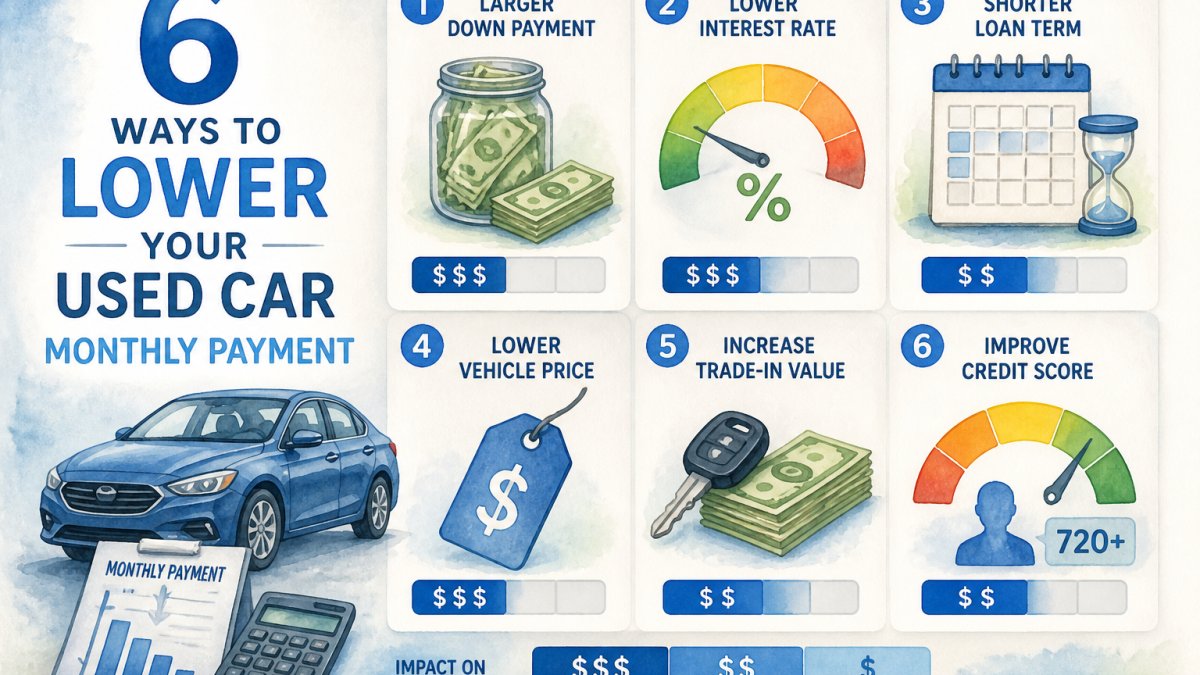
- Credit score band. Even a modest score improvement can move you to a better tier. Pull your own credit report first and dispute any errors before you apply.
- Down payment size. A larger down payment lowers the lender's risk and can offset a weaker score. Many specialty lenders require a minimum percentage down.
- Loan-to-value ratio. The less you borrow relative to the vehicle's value, the better your terms. A trade-in with positive equity helps twice, it lowers the amount financed and improves your LTV.
- Income and employment stability. Proof of steady income matters more than the score alone for many specialty lenders.
Documents to Have Ready Before You Apply
A complete application moves faster and produces more accurate offers. Have these ready:
- Government-issued photo ID
- Proof of income, recent pay stubs, bank statements, or tax records if self-employed
- Proof of residence, a utility bill or lease in your name
- Current insurance information
Trade-In Policy and How It Interacts With Approval
Trade-in handling varies by lender, a detail most buyers never ask about until it causes a problem:
- Some lenders will finance negative equity rolled into a new loan; others cap how much they will allow.
- Some require the trade-in to be free and clear of any lien before finalizing the deal.
- If you still owe on the trade, the dealer typically pays off your existing lender directly and applies the remaining equity, or the shortfall, to the new contract.
Ask upfront whether the lender allows negative equity, whether there is a cap, and how the payoff will be handled. Get those answers in writing to prevent a surprise at signing.
Conclusion
Financing a used car does not have to mean accepting the first number a finance office hands you. The buyers who do best compare offers in writing, arrive with preapproval, and know their trade-in value before they negotiate. AutoSport USA built its online financing tools and trade-in valuation process around exactly that approach. Apply online to get started and walk in with a real offer in hand.
Frequently Asked Questions
How can I compare financing offers from different dealerships?
Ask every dealer for the same four numbers in writing: annual percentage rate, loan term in months, total amount financed, and total interest paid over the life of the loan. A 72-month loan at a lower rate can cost more than a 60-month loan at a slightly higher rate. Request the full disclosure document, not just the monthly payment quote, so you can line the offers up side by side.
Can I get preapproved for an auto loan before visiting a dealership?
Yes. Banks, credit unions, and online lenders issue preapproval decisions, often within a day. A preapproval letter states how much you can borrow and at what rate, which gives you a ceiling to negotiate against. It also lets you skip the dealer's in-house financing desk if their numbers do not beat what you already hold.
How does a trade-in affect the amount I need to finance?
Your trade-in value is subtracted from the vehicle price before financing is calculated, so it directly lowers the principal you borrow. If you still owe money on the trade-in, that payoff gets added to the new loan instead. Getting a used car trade-in valuation from more than one source before you negotiate helps you spot a lowball offer.
What fees should I check before signing a car financing agreement?
Read the itemized fee list for documentation fees, title and registration charges, dealer preparation fees, and any add-ons like extended warranties or gap insurance. Some fees are negotiable and some are set by state law. Ask whether each line item is required or optional, and confirm the final out-the-door total matches the number you agreed to verbally.